THE ADVENTURE COLLECTIVE® · Independent discovery and booking for outdoor travel

Float in the world’s lowest sea and try mineral-rich mud on a private half-day tour from Amman. This easy, accessible outing includes private transfer, hotel beach access, pools and changing rooms — ideal for a restorative morning or afternoon.
Float in the world’s lowest sea and try mineral-rich mud on a private half-day tour from Amman. This easy, accessible outing includes private transfer, hotel beach access, pools and changing rooms — ideal for a restorative morning or afternoon.
The desert thins as the road drops toward the Dead Sea; beige slopes give way to a metallic shimmer below. On arrival at a hotel beach in Sowayma, the water barely laps — it hangs heavy with salt and minerals, and the first instinct is to sit, lower yourself, and let buoyancy take over. Floating here is less a technique than a polite surrender: the sea lifts you and holds you level, while the sun pulls at your skin.
Verified experiences and guided adventures in the surrounding area.
Operated by Zaid Tours and Travel · Sweimeh, Balqa Governorate
The desert thins as the road drops toward the Dead Sea; beige slopes give way to a metallic shimmer below. On arrival at a hotel beach in Sowayma, the water barely laps — it hangs heavy with salt and minerals, and the first instinct is to sit, lower yourself, and let buoyancy take over. Floating here is less a technique than a polite surrender: the sea lifts you and holds you level, while the sun pulls at your skin.
Geology explains the scene: the Dead Sea sits roughly 400 meters below sea level, a closed basin where evaporation concentrates salts and minerals. Its shoreline has seen human stories for millennia — from biblical references to early trade routes and therapeutic resorts that sprang up in the 20th century. Local culture around the Jordanian shore is straightforward and hospitality-driven; most hotels and beach clubs provide separate facilities, changing rooms, and modest restaurant options.
Practicalities matter. Expect a half-day schedule including pickup from central Amman, roughly an hour each way depending on traffic, and 2–3 hours at the beach or hotel pools. Bring a swimsuit, waterproof sandals, and a towel; avoid shaving before entering the water and keep cuts well-covered. Dead Sea mud is popular for skin treatments but usually charged extra; showers are available to rinse off salt.
Plan visits early or late in the day to reduce heat and crowds, and respect signage — shorelines can be slippery and the intense salt can irritate eyes and open wounds. With simple preparation, this short excursion delivers a uniquely buoyant, quietly restorative day on one of the planet’s most unusual shores.
easy.
5 hours (including travel).
Suitable for most fitness levels; minimal walking and no swimming skills required to float safely
The drive typically takes 45–60 minutes from central Amman, depending on traffic; the tour schedule allows roughly 2–3 hours at the beach.
Yes — the Dead Sea’s high salinity makes buoyancy effortless; people who cannot swim can float safely but should avoid submerging their heads.
Mud treatments and spa services are usually optional and charged on-site; the tour covers hotel beach and pool access unless you select a spa upgrade.
Many hotel facilities and the provided vehicles are wheelchair accessible, but accessibility can vary by property — contact the operator in advance to confirm arrangements.
The Dead Sea region has biblical associations (Sodom and Gomorrah references) and long-standing use as a therapeutic destination for its mineral-rich waters.
Water levels have been dropping due to upstream diversions and mineral extraction; visitors should avoid taking chunks of salt or mud and use designated facilities to reduce impact.
Zaid Tours and Travel operates guided outdoor trips and adventures with an emphasis on safety, stewardship, and memorable experiences.
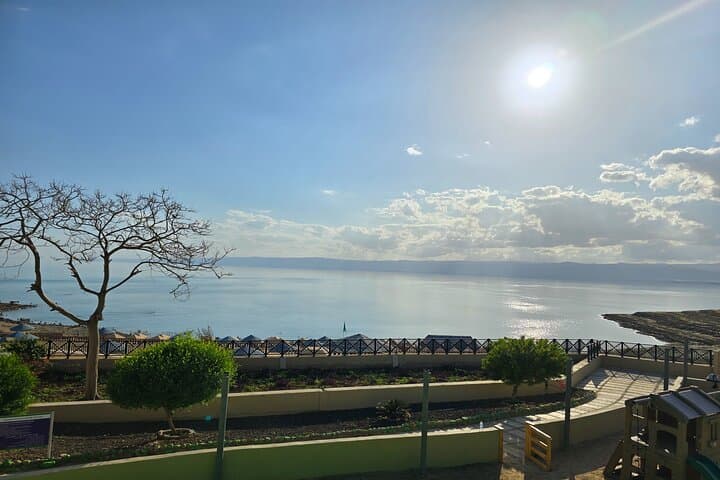
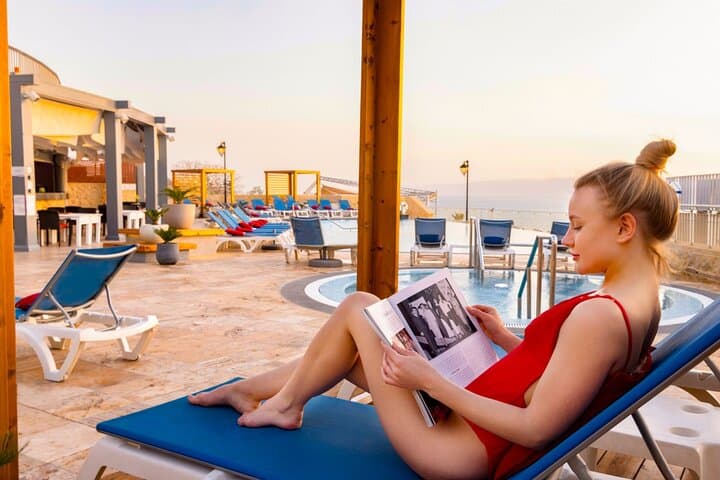
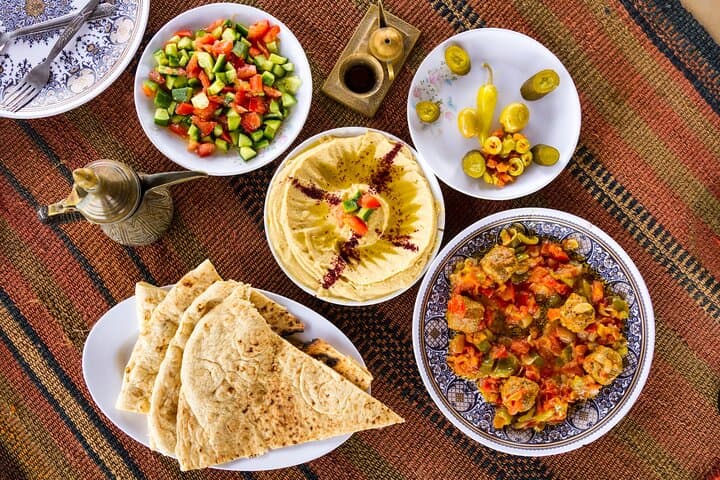
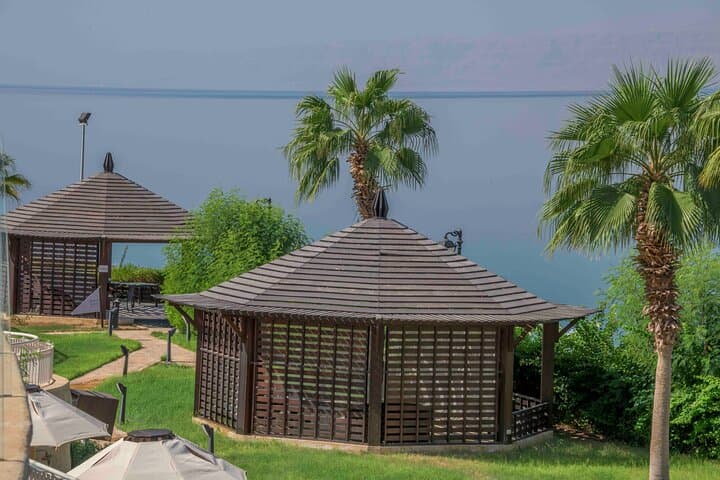
The desert thins as the road drops toward the Dead Sea; beige slopes give way to a metallic shimmer below. On arrival at a hotel beach in Sowayma, the water barely laps — it hangs heavy with salt and minerals, and the first instinct is to sit, lower yourself, and let buoyancy take over. Floating here is less a technique than a polite surrender: the sea lifts you and holds you level, while the sun pulls at your skin.
The desert thins as the road drops toward the Dead Sea; beige slopes give way to a metallic shimmer below. On arrival at a hotel beach in Sowayma, the water barely laps — it hangs heavy with salt and minerals, and the first instinct is to sit, lower yourself, and let buoyancy take over. Floating here is less a technique than a polite surrender: the sea lifts you and holds you level, while the sun pulls at your skin.
Geology explains the scene: the Dead Sea sits roughly 400 meters below sea level, a closed basin where evaporation concentrates salts and minerals. Its shoreline has seen human stories for millennia — from biblical references to early trade routes and therapeutic resorts that sprang up in the 20th century. Local culture around the Jordanian shore is straightforward and hospitality-driven; most hotels and beach clubs provide separate facilities, changing rooms, and modest restaurant options.
Practicalities matter. Expect a half-day schedule including pickup from central Amman, roughly an hour each way depending on traffic, and 2–3 hours at the beach or hotel pools. Bring a swimsuit, waterproof sandals, and a towel; avoid shaving before entering the water and keep cuts well-covered. Dead Sea mud is popular for skin treatments but usually charged extra; showers are available to rinse off salt.
Plan visits early or late in the day to reduce heat and crowds, and respect signage — shorelines can be slippery and the intense salt can irritate eyes and open wounds. With simple preparation, this short excursion delivers a uniquely buoyant, quietly restorative day on one of the planet’s most unusual shores.