THE ADVENTURE COLLECTIVE® · Independent discovery and booking for outdoor travel

Stand within sight of the only surviving wonder of the ancient world on a private half-day tour to the Giza Plateau. This guided outing pairs close-up views of the Great Pyramid and Sphinx with a 30-minute camel ride and practical tips for visiting comfortably.
Stand within sight of the only surviving wonder of the ancient world on a private half-day tour to the Giza Plateau. This guided outing pairs close-up views of the Great Pyramid and Sphinx with a 30-minute camel ride and practical tips for visiting comfortably.
You step from an air-conditioned car onto a wind-flattened stretch of desert and the Great Pyramid fills the sky — a blockwork mountain of ancient geometry that refuses to be small. Sand skitters at your ankles, and the Sphinx watches, patient as a weathered guardian, while camels shift and chew in the background.
Verified experiences and guided adventures in the surrounding area.
Operated by Egypt Gift Tours · Giza, Giza Governorate
You step from an air-conditioned car onto a wind-flattened stretch of desert and the Great Pyramid fills the sky — a blockwork mountain of ancient geometry that refuses to be small. Sand skitters at your ankles, and the Sphinx watches, patient as a weathered guardian, while camels shift and chew in the background.
This half-day private tour threads archaeology, geology and living local practice into a compact experience. The Great Pyramid of Khufu dates to around 2560 BCE; its core of limestone and granite sits on bedrock that was once part of a coastal plain before the Sahara advanced. The Sphinx, carved from the plateau’s bedrock, anchors funerary complexes that include the Valley Temple, where embalming rituals were performed. Nearby, the Sun Boat Museum conserves cedar planks from a ritual vessel — a tangible link to ancient timber trade and shipbuilding.
Practical guidance sits close to inspiration here. The tour typically runs about four hours with door-to-door pickup from Cairo or Giza, a certified Egyptologist guide, a 30-minute camel ride and bottled water supplied. Entrance fees to the plateau and optional interiors (like entering a pyramid) are usually paid on-site. Expect uneven sandy surfaces, strong sun and crowds during midday.
Wear sturdy closed-toe shoes, bring layered sun protection and a credit card for admissions. Respect site rules: climbing is prohibited and often enforced. Go early or late to dodge heat and get cleaner photos — the stones look best when light grazes their faces. This is an encounter with living history: tactile, fragile and best experienced with curiosity and care.
easy.
4 hours.
Suitable for most fitness levels; requires short periods of walking on uneven ground and standing.
No — entrance fees to the Giza Plateau and optional sites (like entering a pyramid) are typically paid on-site; card payment is usually accepted.
Yes — the tour includes a 30-minute camel ride around the pyramids as described in the itinerary.
The tour lists wheelchair accessibility; however, movement across sandy and uneven areas can be challenging—check with the operator about specific mobility needs.
Early morning or late afternoon offers cooler temperatures and softer light for photos; midday is hottest and busiest.
The Great Pyramid is the only surviving structure of the ancient Seven Wonders, built for Pharaoh Khufu around 2560 BCE using massive limestone and granite blocks.
The plateau faces wear from tourism and air pollution; stay on designated paths, avoid touching masonry and support licensed local guides to minimize impact.
Egypt Gift Tours operates guided outdoor trips and adventures with an emphasis on safety, stewardship, and memorable experiences.

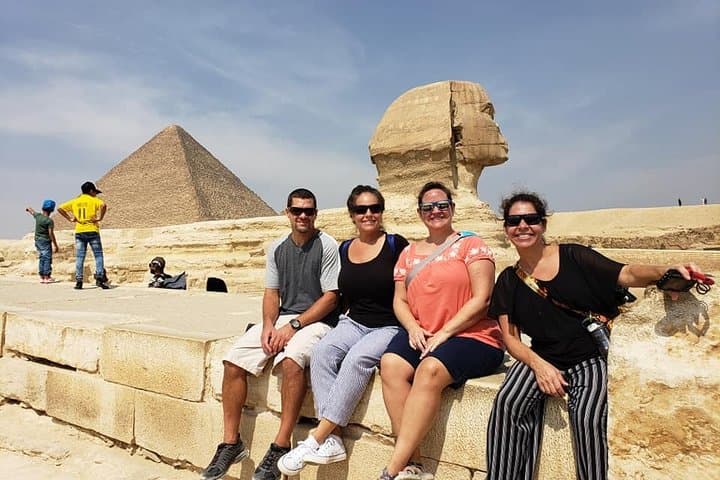


You step from an air-conditioned car onto a wind-flattened stretch of desert and the Great Pyramid fills the sky — a blockwork mountain of ancient geometry that refuses to be small. Sand skitters at your ankles, and the Sphinx watches, patient as a weathered guardian, while camels shift and chew in the background.
You step from an air-conditioned car onto a wind-flattened stretch of desert and the Great Pyramid fills the sky — a blockwork mountain of ancient geometry that refuses to be small. Sand skitters at your ankles, and the Sphinx watches, patient as a weathered guardian, while camels shift and chew in the background.
This half-day private tour threads archaeology, geology and living local practice into a compact experience. The Great Pyramid of Khufu dates to around 2560 BCE; its core of limestone and granite sits on bedrock that was once part of a coastal plain before the Sahara advanced. The Sphinx, carved from the plateau’s bedrock, anchors funerary complexes that include the Valley Temple, where embalming rituals were performed. Nearby, the Sun Boat Museum conserves cedar planks from a ritual vessel — a tangible link to ancient timber trade and shipbuilding.
Practical guidance sits close to inspiration here. The tour typically runs about four hours with door-to-door pickup from Cairo or Giza, a certified Egyptologist guide, a 30-minute camel ride and bottled water supplied. Entrance fees to the plateau and optional interiors (like entering a pyramid) are usually paid on-site. Expect uneven sandy surfaces, strong sun and crowds during midday.
Wear sturdy closed-toe shoes, bring layered sun protection and a credit card for admissions. Respect site rules: climbing is prohibited and often enforced. Go early or late to dodge heat and get cleaner photos — the stones look best when light grazes their faces. This is an encounter with living history: tactile, fragile and best experienced with curiosity and care.