THE ADVENTURE COLLECTIVE® · Independent discovery and booking for outdoor travel

Explore Gyeongju’s UNESCO treasures on a private full‑day tour that visits Bulguksa, Seokguram Grotto, royal tombs, Cheomseongdae and Donggung Palace. A guided, customizable route gives concentrated cultural context with door‑to‑door convenience.
Explore Gyeongju’s UNESCO treasures on a private full‑day tour that visits Bulguksa, Seokguram Grotto, royal tombs, Cheomseongdae and Donggung Palace. A guided, customizable route gives concentrated cultural context with door‑to‑door convenience.
You step from an air‑conditioned vehicle onto a flagstone approach framed by pines; the scent of damp earth and incense rises as Bulguksa’s stone pagodas and bridges draw your gaze. The day unfolds like chapters of an old chronicle—temple courtyards open into carved wood and quiet bells, a grotto holds a seated Buddha watched by carved attendants, and broad grassy mounds mark royal tombs where the wind reads the margins of history.
Verified experiences and guided adventures in the surrounding area.
Operated by Korea Go Tours · Gyeongju, North Gyeongsang
You step from an air‑conditioned vehicle onto a flagstone approach framed by pines; the scent of damp earth and incense rises as Bulguksa’s stone pagodas and bridges draw your gaze. The day unfolds like chapters of an old chronicle—temple courtyards open into carved wood and quiet bells, a grotto holds a seated Buddha watched by carved attendants, and broad grassy mounds mark royal tombs where the wind reads the margins of history.
Gyeongju served as the capital of the Silla Kingdom for nearly a millennium; its monuments are both cultural artifacts and records of early Korean astronomy, engineering and religious life. Cheomseongdae’s stacked stones count days as precisely as the observatory once tracked eclipses; the water of Wolji Pond mirrors the palace lights that once hosted court banquets. The city's granite and low hills speak of ancient geology shaped by volcanic flows and river sediment that cushioned settlements and preserved relics.
Practicalities follow the story. Expect a full‑day private tour (8–9 hours) with door‑to‑door pickup in Gyeongju, a professionally guided pace, and opportunities to pause for a traditional Korean lunch. Wear supportive walking shoes—the route includes uneven temple approaches, short trails, and stairs. Carry water, a sun layer, and a small daypack for camera gear and purchases; many sites limit large bags. Timing matters: Seokguram’s grotto can feel markedly cooler than the temple grounds, and Donggung Palace is especially photogenic at dusk when lamps ring Wolji Pond with reflection.
This tour trades strenuous exertion for layered cultural immersion—an accessible, sensory way to move through Korea’s past while staying grounded in today’s rhythms.
easy.
8–9 hours.
Light physical fitness—able to walk several short distances and negotiate stairs; suitable for most travelers
Admission is typically not included for some historic sites—confirm with the operator before booking to know which entries are covered.
Yes—this private tour includes pickup and drop‑off; specify your preferred pickup point when booking.
Transport and many public paths are accessible, but some sites (temple complexes and Cheomseongdae) have steps or uneven surfaces that may limit access; check in advance for specific needs.
Yes—the tour is private and customizable; popular additions include Hwangnidan‑gil, Gyochon Village, Woljeong Bridge or Yangdong Village based on your interests.
Gyeongju was the political and cultural heart of the Silla Kingdom (57 BCE–935 CE); many surviving sites—tombs, observatory, temples—reflect its role as an ancient capital.
Archaeological sites are protected and visitor numbers are managed at some locations; stick to marked paths, avoid touching relics and follow guide instructions to minimize impact.
Korea Go Tours operates guided outdoor trips and adventures with an emphasis on safety, stewardship, and memorable experiences.
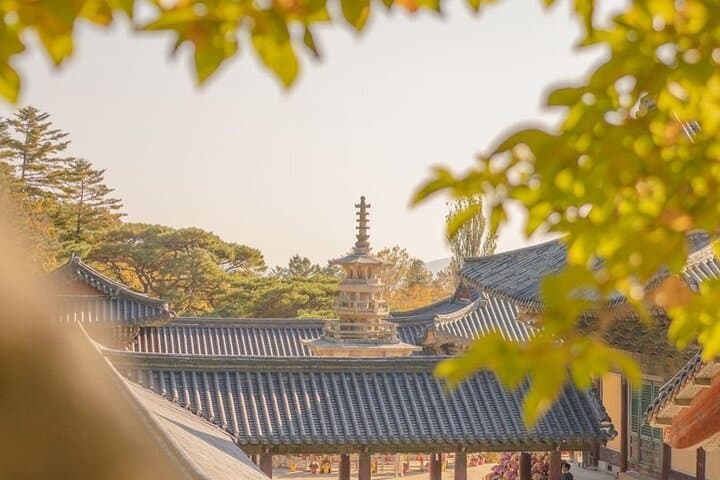
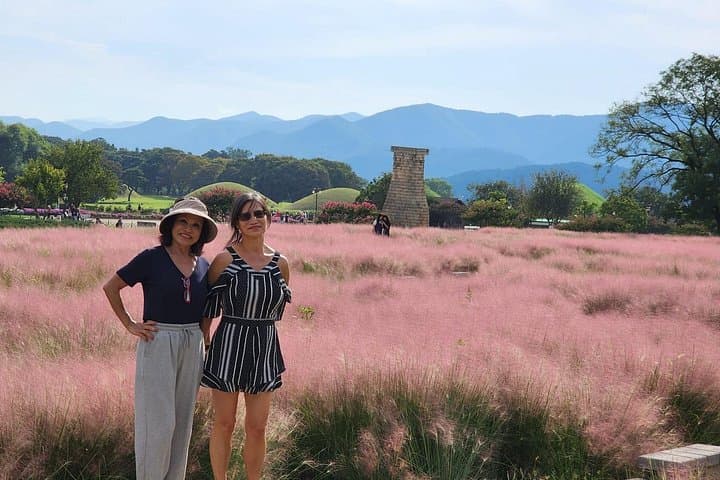
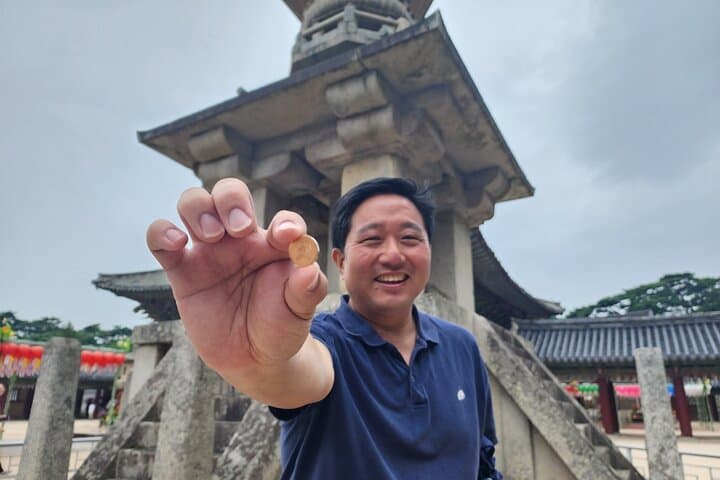
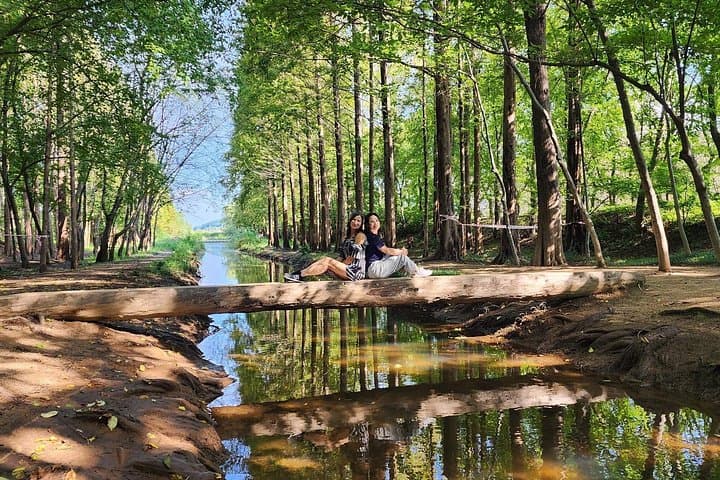
You step from an air‑conditioned vehicle onto a flagstone approach framed by pines; the scent of damp earth and incense rises as Bulguksa’s stone pagodas and bridges draw your gaze. The day unfolds like chapters of an old chronicle—temple courtyards open into carved wood and quiet bells, a grotto holds a seated Buddha watched by carved attendants, and broad grassy mounds mark royal tombs where the wind reads the margins of history.
You step from an air‑conditioned vehicle onto a flagstone approach framed by pines; the scent of damp earth and incense rises as Bulguksa’s stone pagodas and bridges draw your gaze. The day unfolds like chapters of an old chronicle—temple courtyards open into carved wood and quiet bells, a grotto holds a seated Buddha watched by carved attendants, and broad grassy mounds mark royal tombs where the wind reads the margins of history.
Gyeongju served as the capital of the Silla Kingdom for nearly a millennium; its monuments are both cultural artifacts and records of early Korean astronomy, engineering and religious life. Cheomseongdae’s stacked stones count days as precisely as the observatory once tracked eclipses; the water of Wolji Pond mirrors the palace lights that once hosted court banquets. The city's granite and low hills speak of ancient geology shaped by volcanic flows and river sediment that cushioned settlements and preserved relics.
Practicalities follow the story. Expect a full‑day private tour (8–9 hours) with door‑to‑door pickup in Gyeongju, a professionally guided pace, and opportunities to pause for a traditional Korean lunch. Wear supportive walking shoes—the route includes uneven temple approaches, short trails, and stairs. Carry water, a sun layer, and a small daypack for camera gear and purchases; many sites limit large bags. Timing matters: Seokguram’s grotto can feel markedly cooler than the temple grounds, and Donggung Palace is especially photogenic at dusk when lamps ring Wolji Pond with reflection.
This tour trades strenuous exertion for layered cultural immersion—an accessible, sensory way to move through Korea’s past while staying grounded in today’s rhythms.