THE ADVENTURE COLLECTIVE® · Independent discovery and booking for outdoor travel

Experience Florence from an insider’s vantage: a private guide leads you through the Uffizi’s masterpieces and then along the recently reopened Vasari Corridor, a 16th-century elevated passage with rare views over the Arno. Limited, nominative access makes this an intimate cultural walk worth pre-booking.
Experience Florence from an insider’s vantage: a private guide leads you through the Uffizi’s masterpieces and then along the recently reopened Vasari Corridor, a 16th-century elevated passage with rare views over the Arno. Limited, nominative access makes this an intimate cultural walk worth pre-booking.
You step out of a narrow Via Cavour doorway into Florence’s morning light and the guide’s voice folds the city’s past into the present. The stones underfoot—pietra serena in the piazzas, worn travertine on the bridge—hint at centuries of traffic and patronage. For the next three hours you’ll move between luminous museum halls and an elevated royal passage that peers over the Arno like a quiet, surveying eye.
Verified experiences and guided adventures in the surrounding area.
Operated by Ciao Florence Tours Srl · Florence, Tuscany
You step out of a narrow Via Cavour doorway into Florence’s morning light and the guide’s voice folds the city’s past into the present. The stones underfoot—pietra serena in the piazzas, worn travertine on the bridge—hint at centuries of traffic and patronage. For the next three hours you’ll move between luminous museum halls and an elevated royal passage that peers over the Arno like a quiet, surveying eye.
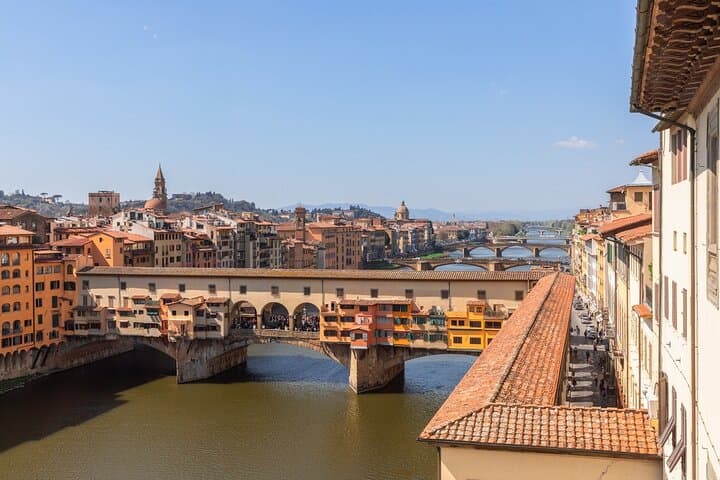
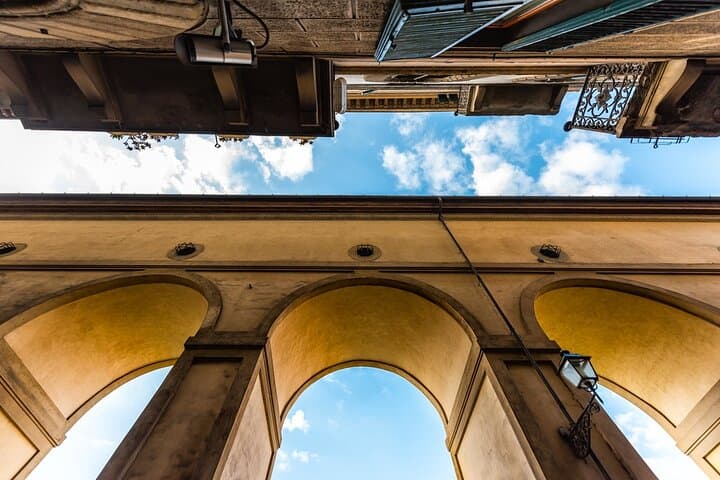
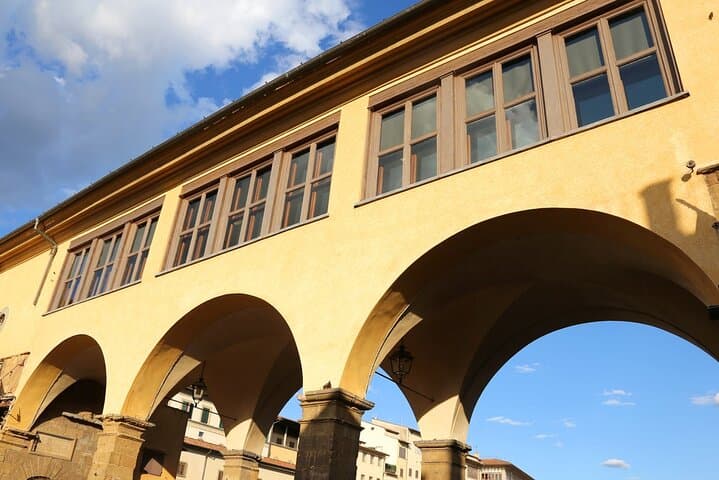
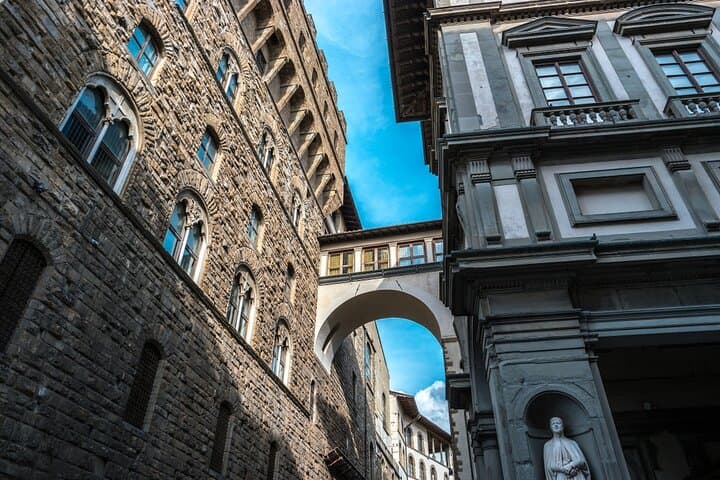
The Uffizi began as Medici offices in the 16th century and evolved into one of Italy’s great picture galleries; paintings by Giotto, Botticelli, Michelangelo and Leonardo comprise the core experience. The Vasari Corridor, designed by Giorgio Vasari in 1565, is a 750-meter raised route built so Cosimo I could cross the city unseen—today it offers rare, framed views of Ponte Vecchio and Florence’s rooftops. The corridor’s reopening after eight years is tightly managed: access is nominative, limited to small groups, and the guide follows museum rules (explanations inside the corridor are restricted).
Practical note: the tour combines about two hours inside the Uffizi with a 30–45 minute corridor passage and terrace moments; expect mostly flat, cobbled surfaces and brief stair negotiation. Bring a government ID for ticket checks, travel light (large backpacks can be refused), wear comfortable walking shoes, and plan for museum security screening. If you want photos, follow staff directions; flash and tripods are usually restricted. Book in advance, arrive 15 minutes early, and prepare for an intimate, historically layered walk through Florence’s civic heart.
easy.
3 hours.
Suitable for all fitness levels; involves standing and walking on cobbles for up to three hours with short stairs.
The corridor has reopened with limited, controlled access; visits are only via special reserved tours and tickets are nominative with strict capacity limits.
Museum rules typically prohibit guided explanations inside the corridor; the guide will point out highlights and provide commentary before and after that portion.
Photography policies vary—non-flash photography is commonly permitted but follow museum staff directions; flash and tripods are usually restricted.
Full names, dates of birth and passport/nationality details are required for each participant since the Vasari Corridor tickets are nominative and checked at entry.
The Vasari Corridor was commissioned in 1565 by Cosimo I de' Medici to link the Pitti Palace and Palazzo Vecchio; the Uffizi began as Medici government offices before becoming a public gallery in the 18th century.
Access is limited and nominative to reduce wear and preserve fragile interiors; visitors should follow museum rules to help protect artworks and historic fabric.
Ciao Florence Tours Srl operates guided outdoor trips and adventures with an emphasis on safety, stewardship, and memorable experiences.
You step out of a narrow Via Cavour doorway into Florence’s morning light and the guide’s voice folds the city’s past into the present. The stones underfoot—pietra serena in the piazzas, worn travertine on the bridge—hint at centuries of traffic and patronage. For the next three hours you’ll move between luminous museum halls and an elevated royal passage that peers over the Arno like a quiet, surveying eye.
You step out of a narrow Via Cavour doorway into Florence’s morning light and the guide’s voice folds the city’s past into the present. The stones underfoot—pietra serena in the piazzas, worn travertine on the bridge—hint at centuries of traffic and patronage. For the next three hours you’ll move between luminous museum halls and an elevated royal passage that peers over the Arno like a quiet, surveying eye.
The Uffizi began as Medici offices in the 16th century and evolved into one of Italy’s great picture galleries; paintings by Giotto, Botticelli, Michelangelo and Leonardo comprise the core experience. The Vasari Corridor, designed by Giorgio Vasari in 1565, is a 750-meter raised route built so Cosimo I could cross the city unseen—today it offers rare, framed views of Ponte Vecchio and Florence’s rooftops. The corridor’s reopening after eight years is tightly managed: access is nominative, limited to small groups, and the guide follows museum rules (explanations inside the corridor are restricted).
Practical note: the tour combines about two hours inside the Uffizi with a 30–45 minute corridor passage and terrace moments; expect mostly flat, cobbled surfaces and brief stair negotiation. Bring a government ID for ticket checks, travel light (large backpacks can be refused), wear comfortable walking shoes, and plan for museum security screening. If you want photos, follow staff directions; flash and tripods are usually restricted. Book in advance, arrive 15 minutes early, and prepare for an intimate, historically layered walk through Florence’s civic heart.