THE ADVENTURE COLLECTIVE® · Independent discovery and booking for outdoor travel

Explore the Taj Mahal and Agra Fort with a government-approved private guide. This four-hour tour combines close architectural reading, Mughal history, and practical tips for timing, dress, and photography.
Explore the Taj Mahal and Agra Fort with a government-approved private guide. This four-hour tour combines close architectural reading, Mughal history, and practical tips for timing, dress, and photography.
You step out of the heat and into a courtyard of white marble and shadow; the Taj Mahal rises ahead with the Yamuna river sliding quietly at its rear, the minarets standing like watchful guides. Early light picks out the carved inlay and calligraphy while a government-approved guide unfolds the story of Shah Jahan and Mumtaz Mahal.
Verified experiences and guided adventures in the surrounding area.
Operated by THE IMPERIAL TOURS India · Agra, Uttar Pradesh
You step out of the heat and into a courtyard of white marble and shadow; the Taj Mahal rises ahead with the Yamuna river sliding quietly at its rear, the minarets standing like watchful guides. Early light picks out the carved inlay and calligraphy while a government-approved guide unfolds the story of Shah Jahan and Mumtaz Mahal.
The Taj Mahal (completed mid-17th century) is a Mughal mausoleum of white Makrana marble set on a raised plinth; nearby Agra Fort is a sprawling red-sandstone citadel that predates and later housed Mughal courts. Geologically, the marble’s sheen owes to metamorphosed limestone from Rajasthan; culturally, both sites reflect Indo-Islamic architectural language—charbagh gardens, iwans, pietra dura inlay. The Yamuna’s floodplain shaped settlement patterns here, and local craftspeople continue stone inlay traditions in Agra’s bazaars.
Expect guided storytelling that alternates architectural detail with social history: imperial patronage, funerary practice, and the fort’s military role. Plan for walking across paved and polished marble surfaces; the operator typically supplies shoe covers and a short golf-cart transfer from parking. Bring layered sun protection, a reusable water bottle, and a camera (tripod rules vary).
Timing matters—arrive at opening or late afternoon to avoid peak crowds and midday heat. Respect local norms: modest dress and quiet behavior inside mausoleum spaces. The tour runs about four hours total, pairing close-up interpretation at the Taj with a measured walkthrough of Agra Fort’s halls, gates, and gardens. Practical rhythm, historical depth, and architectural detail make this a compact cultural day that’s easy to navigate for most travelers.
easy.
4 hours.
Suitable for most fitness levels; requires walking on flat and polished marble surfaces for several hours.
This tour provides guide services but does not include monument admission unless explicitly stated—purchase tickets separately or confirm with the operator before arrival.
Accessible routes exist and the operator lists wheelchair-accessible options; confirm specific assistance, golf-cart transfers, and surface conditions when booking.
Photography is allowed in most outdoor and courtyard areas; rules inside the main mausoleum can be restrictive—follow your guide and signage for flash and tripod policies.
The private tour runs about four hours total with moderate walking across level surfaces at both sites; expect up to a few miles of slow-paced walking with stops.
The Taj Mahal was commissioned by Shah Jahan in the mid-1600s as a mausoleum for Mumtaz Mahal; Agra Fort served as the Mughal imperial fortress and palace complex largely constructed in red sandstone.
High visitor numbers stress marble surfaces and gardens; use provided shoe covers, avoid touching inlay, and follow guide directions to reduce wear and litter.
THE IMPERIAL TOURS India operates guided outdoor trips and adventures with an emphasis on safety, stewardship, and memorable experiences.
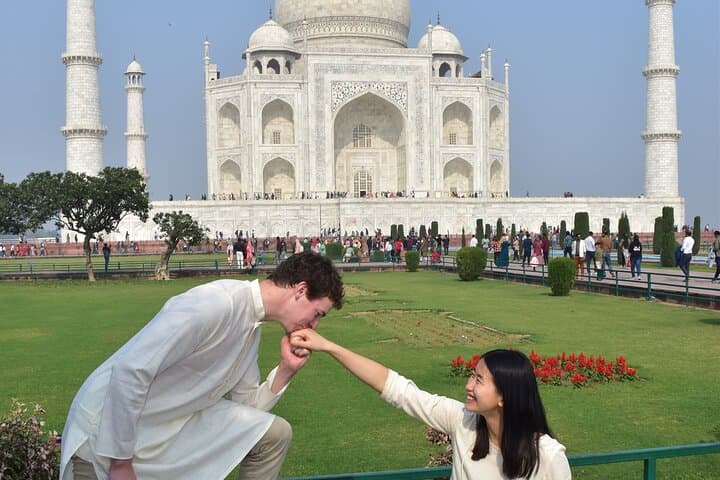
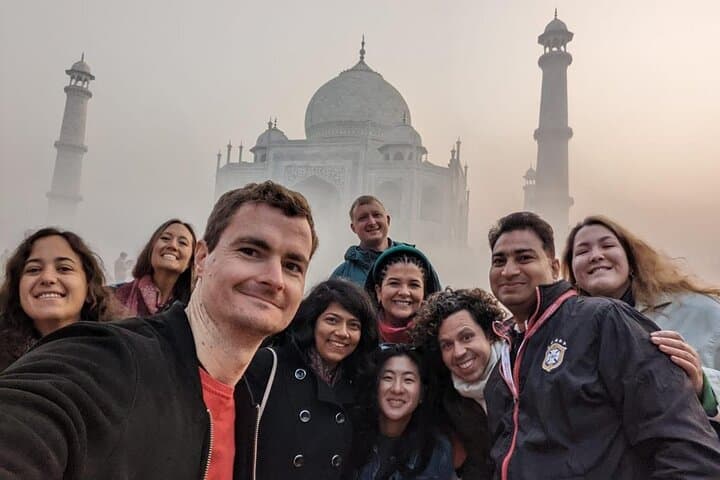
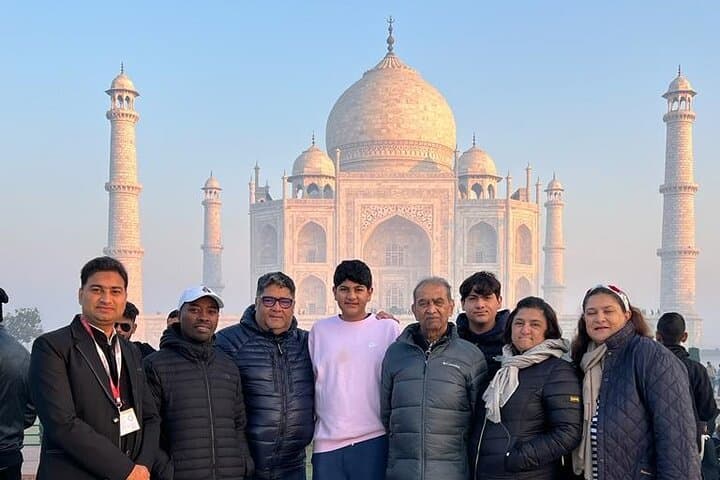

You step out of the heat and into a courtyard of white marble and shadow; the Taj Mahal rises ahead with the Yamuna river sliding quietly at its rear, the minarets standing like watchful guides. Early light picks out the carved inlay and calligraphy while a government-approved guide unfolds the story of Shah Jahan and Mumtaz Mahal.
You step out of the heat and into a courtyard of white marble and shadow; the Taj Mahal rises ahead with the Yamuna river sliding quietly at its rear, the minarets standing like watchful guides. Early light picks out the carved inlay and calligraphy while a government-approved guide unfolds the story of Shah Jahan and Mumtaz Mahal.
The Taj Mahal (completed mid-17th century) is a Mughal mausoleum of white Makrana marble set on a raised plinth; nearby Agra Fort is a sprawling red-sandstone citadel that predates and later housed Mughal courts. Geologically, the marble’s sheen owes to metamorphosed limestone from Rajasthan; culturally, both sites reflect Indo-Islamic architectural language—charbagh gardens, iwans, pietra dura inlay. The Yamuna’s floodplain shaped settlement patterns here, and local craftspeople continue stone inlay traditions in Agra’s bazaars.
Expect guided storytelling that alternates architectural detail with social history: imperial patronage, funerary practice, and the fort’s military role. Plan for walking across paved and polished marble surfaces; the operator typically supplies shoe covers and a short golf-cart transfer from parking. Bring layered sun protection, a reusable water bottle, and a camera (tripod rules vary).
Timing matters—arrive at opening or late afternoon to avoid peak crowds and midday heat. Respect local norms: modest dress and quiet behavior inside mausoleum spaces. The tour runs about four hours total, pairing close-up interpretation at the Taj with a measured walkthrough of Agra Fort’s halls, gates, and gardens. Practical rhythm, historical depth, and architectural detail make this a compact cultural day that’s easy to navigate for most travelers.