THE ADVENTURE COLLECTIVE® · Independent discovery and booking for outdoor travel

Explore three centuries of design with an expert private guide at the Victoria and Albert Museum. This tailored 3-hour tour highlights the museum's best collections and practical tips to make the most of your visit.
Explore three centuries of design with an expert private guide at the Victoria and Albert Museum. This tailored 3-hour tour highlights the museum's best collections and practical tips to make the most of your visit.
You step through the V&A’s heavy doors and the corridor opens like a corridor of time: tile, iron, and glass leading into rooms where objects keep their own biographies. The South Kensington light filters across carved stone and ceramics; your guide negotiates a route through galleries so vast a map feels necessary, selecting moments that catch the eye — a medieval reliquary, a brutalist poster, a fragile textile under soft illumination.
Verified experiences and guided adventures in the surrounding area.
Operated by ArtGuides · London, England
You step through the V&A’s heavy doors and the corridor opens like a corridor of time: tile, iron, and glass leading into rooms where objects keep their own biographies. The South Kensington light filters across carved stone and ceramics; your guide negotiates a route through galleries so vast a map feels necessary, selecting moments that catch the eye — a medieval reliquary, a brutalist poster, a fragile textile under soft illumination.
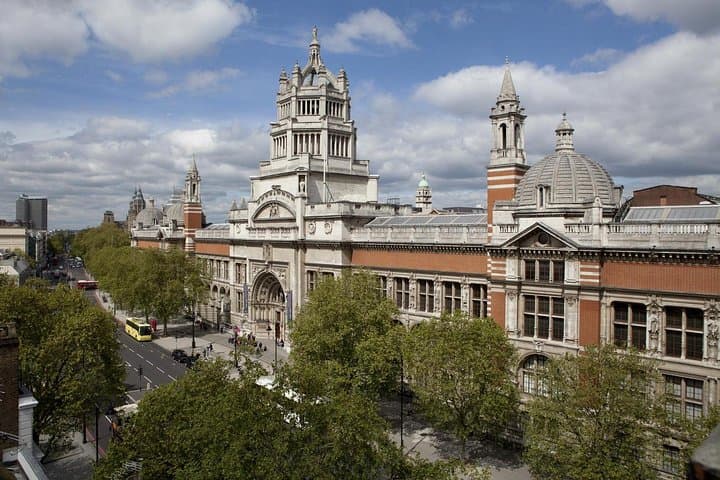
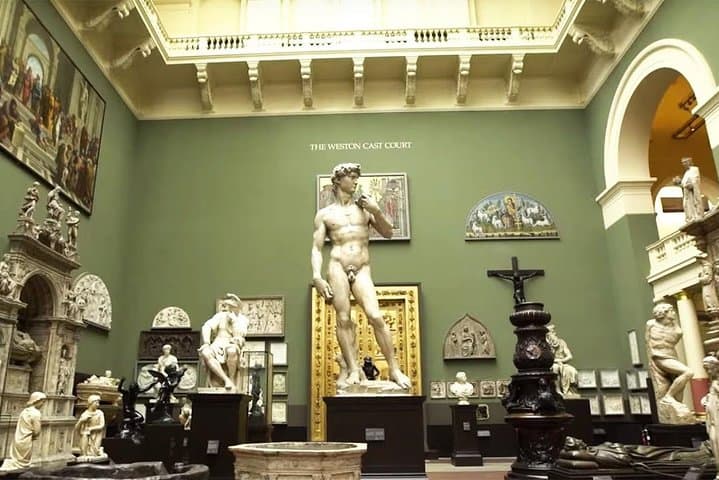
The V&A began as the South Kensington Museum in 1852, created to educate craftsmen and the public after the Great Exhibition. Its architecture reflects Victorian ambitions — terracotta façades and vaulted cast-iron galleries that hold decorative arts from Asia, Europe, and beyond. The famous Cast Courts replay ancient sculpture at scale; ceramics and fashion galleries trace procedural craft alongside social history.
Local context matters: the museum sits in a cultural cluster with the Natural History Museum and Royal Albert Hall a short walk away, making the neighborhood itself part of the visit. Guides often thread personal stories into objects, linking design choices to trade routes, industrial techniques, and shifting tastes.
Practical guidance: tours run three hours for up to six people, and can be tailored to fashion, ceramics, or sculpture. Admission to the permanent collection is free, but special exhibitions may require separate tickets. Wear comfortable shoes — you’ll walk several kilometers across floors and staircases. Allow time to linger in the John Madejski Garden or the museum café after your tour. Arrive 10–15 minutes early, flag any accessibility needs in advance, and bring a charged phone for photos of permitted displays.
easy.
3 hours.
Suitable for most fitness levels; requires standing and walking for extended periods.
Admission to the permanent collection is free; the tour fee covers the guide’s services. Special exhibitions with separate entry fees are generally not included unless stated.
This private tour accommodates up to six people, allowing personalized attention and flexibility in route and subject matter.
Yes—the V&A is largely wheelchair accessible and the operator can adapt the route; notify them of accessibility needs when booking.
Photography is usually permitted in permanent galleries without flash, but rules vary by object and exhibition—follow your guide’s instructions.
Founded in 1852 as the South Kensington Museum and renamed for Queen Victoria and Prince Albert, the V&A was created to educate industry and celebrate decorative arts.
The V&A maintains a large conservation department and controls light, humidity, and access to protect objects—visitors are asked not to touch displays and to follow signage to reduce wear.
ArtGuides operates guided outdoor trips and adventures with an emphasis on safety, stewardship, and memorable experiences.
You step through the V&A’s heavy doors and the corridor opens like a corridor of time: tile, iron, and glass leading into rooms where objects keep their own biographies. The South Kensington light filters across carved stone and ceramics; your guide negotiates a route through galleries so vast a map feels necessary, selecting moments that catch the eye — a medieval reliquary, a brutalist poster, a fragile textile under soft illumination.
You step through the V&A’s heavy doors and the corridor opens like a corridor of time: tile, iron, and glass leading into rooms where objects keep their own biographies. The South Kensington light filters across carved stone and ceramics; your guide negotiates a route through galleries so vast a map feels necessary, selecting moments that catch the eye — a medieval reliquary, a brutalist poster, a fragile textile under soft illumination.
The V&A began as the South Kensington Museum in 1852, created to educate craftsmen and the public after the Great Exhibition. Its architecture reflects Victorian ambitions — terracotta façades and vaulted cast-iron galleries that hold decorative arts from Asia, Europe, and beyond. The famous Cast Courts replay ancient sculpture at scale; ceramics and fashion galleries trace procedural craft alongside social history.
Local context matters: the museum sits in a cultural cluster with the Natural History Museum and Royal Albert Hall a short walk away, making the neighborhood itself part of the visit. Guides often thread personal stories into objects, linking design choices to trade routes, industrial techniques, and shifting tastes.
Practical guidance: tours run three hours for up to six people, and can be tailored to fashion, ceramics, or sculpture. Admission to the permanent collection is free, but special exhibitions may require separate tickets. Wear comfortable shoes — you’ll walk several kilometers across floors and staircases. Allow time to linger in the John Madejski Garden or the museum café after your tour. Arrive 10–15 minutes early, flag any accessibility needs in advance, and bring a charged phone for photos of permitted displays.