THE ADVENTURE COLLECTIVE® · Independent discovery and booking for outdoor travel

Explore Scotland’s modern seat of government with a licensed private guide. This 2–3 hour experience pairs architectural insight with the political history of devolution, offering skip‑the‑line entry and optional transport.
Explore Scotland’s modern seat of government with a licensed private guide. This 2–3 hour experience pairs architectural insight with the political history of devolution, offering skip‑the‑line entry and optional transport.
On a cool Edinburgh morning the Parliament’s angles and timbered roofs catch the light like an argument—sharp, deliberate, public.
Verified experiences and guided adventures in the surrounding area.
Operated by UK Tours & Activites · Edinburgh, Scotland
On a cool Edinburgh morning the Parliament’s angles and timbered roofs catch the light like an argument—sharp, deliberate, public.
Visitors assemble at Canongate and step into a building deliberately designed to be accessible: public galleries, open chambers, and materials that reference the Highlands and Lowlands. Your licensed guide threads political history through architectural detail — why the debating chamber bends, where oak and granite are used, and how the building’s small courtyards frame views of Arthur’s Seat and Holyrood Park.
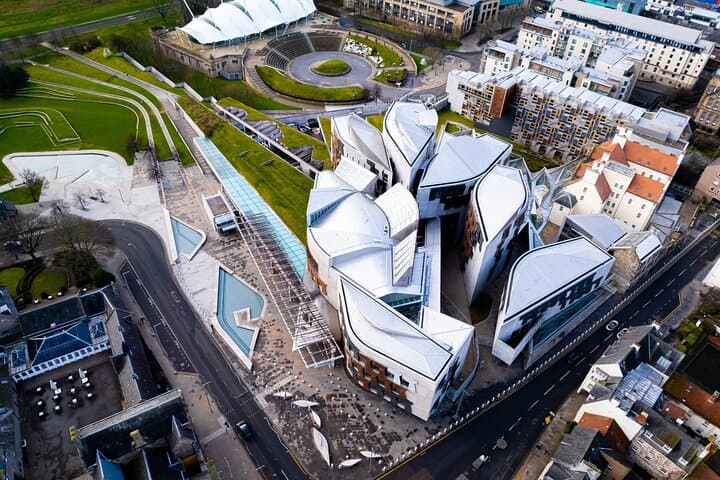
Since opening in 2004, the Scottish Parliament has been a flashpoint for conversations about identity, devolution, and civic design. Enric Miralles’ bold, asymmetric forms responded to site geology and the city’s layered past: medieval streets give way to a modern civic forum that deliberately faces the Crown’s palace and the Royal Mile.
Expect conversations about contemporary politics as much as stone and light. Guides explain legislative procedures, public access protocols, and the symbolic references embedded in panels, glass, and joinery.
Practicalities: tours run 2–3 hours depending on transport options; the 2‑hour option is walking-only. Wear weatherproof layers and comfortable shoes—the route includes paved forecourts and core security checkpoints. Photography rules and bag searches are standard; allow time for entry. Accessibility is good, with step-free routes and accessible transport available on request.
This is a close, readable introduction to modern Scottish civic life—an urban walk that pairs political context with readable architecture and clear routes for visitors who want to understand how design shapes democracy.
easy.
2–3 hours.
Basic walking fitness—able to stand and walk for short periods; suitable for most ages.
Yes—entry is included as part of the tour; some internal areas may still restrict photography or access for security reasons.
Yes—guides are available in several languages; note your preference when booking to confirm availability.
The Parliament and provided transport options are wheelchair accessible—inform the operator of needs in advance to arrange suitable transport.
Choose a walking-only 2‑hour tour or a 3‑hour option with round‑trip private transport; vehicles range from sedans to vans depending on group size.
The Scottish Parliament reopened as a devolved legislature in 1999, with the modern building completed in 2004 to symbolize a renewed civic identity and public accessibility.
Visitors are encouraged to respect restricted zones and follow guidelines to minimize wear on historic forecourts; book through licensed operators to support managed access.
UK Tours & Activites operates guided outdoor trips and adventures with an emphasis on safety, stewardship, and memorable experiences.
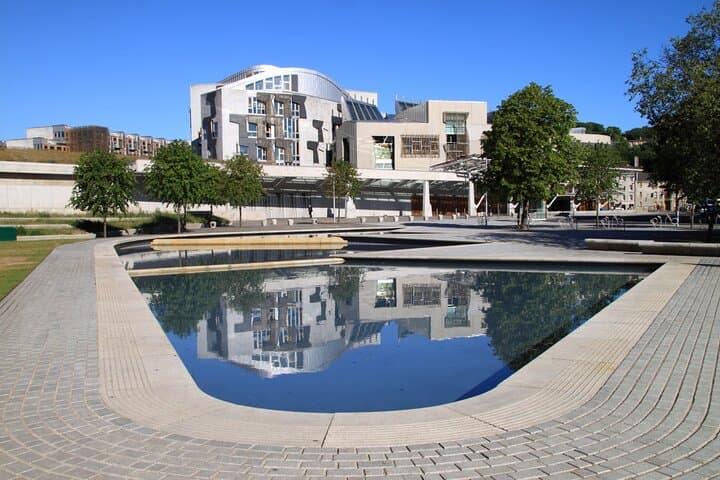
On a cool Edinburgh morning the Parliament’s angles and timbered roofs catch the light like an argument—sharp, deliberate, public.
On a cool Edinburgh morning the Parliament’s angles and timbered roofs catch the light like an argument—sharp, deliberate, public.
Visitors assemble at Canongate and step into a building deliberately designed to be accessible: public galleries, open chambers, and materials that reference the Highlands and Lowlands. Your licensed guide threads political history through architectural detail — why the debating chamber bends, where oak and granite are used, and how the building’s small courtyards frame views of Arthur’s Seat and Holyrood Park.
Since opening in 2004, the Scottish Parliament has been a flashpoint for conversations about identity, devolution, and civic design. Enric Miralles’ bold, asymmetric forms responded to site geology and the city’s layered past: medieval streets give way to a modern civic forum that deliberately faces the Crown’s palace and the Royal Mile.
Expect conversations about contemporary politics as much as stone and light. Guides explain legislative procedures, public access protocols, and the symbolic references embedded in panels, glass, and joinery.
Practicalities: tours run 2–3 hours depending on transport options; the 2‑hour option is walking-only. Wear weatherproof layers and comfortable shoes—the route includes paved forecourts and core security checkpoints. Photography rules and bag searches are standard; allow time for entry. Accessibility is good, with step-free routes and accessible transport available on request.
This is a close, readable introduction to modern Scottish civic life—an urban walk that pairs political context with readable architecture and clear routes for visitors who want to understand how design shapes democracy.