THE ADVENTURE COLLECTIVE® · Independent discovery and booking for outdoor travel

Walk Santiago’s beating center with a local guide on this private four-hour tour. From Santa Lucía Hill’s views to La Moneda and Plaza de Armas, the route pairs historical context with easy urban walking—perfect for first-time visitors who want depth without the crowds.
Walk Santiago’s beating center with a local guide on this private four-hour tour. From Santa Lucía Hill’s views to La Moneda and Plaza de Armas, the route pairs historical context with easy urban walking—perfect for first-time visitors who want depth without the crowds.
You step off the shaded pavement of Paseo Ahumada and the city opens: Santa Lucía Hill rises a short walk away, terraces climbing like a small stage where locals and visitors pause to look toward the Andes. The air carries the mixed scents of espresso, street food and distant eucalyptus, and the Mapocho River threads through the city as if urging you forward.
Verified experiences and guided adventures in the surrounding area.
Operated by Opatrip.com Chille · Santiago, Santiago Metropolitan Region
You step off the shaded pavement of Paseo Ahumada and the city opens: Santa Lucía Hill rises a short walk away, terraces climbing like a small stage where locals and visitors pause to look toward the Andes. The air carries the mixed scents of espresso, street food and distant eucalyptus, and the Mapocho River threads through the city as if urging you forward.
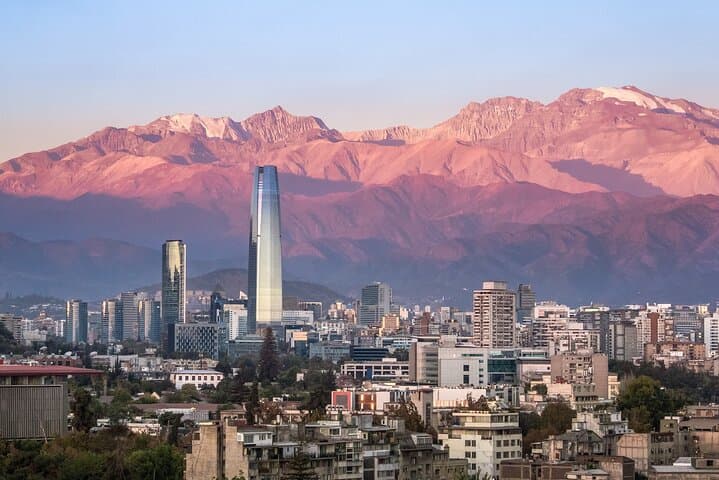
This four-hour private walking tour moves through Santiago’s political and cultural core. Founded by Pedro de Valdivia in 1541, the city’s colonial layout centers on Plaza de Armas, where the Metropolitan Cathedral and former stock exchange reflect neoclassical and republican eras. La Moneda Palace—once a colonial mint, now the presidential seat—anchors Chile’s modern political story. Santiago’s geology is visible in its setting: alluvial plains backed by rising Andean foothills, while volcanic and riverine processes have shaped the valley over millennia.
Culture here is tactile: fruit stalls, buskers on pedestrian streets and a café culture that keeps conversations lively. Local guides add context—how immigration, mining wealth and political upheaval shaped neighborhoods you’ll pass.
Practical notes: the itinerary is private and mostly on paved streets with short uphill sections (Santa Lucía). Expect around 4 hours with stops for photos and commentary. Morning or late-afternoon departures reduce heat and crowds. Wear stable walking shoes, carry sun protection and a small water bottle. Public transit and taxi access are straightforward; confirm pickup point with your operator. This is an urban exploration that rewards curiosity—look up, ask about plaster cornices and plaques, and let the city’s layers unfold at a steady pace.
easy.
4 hours.
Suitable for most fitness levels; involves several hours of walking and short stair sections
Yes — the itinerary is offered as a private tour with your own local guide for your group only.
Most of the route is on paved streets but there are stairs and short uphill sections at Santa Lucía; contact the operator to discuss accessibility needs.
The tour describes outside visits to landmarks; any paid museum entries are typically not included—confirm with the operator before booking.
Local guides commonly offer Spanish and English; request your preferred language at booking to confirm availability.
Santiago was founded in 1541 by Spanish conquistador Pedro de Valdivia; its central grid and main square reflect that colonial origin and the city’s growth through mining and political change.
Respect fragile historic façades, avoid littering in plazas and support local businesses to keep tourism sustainable; many central sites benefit from conservation-funded restoration projects.
Opatrip.com Chille operates guided outdoor trips and adventures with an emphasis on safety, stewardship, and memorable experiences.
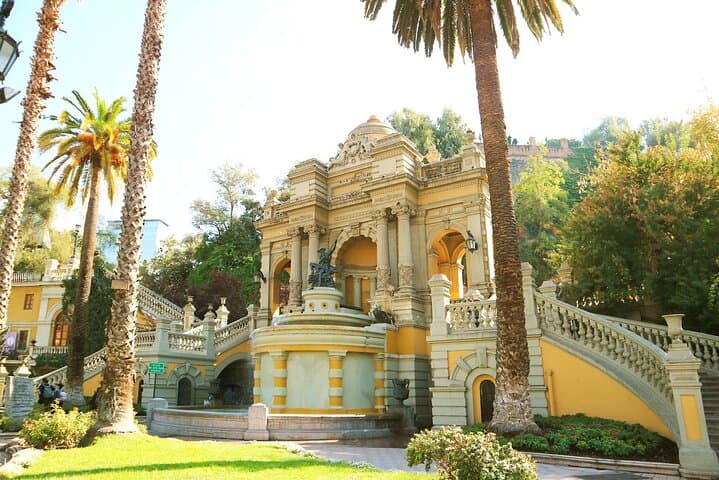

You step off the shaded pavement of Paseo Ahumada and the city opens: Santa Lucía Hill rises a short walk away, terraces climbing like a small stage where locals and visitors pause to look toward the Andes. The air carries the mixed scents of espresso, street food and distant eucalyptus, and the Mapocho River threads through the city as if urging you forward.
You step off the shaded pavement of Paseo Ahumada and the city opens: Santa Lucía Hill rises a short walk away, terraces climbing like a small stage where locals and visitors pause to look toward the Andes. The air carries the mixed scents of espresso, street food and distant eucalyptus, and the Mapocho River threads through the city as if urging you forward.
This four-hour private walking tour moves through Santiago’s political and cultural core. Founded by Pedro de Valdivia in 1541, the city’s colonial layout centers on Plaza de Armas, where the Metropolitan Cathedral and former stock exchange reflect neoclassical and republican eras. La Moneda Palace—once a colonial mint, now the presidential seat—anchors Chile’s modern political story. Santiago’s geology is visible in its setting: alluvial plains backed by rising Andean foothills, while volcanic and riverine processes have shaped the valley over millennia.
Culture here is tactile: fruit stalls, buskers on pedestrian streets and a café culture that keeps conversations lively. Local guides add context—how immigration, mining wealth and political upheaval shaped neighborhoods you’ll pass.
Practical notes: the itinerary is private and mostly on paved streets with short uphill sections (Santa Lucía). Expect around 4 hours with stops for photos and commentary. Morning or late-afternoon departures reduce heat and crowds. Wear stable walking shoes, carry sun protection and a small water bottle. Public transit and taxi access are straightforward; confirm pickup point with your operator. This is an urban exploration that rewards curiosity—look up, ask about plaster cornices and plaques, and let the city’s layers unfold at a steady pace.