THE ADVENTURE COLLECTIVE® · Independent discovery and booking for outdoor travel

Walk through streets carbonized by Vesuvius and learn everyday Roman life on a private two-hour tour led by a PhD archaeologist. Expect preserved wood, frescoed homes and detailed context that brings Herculaneum to life.
Walk through streets carbonized by Vesuvius and learn everyday Roman life on a private two-hour tour led by a PhD archaeologist. Expect preserved wood, frescoed homes and detailed context that brings Herculaneum to life.
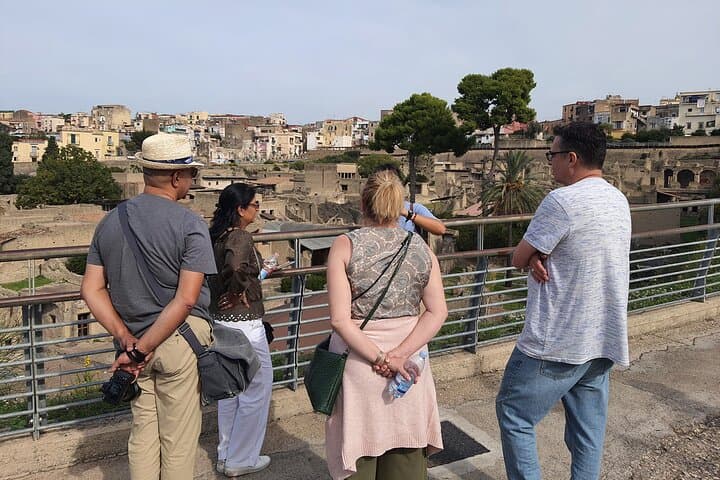
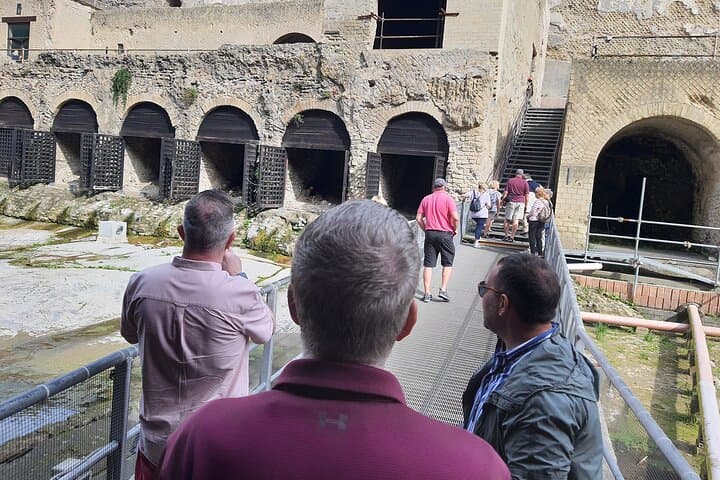
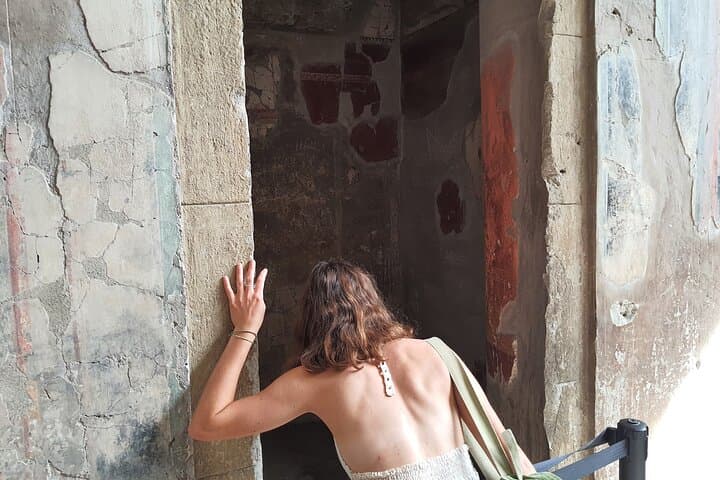
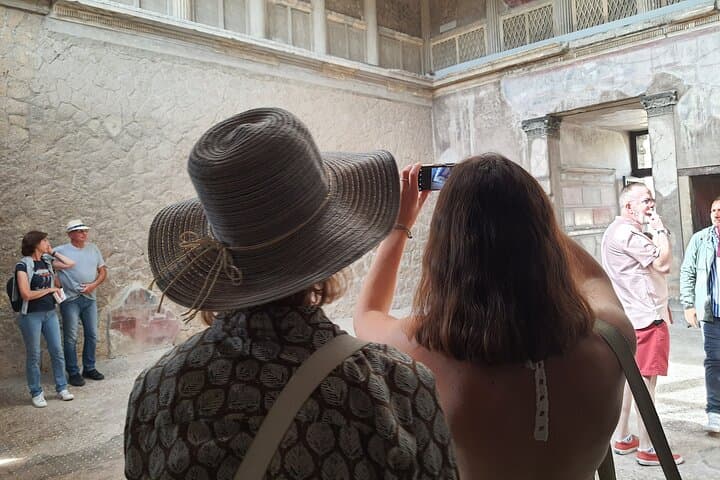
You step through an iron gate and the city exhales its past: sun-warmed stone alleys, timber thresholds carbonized but intact, and the shadow of Vesuvius guarding the horizon. The air smells faintly of dust and salt from the nearby Bay of Naples; voices trail off as a guide with academic training points out a fresco that still clings to its wall.
Verified experiences and guided adventures in the surrounding area.
Operated by Archeo Tours · Ercolano, Campania
You step through an iron gate and the city exhales its past: sun-warmed stone alleys, timber thresholds carbonized but intact, and the shadow of Vesuvius guarding the horizon. The air smells faintly of dust and salt from the nearby Bay of Naples; voices trail off as a guide with academic training points out a fresco that still clings to its wall.
Herculaneum—Ercolano in Italian—was buried in the same 79 AD eruption that destroyed Pompeii, but here a denser pyroclastic surge tempered preservation differently: wood, textiles and foodstuffs survive in ways they do not elsewhere. Geology and archaeology intersect in the compact volcanic deposits that sealed houses, baths and the ancient shoreline, giving a rare cross-section of Roman urban life. The town’s streets reveal Greek and Eastern trade influences in household shrines and imported ceramics, while the coastal economy and Roman engineering—especially water systems—speak to everyday logistics of empire.
Visitors will learn cultural nuances: family homes built for display, public baths as social engines, and the small electric hum of modern Ercolano just beyond the site gates. Practical guidance follows: wear sturdy shoes for uneven basalt and sediment surfaces; bring sun protection and a bottle of water—the site is exposed in places; allow roughly two hours for a focused private tour; and expect short walks between highlighted houses and public buildings.
A guided visit with a PhD archaeologist elevates the experience—contextualizing artifacts, conservation challenges and the human stories beneath the ash—so you leave with a clearer picture, not just of what was lost, but of how people lived here before the mountain changed everything.
easy.
2 hours.
Suitable for most fitness levels; involves standing and walking on uneven ground for up to two hours.
The private guided tour is approximately two hours, allowing time to see major houses, the waterfront area and public buildings.
The site is largely walkable but uneven; it’s generally suitable for children and those with moderate mobility, but accessibility is limited in some houses and along narrow lanes.
Entrance tickets to the Herculaneum Archaeological Park are included with this private tour as stated in the listing.
Some main routes are passable, but cobblestones and steps make full access difficult—contact the operator in advance to discuss specific needs.
Herculaneum was overwhelmed by a high-temperature pyroclastic flow in 79 AD; its rapid burial preserved organic materials rarely seen at other Roman sites.
Conservation focuses on stabilizing fragile frescoes and preventing salt crystallization from the nearby sea; visitor numbers are managed to limit wear on ancient surfaces.
Archeo Tours operates guided outdoor trips and adventures with an emphasis on safety, stewardship, and memorable experiences.
You step through an iron gate and the city exhales its past: sun-warmed stone alleys, timber thresholds carbonized but intact, and the shadow of Vesuvius guarding the horizon. The air smells faintly of dust and salt from the nearby Bay of Naples; voices trail off as a guide with academic training points out a fresco that still clings to its wall.
You step through an iron gate and the city exhales its past: sun-warmed stone alleys, timber thresholds carbonized but intact, and the shadow of Vesuvius guarding the horizon. The air smells faintly of dust and salt from the nearby Bay of Naples; voices trail off as a guide with academic training points out a fresco that still clings to its wall.
Herculaneum—Ercolano in Italian—was buried in the same 79 AD eruption that destroyed Pompeii, but here a denser pyroclastic surge tempered preservation differently: wood, textiles and foodstuffs survive in ways they do not elsewhere. Geology and archaeology intersect in the compact volcanic deposits that sealed houses, baths and the ancient shoreline, giving a rare cross-section of Roman urban life. The town’s streets reveal Greek and Eastern trade influences in household shrines and imported ceramics, while the coastal economy and Roman engineering—especially water systems—speak to everyday logistics of empire.
Visitors will learn cultural nuances: family homes built for display, public baths as social engines, and the small electric hum of modern Ercolano just beyond the site gates. Practical guidance follows: wear sturdy shoes for uneven basalt and sediment surfaces; bring sun protection and a bottle of water—the site is exposed in places; allow roughly two hours for a focused private tour; and expect short walks between highlighted houses and public buildings.
A guided visit with a PhD archaeologist elevates the experience—contextualizing artifacts, conservation challenges and the human stories beneath the ash—so you leave with a clearer picture, not just of what was lost, but of how people lived here before the mountain changed everything.