THE ADVENTURE COLLECTIVE® · Independent discovery and booking for outdoor travel

Explore the Giza Plateau with a private Egyptologist, skip long lines, and spend focused time at the Great Pyramid, Khafre’s tomb, and the Sphinx. This 4–5 hour private tour pairs archaeology and practical logistics for a stress-free visit.
Explore the Giza Plateau with a private Egyptologist, skip long lines, and spend focused time at the Great Pyramid, Khafre’s tomb, and the Sphinx. This 4–5 hour private tour pairs archaeology and practical logistics for a stress-free visit.
You arrive at the Giza Plateau under a wide, pale sky; wind lifts sand from the desert like a living map, and the pyramids stand with precise, geometric calm. A private Egyptologist meets you, and the day opens with the Great Pyramid’s angled face, its limestone blocks warm to the touch where tourists’ hands have smoothed them.
Verified experiences and guided adventures in the surrounding area.
Operated by Misk Tours · Giza, Giza Governorate
You arrive at the Giza Plateau under a wide, pale sky; wind lifts sand from the desert like a living map, and the pyramids stand with precise, geometric calm. A private Egyptologist meets you, and the day opens with the Great Pyramid’s angled face, its limestone blocks warm to the touch where tourists’ hands have smoothed them.
The three main pyramids date to Egypt’s Old Kingdom (c. 2600–2500 BCE), constructed as monumental royal tombs. The Sphinx, carved from the same plateau bedrock, watches the horizon—its enigmatic gaze layered with millennia of repair and legend. Geologically, you’re on Pleistocene limestone and sand deposited by ancient seas; the plateau’s quarried faces reveal the work of builders and time.
Culturally the site is both sacred and civic: ritual landscape, modern picnic spot, and a working archaeological zone. Local insight: visit early to catch softer light and fewer tour groups, and save time for the on-site Solar Boat Museum if you’ve booked entrance.
Practical guidance: expect uneven stone and packed sand underfoot, bring sun protection and a refillable bottle, and plan for 4–5 hours including hotel transfer. Photography is straightforward but be mindful of restricted areas—climbing the monuments is illegal and damages the fabric of the site. Your private guide handles logistics and permits, so you can focus on the scale and history without waiting in lines.
The advantage of a private tour is pace: more time at viewpoints, tailored storytelling, and the option to add a short camel ride if included in your package.
easy.
4–5 hours.
Suitable for most fitness levels; requires standing and walking on uneven stone and sand for several hours.
Some booking options include entrance fees and the Solar Boat Museum; check your chosen option—the product notes that entrance fees are included if you select the all-inclusive price.
Yes—this private tour includes hotel pickup and drop-off from Cairo or Giza hotels as part of the service.
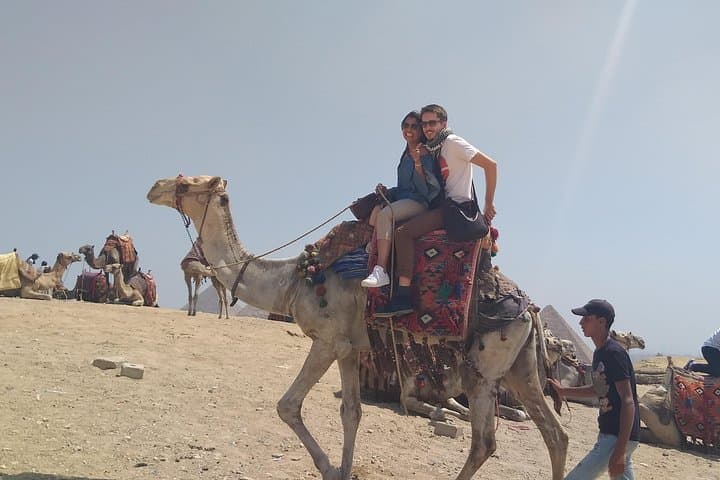
A 25-minute camel ride is offered only with the all-inclusive package option; confirm at booking to guarantee availability.
The tour is labeled physically easy, but the site has uneven terrain and sand—guests with limited mobility should consult the operator in advance to discuss accessibility and vehicle drop-off points.
The three major pyramids were built during Egypt’s Old Kingdom (c. 2600–2500 BCE) as royal tombs; the Sphinx is associated with the pharaoh Khafre and carved from bedrock on the plateau.
Visitor pressure and erosion are ongoing concerns—stay on designated paths, avoid touching fragile masonry where requested, and follow guide instructions to minimize impact.
Misk Tours operates guided outdoor trips and adventures with an emphasis on safety, stewardship, and memorable experiences.
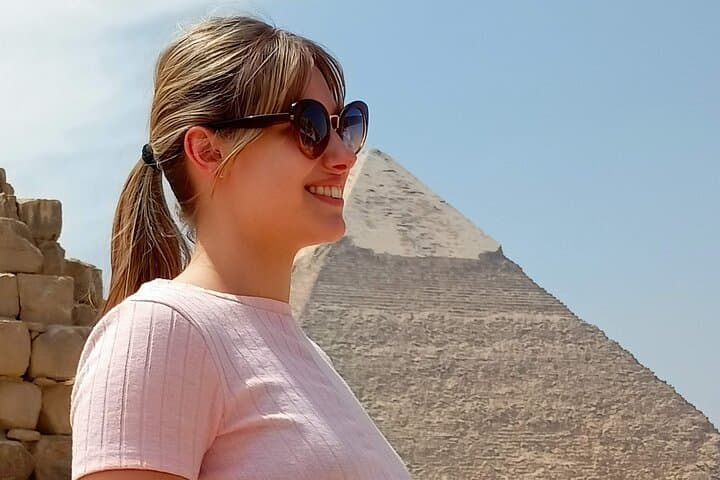
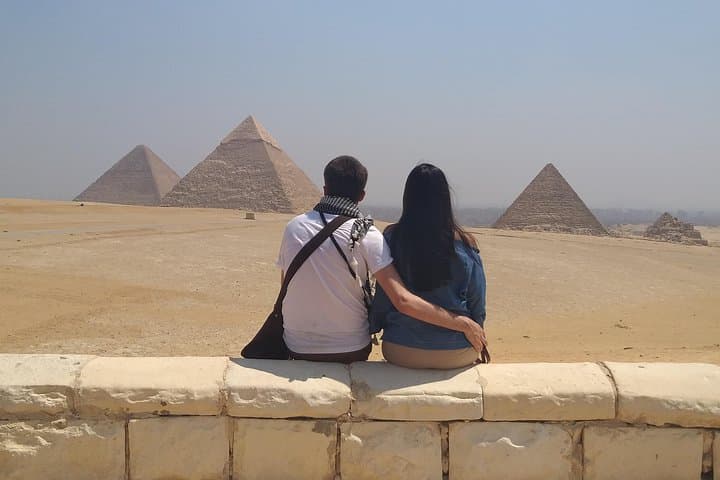
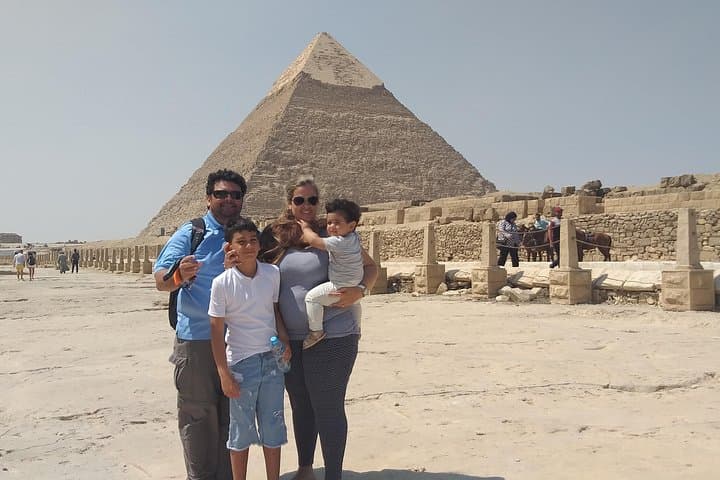
You arrive at the Giza Plateau under a wide, pale sky; wind lifts sand from the desert like a living map, and the pyramids stand with precise, geometric calm. A private Egyptologist meets you, and the day opens with the Great Pyramid’s angled face, its limestone blocks warm to the touch where tourists’ hands have smoothed them.
You arrive at the Giza Plateau under a wide, pale sky; wind lifts sand from the desert like a living map, and the pyramids stand with precise, geometric calm. A private Egyptologist meets you, and the day opens with the Great Pyramid’s angled face, its limestone blocks warm to the touch where tourists’ hands have smoothed them.
The three main pyramids date to Egypt’s Old Kingdom (c. 2600–2500 BCE), constructed as monumental royal tombs. The Sphinx, carved from the same plateau bedrock, watches the horizon—its enigmatic gaze layered with millennia of repair and legend. Geologically, you’re on Pleistocene limestone and sand deposited by ancient seas; the plateau’s quarried faces reveal the work of builders and time.
Culturally the site is both sacred and civic: ritual landscape, modern picnic spot, and a working archaeological zone. Local insight: visit early to catch softer light and fewer tour groups, and save time for the on-site Solar Boat Museum if you’ve booked entrance.
Practical guidance: expect uneven stone and packed sand underfoot, bring sun protection and a refillable bottle, and plan for 4–5 hours including hotel transfer. Photography is straightforward but be mindful of restricted areas—climbing the monuments is illegal and damages the fabric of the site. Your private guide handles logistics and permits, so you can focus on the scale and history without waiting in lines.
The advantage of a private tour is pace: more time at viewpoints, tailored storytelling, and the option to add a short camel ride if included in your package.