THE ADVENTURE COLLECTIVE® · Independent discovery and booking for outdoor travel

A private, half-day Egyptologist-led visit to the Giza Plateau that bundles hotel pickup, entrance fees and a camel ride. Ideal for travelers who want context and comfort while exploring Khufu, Khafre, Menkaure and the Great Sphinx.
A private, half-day Egyptologist-led visit to the Giza Plateau that bundles hotel pickup, entrance fees and a camel ride. Ideal for travelers who want context and comfort while exploring Khufu, Khafre, Menkaure and the Great Sphinx.
The plateau opens before you like an ancient stage: limestone blocks glow from the first light, wind carries sand in thin ribbons, and the three pyramids stand as angles of human ambition against an immense sky.
Verified experiences and guided adventures in the surrounding area.
Operated by Get Egypt Vacation · Giza, Giza Governorate
The plateau opens before you like an ancient stage: limestone blocks glow from the first light, wind carries sand in thin ribbons, and the three pyramids stand as angles of human ambition against an immense sky.
This private half-day tour places an Egyptologist at your side to explain the Old Kingdom feats—Khufu’s engineering gamble, Khafre’s ridge-line illusion, Menkaure’s more modest scale—and why the Sphinx keeps its watch. The geology of the site is simple and brutal: Nubian limestone and wind-polished sand, the raw materials that both framed and preserved pharaonic monuments.
Expect cultural notes along the way about burial rites, quarrying methods and the later reuse of stones in Cairo’s medieval buildings. Local insights include the Solar Boat Museum beside Khufu’s base and vantage points on the plateau that photographers prize for sunrise and sunset light.
Logistics are straightforward: the operator handles door-to-door transfers and entrance fees, leaving you to walk on compacted stone paths, climb a few low ramps and take an optional 30-minute camel ride across the sands. Plan for uneven surfaces, sun exposure and brief periods of standing while your guide interprets hieroglyphs and sightlines. Bring a reusable water bottle, sun protection and comfortable shoes; move at a steady pace to make the most of the three–four hour window.
The tone here is practical: the wonders are spectacular, but preparation—from timing your visit to respecting protected areas—makes them accessible and sustainable for every traveler.
easy.
3–4 hours.
Light walking on uneven surfaces; suitable for most fitness levels but includes short climbs and standing periods
Yes—the tour price covers entrance to the Giza Plateau and the sites listed in the itinerary.
Yes—round-trip transfer by air-conditioned vehicle from central Cairo hotels is included in the booking.
Yes—an optional 30-minute camel ride is offered on the plateau; follow the handler’s safety instructions and confirm any extra charges or tipping.
Dress modestly out of respect—avoid very short shorts or bare shoulders—and be prepared for bag checks at entry points; climbing on the monuments is prohibited.
The Giza complex dates to Egypt’s Fourth Dynasty (c. 2600–2500 BCE), built as monumental tomb complexes for Khufu, Khafre and Menkaure and surrounded by subsidiary tombs and workers’ settlements.
High visitor numbers and wind-driven erosion strain fragile surfaces; stick to marked paths, avoid touching carved stone and follow guide instructions to minimize impact.
Get Egypt Vacation operates guided outdoor trips and adventures with an emphasis on safety, stewardship, and memorable experiences.
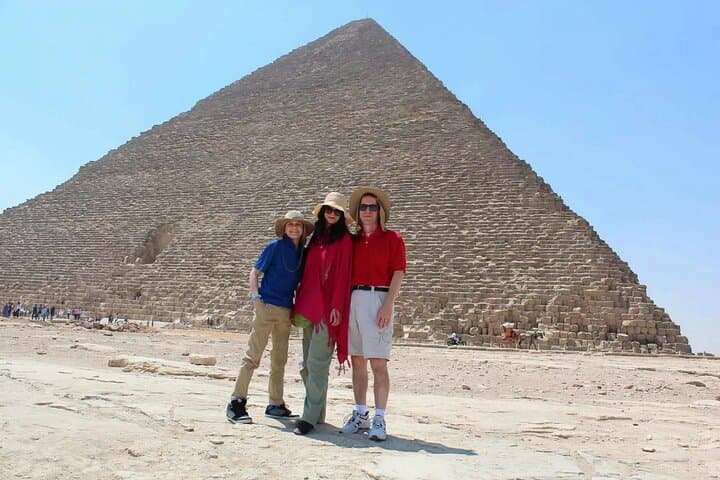


The plateau opens before you like an ancient stage: limestone blocks glow from the first light, wind carries sand in thin ribbons, and the three pyramids stand as angles of human ambition against an immense sky.
The plateau opens before you like an ancient stage: limestone blocks glow from the first light, wind carries sand in thin ribbons, and the three pyramids stand as angles of human ambition against an immense sky.
This private half-day tour places an Egyptologist at your side to explain the Old Kingdom feats—Khufu’s engineering gamble, Khafre’s ridge-line illusion, Menkaure’s more modest scale—and why the Sphinx keeps its watch. The geology of the site is simple and brutal: Nubian limestone and wind-polished sand, the raw materials that both framed and preserved pharaonic monuments.
Expect cultural notes along the way about burial rites, quarrying methods and the later reuse of stones in Cairo’s medieval buildings. Local insights include the Solar Boat Museum beside Khufu’s base and vantage points on the plateau that photographers prize for sunrise and sunset light.
Logistics are straightforward: the operator handles door-to-door transfers and entrance fees, leaving you to walk on compacted stone paths, climb a few low ramps and take an optional 30-minute camel ride across the sands. Plan for uneven surfaces, sun exposure and brief periods of standing while your guide interprets hieroglyphs and sightlines. Bring a reusable water bottle, sun protection and comfortable shoes; move at a steady pace to make the most of the three–four hour window.
The tone here is practical: the wonders are spectacular, but preparation—from timing your visit to respecting protected areas—makes them accessible and sustainable for every traveler.