THE ADVENTURE COLLECTIVE® · Independent discovery and booking for outdoor travel

Leave Siem Reap for a private, hour-long drive east to Beng Mealea, an unrestored 12th‑century sandstone temple where roots lift lintels and fallen blocks invite exploration. This guided half-day trip blends on-site archaeology with practical logistics like transport, terrain, and the best light for photos.
Leave Siem Reap for a private, hour-long drive east to Beng Mealea, an unrestored 12th‑century sandstone temple where roots lift lintels and fallen blocks invite exploration. This guided half-day trip blends on-site archaeology with practical logistics like transport, terrain, and the best light for photos.
You arrive from Siem Reap on a ribbon of road that peels away from the city and pushes east, the engine humming while trees begin to crowd the windows. The first glimpse of Beng Mealea is disorienting: towers fractured into heaps, sandstone blocks scattered like the bones of an ancient edifice, fig roots threading through lintels and daring you to follow.
Verified experiences and guided adventures in the surrounding area.
Operated by Around Cambodia Travel · Siem Reap, Siem Reap Province
You arrive from Siem Reap on a ribbon of road that peels away from the city and pushes east, the engine humming while trees begin to crowd the windows. The first glimpse of Beng Mealea is disorienting: towers fractured into heaps, sandstone blocks scattered like the bones of an ancient edifice, fig roots threading through lintels and daring you to follow.
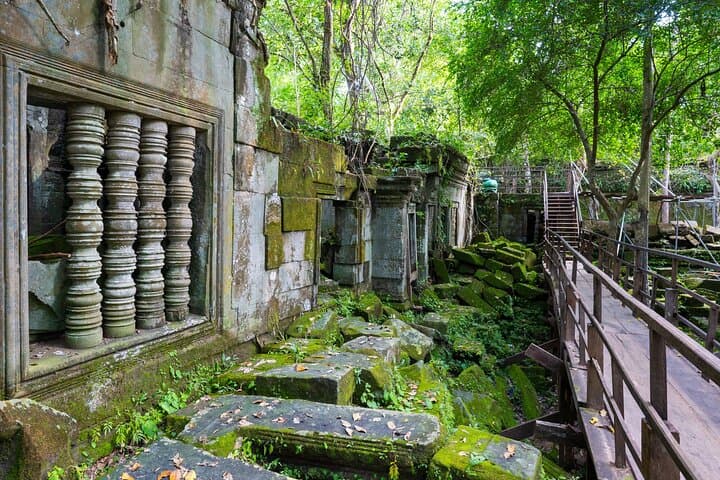
Built in the 12th century in the Angkor Wat style, Beng Mealea was constructed from sandstone and originally dedicated to Hindu rites though later Buddhist imagery appears in its carvings. Unlike Angkor’s restored complexes, Beng Mealea remains largely unrestored—its courtyards and corridors claim back the jungle, and the architecture reads as both ruin and living place. Geologically, the soft sandstone erodes and breaks, leaving many galleries collapsed and creating a landscape of rubble, low walls, and precarious steps.
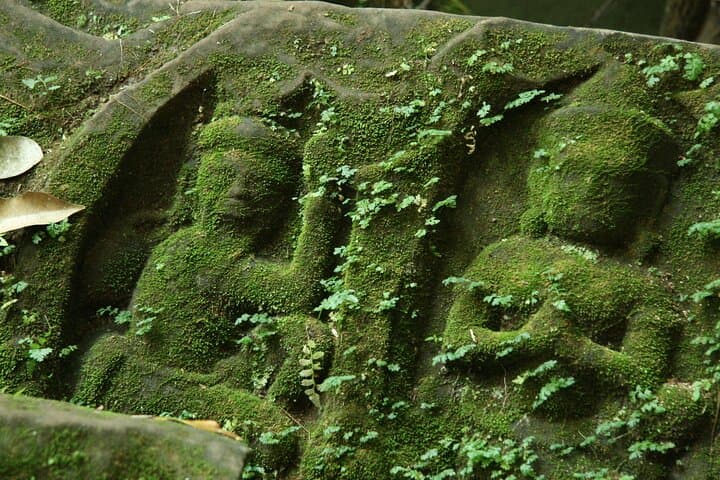
Local guides point out faint bas-reliefs, hidden doorways and the way later villagers repurposed stone. Culture here is tactile: monks still visit, and nearby villages maintain ancestral ties to the site.
Practical guidance: plan a 5‑hour window—roughly 1–1.5 hours each way from Siem Reap and about 2–3 hours on-site. Wear sturdy, closed-toe shoes for uneven sandstone and loose rubble; bring at least 1–2 liters of water, sun protection, and insect repellent. Admission is paid separately at the site; confirm current fees before you go. A private, air‑conditioned car and driver mean flexibility—ask your guide to point out quieter corners and give time for photography away from the busiest entrance routes. Morning or late afternoon light softens the stone and cools the walk; midday can be hot and bright. Beng Mealea rewards slow exploration: let the ruins set the pace, and watch the jungle watch back.
moderate.
Approximately 5 hours (including transport).
Moderate fitness: able to walk over uneven stone, climb short flights of ruin steps and stand for 1–2 hours exploring
No; admission is not included. Visitors usually pay an entrance fee at the site—confirm the current rate with your operator before travelling.
Expect roughly 1–1.5 hours each way depending on traffic and route, making the total experience about five hours including a lunch stop.
The site has uneven ground, loose stones and some steep, narrow steps; families should supervise children and older visitors should assess mobility — the tour notes moderate fitness is required.
Photography is allowed; drone use is typically restricted or requires permits—check current local regulations and the operator’s policy before flying.
Built in the early 12th century in the Angkor Wat architectural style, Beng Mealea was likely dedicated to Hindu rituals and later accumulated Buddhist iconography as regional beliefs shifted.
Because the site is largely unrestored, visitors should avoid climbing unstable piles of stone and follow paths indicated by guides; local conservation efforts focus on limiting erosion and balancing visitor access with the temple’s fragile fabric.
Around Cambodia Travel operates guided outdoor trips and adventures with an emphasis on safety, stewardship, and memorable experiences.
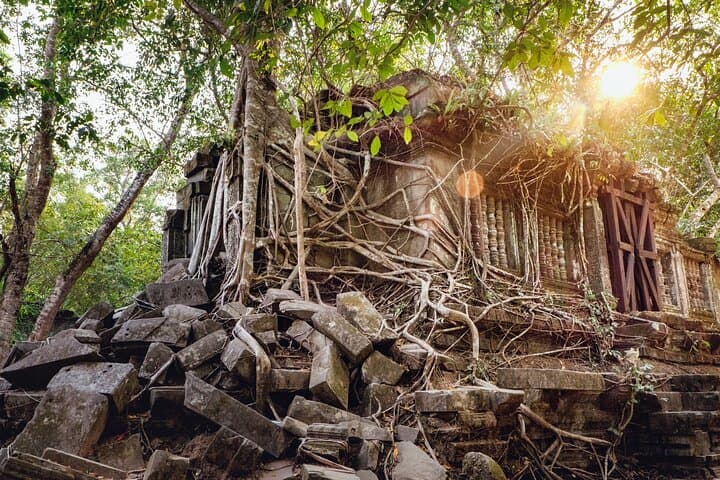
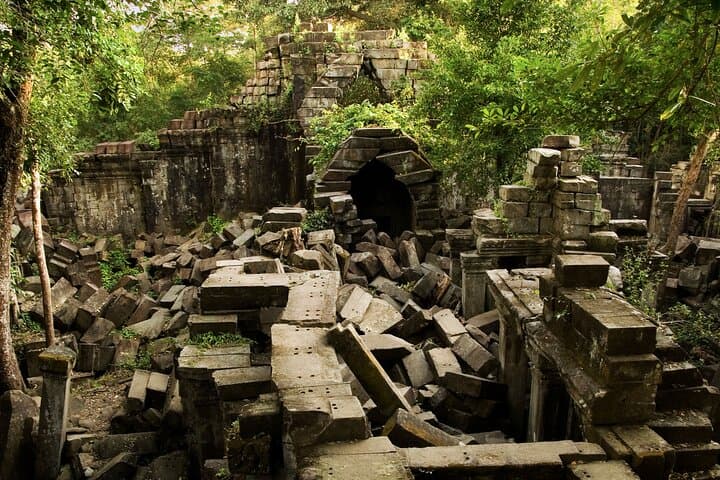
You arrive from Siem Reap on a ribbon of road that peels away from the city and pushes east, the engine humming while trees begin to crowd the windows. The first glimpse of Beng Mealea is disorienting: towers fractured into heaps, sandstone blocks scattered like the bones of an ancient edifice, fig roots threading through lintels and daring you to follow.
You arrive from Siem Reap on a ribbon of road that peels away from the city and pushes east, the engine humming while trees begin to crowd the windows. The first glimpse of Beng Mealea is disorienting: towers fractured into heaps, sandstone blocks scattered like the bones of an ancient edifice, fig roots threading through lintels and daring you to follow.
Built in the 12th century in the Angkor Wat style, Beng Mealea was constructed from sandstone and originally dedicated to Hindu rites though later Buddhist imagery appears in its carvings. Unlike Angkor’s restored complexes, Beng Mealea remains largely unrestored—its courtyards and corridors claim back the jungle, and the architecture reads as both ruin and living place. Geologically, the soft sandstone erodes and breaks, leaving many galleries collapsed and creating a landscape of rubble, low walls, and precarious steps.
Local guides point out faint bas-reliefs, hidden doorways and the way later villagers repurposed stone. Culture here is tactile: monks still visit, and nearby villages maintain ancestral ties to the site.
Practical guidance: plan a 5‑hour window—roughly 1–1.5 hours each way from Siem Reap and about 2–3 hours on-site. Wear sturdy, closed-toe shoes for uneven sandstone and loose rubble; bring at least 1–2 liters of water, sun protection, and insect repellent. Admission is paid separately at the site; confirm current fees before you go. A private, air‑conditioned car and driver mean flexibility—ask your guide to point out quieter corners and give time for photography away from the busiest entrance routes. Morning or late afternoon light softens the stone and cools the walk; midday can be hot and bright. Beng Mealea rewards slow exploration: let the ruins set the pace, and watch the jungle watch back.