THE ADVENTURE COLLECTIVE® · Independent discovery and booking for outdoor travel

A private half-day circuit from Split that links Roman ruins, a clifftop medieval fortress, a family agro-park tasting, and a karst cave. Perfect for travelers who want history, geology and local flavors without the hassle of transfers.
A private half-day circuit from Split that links Roman ruins, a clifftop medieval fortress, a family agro-park tasting, and a karst cave. Perfect for travelers who want history, geology and local flavors without the hassle of transfers.
You leave Split’s harbor behind and the Adriatic light slides across the windshield as your private driver sets the rhythm for the day. Roads climb away from the coast and the hinterland opens: olive groves, terraced vineyards and limestone ridges that seem to lean toward the sea.
Verified experiences and guided adventures in the surrounding area.
Operated by That´s it! · Split, Split-Dalmatia County
You leave Split’s harbor behind and the Adriatic light slides across the windshield as your private driver sets the rhythm for the day. Roads climb away from the coast and the hinterland opens: olive groves, terraced vineyards and limestone ridges that seem to lean toward the sea.
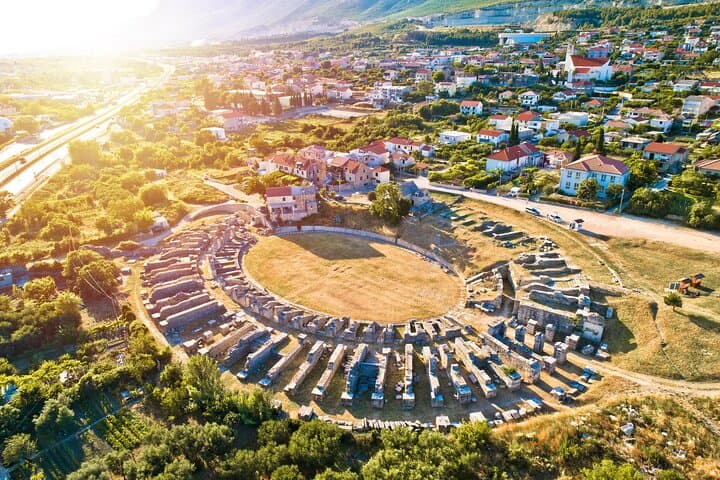
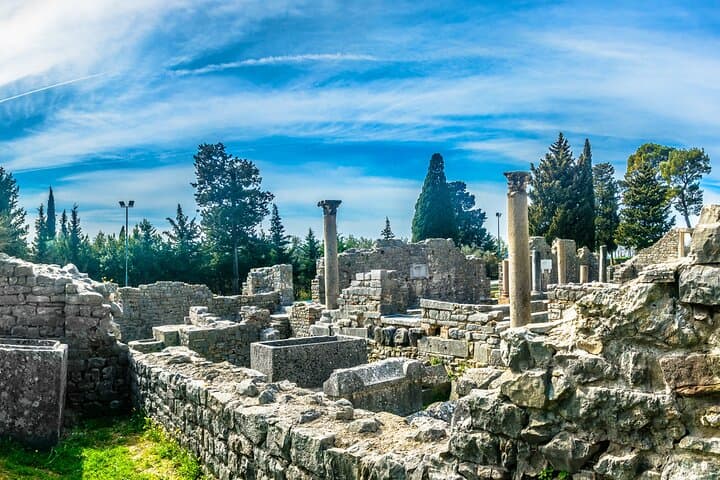
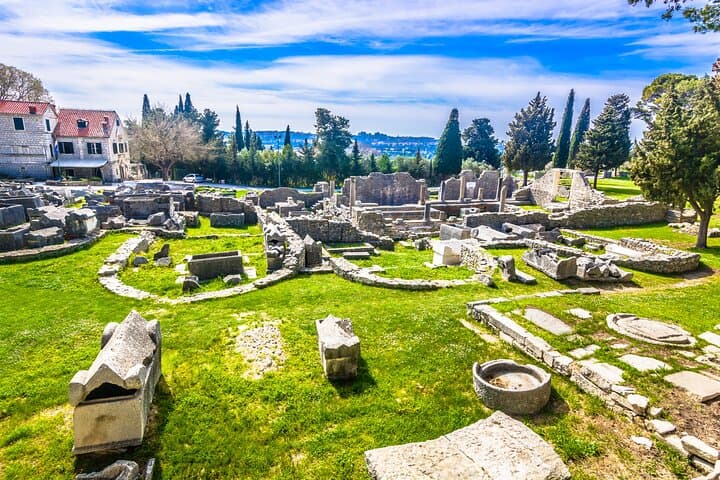
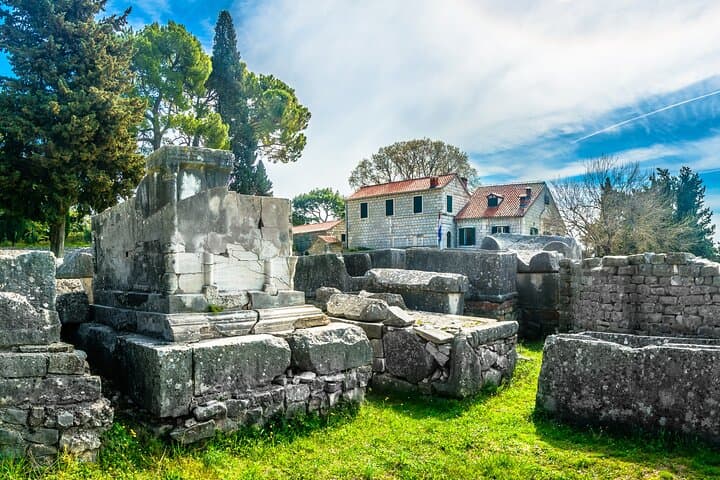
Begin at Salona (modern Solin), once the Roman capital of Dalmatia—its ruined walls, baths and amphitheater still sketch the footprint of a city that fed the empire. From there the road rises to Klis Fortress, a medieval stronghold carved into a rocky crag that watches the plain; its walls read like a catalogue of sieges and strategic chess moves. Later, a family-run ethno-park offers a quieter counterpoint: Stella Croatica’s olive presses and small-batch wine pair local stories with tastes that reflect centuries of Mediterranean farming. Finish underground in Vranjača Cave, where karst water has coaxed stalactites and columns into slow-motion sculptures; the cave’s cool hush is a counterpoint to the sun above.
Practical edge: the full circuit is about 4–5 hours with short walks on uneven surfaces—comfortable shoes and sun protection matter. The cave stays cool year-round; bring a light layer. Expect minimal strenuous hiking but several uneven steps and narrow corridors. Carry local currency for small tastings and support the agro-park directly. Your private driver handles logistics and timing; aim for morning departures to avoid peak heat and capture softer light on the fortress walls.
easy.
4–5 hours.
Suitable for most fitness levels; involves short walks on uneven ground and stairs.
Tours typically start and end in Split; confirm your exact pickup point when booking (hotel, port or meeting address).
Admission fees are not included—bring cash or card for fortress or museum entries if required.
Yes; the tour is rated easy with short walks, but note stairs at Klis and uneven ground at Salona and in the cave.
Yes; Stella Croatica offers olive oil, wine and traditional tastings—small purchases help support the family operation.
Salona was the Roman capital of the province of Dalmatia; Klis Fortress later dominated regional defenses through medieval and Ottoman periods.
High visitor pressure can damage ruins and delicate cave formations—stay on marked paths, avoid touching speleothems, and support local operators who manage land sustainably.
That´s it! operates guided outdoor trips and adventures with an emphasis on safety, stewardship, and memorable experiences.
You leave Split’s harbor behind and the Adriatic light slides across the windshield as your private driver sets the rhythm for the day. Roads climb away from the coast and the hinterland opens: olive groves, terraced vineyards and limestone ridges that seem to lean toward the sea.
You leave Split’s harbor behind and the Adriatic light slides across the windshield as your private driver sets the rhythm for the day. Roads climb away from the coast and the hinterland opens: olive groves, terraced vineyards and limestone ridges that seem to lean toward the sea.
Begin at Salona (modern Solin), once the Roman capital of Dalmatia—its ruined walls, baths and amphitheater still sketch the footprint of a city that fed the empire. From there the road rises to Klis Fortress, a medieval stronghold carved into a rocky crag that watches the plain; its walls read like a catalogue of sieges and strategic chess moves. Later, a family-run ethno-park offers a quieter counterpoint: Stella Croatica’s olive presses and small-batch wine pair local stories with tastes that reflect centuries of Mediterranean farming. Finish underground in Vranjača Cave, where karst water has coaxed stalactites and columns into slow-motion sculptures; the cave’s cool hush is a counterpoint to the sun above.
Practical edge: the full circuit is about 4–5 hours with short walks on uneven surfaces—comfortable shoes and sun protection matter. The cave stays cool year-round; bring a light layer. Expect minimal strenuous hiking but several uneven steps and narrow corridors. Carry local currency for small tastings and support the agro-park directly. Your private driver handles logistics and timing; aim for morning departures to avoid peak heat and capture softer light on the fortress walls.