THE ADVENTURE COLLECTIVE® · Independent discovery and booking for outdoor travel

Walk through the Siq to the Treasury and feel Petra’s rose-colored cliffs close in. This private day tour from Amman pairs guided history with practical logistics—ideal for first-time visitors who want the essentials covered.
Walk through the Siq to the Treasury and feel Petra’s rose-colored cliffs close in. This private day tour from Amman pairs guided history with practical logistics—ideal for first-time visitors who want the essentials covered.
You step from a private car into a canyon that funnels light like a turned page—the Siq narrows, walls of streaked rose and ochre closing around you until the Treasury breaks open.
Verified experiences and guided adventures in the surrounding area.
Operated by ToBadaa · Wadi Musa, Ma'an Governorate
You step from a private car into a canyon that funnels light like a turned page—the Siq narrows, walls of streaked rose and ochre closing around you until the Treasury breaks open.
This is Petra: carved facades and tombs hewn from sandstone by the Nabataeans who made the desert bloom. The landscape is geological storytelling—soft, banded sandstone shaped by wind and flash floods, layered with mineral stripes that change with the sun’s angle. Occupation here stretches back millennia; people passed and settled these wadis long before Petra rose as a caravan hub in the first millennium BCE.
Culturally the site is still lived-in by the town of Wadi Musa and by traditions that keep local storytelling alive; tea offered at small stands, local guides reciting lore, and Bedouin-led horse options at trailheads. For a practical visit expect a private pickup in Amman, roughly a 3-hour drive, then about four hours on foot in the site on this full-day tour.
Plan routes: the Treasury and Street of Facades sit near the entrance but reach points like the Royal Tombs or the Monastery require steep stair sections and more time. Wear sturdy shoes, carry sun protection and at least 1–2 liters of water, and stick to marked routes to protect fragile sandstone. Optional horse rides and golf carts reduce walking but not exposure to sun. A private guide streamlines logistics—tickets, history, and the quieter passages worth lingering over.
moderate.
8 hours (including transfer).
Moderate—able to walk several hours over uneven ground and climb stairs; good balance helps.
Expect about a 2.5–3 hour drive each way depending on traffic and your pickup location; private transport is included on this tour.
Yes—many paths are manageable for families and older travelers, though some highlights like the Monastery involve steep climbs; horse or buggy options reduce walking.
Entrance to Petra is usually paid separately at the Petra Visitor Centre—confirm with your operator whether admission is included in your booking.
Yes—short horse rides and golf carts are offered by local providers at extra cost; they are useful for reducing walking but may not reach all viewpoints.
Petra was the Nabataean capital and prospered as a caravan crossroads from the 1st century BCE; its façades are cut directly into sandstone cliffs.
Petra’s sandstone is vulnerable to erosion and human impact—stay on marked trails, avoid touching carved surfaces, and use refillable water containers to reduce waste.
ToBadaa operates guided outdoor trips and adventures with an emphasis on safety, stewardship, and memorable experiences.
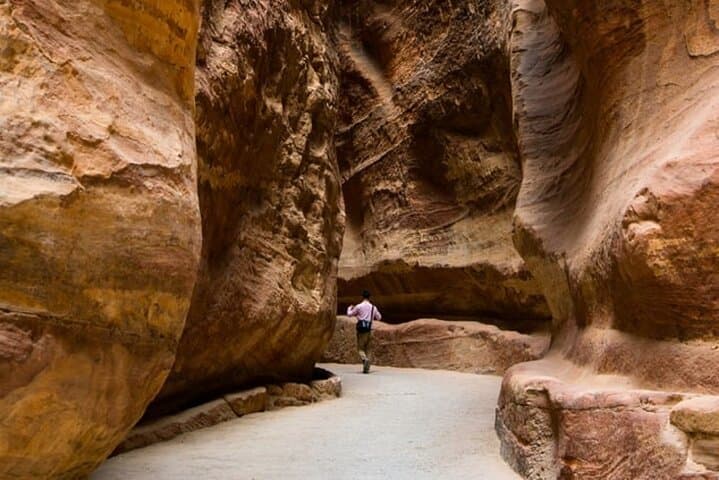


You step from a private car into a canyon that funnels light like a turned page—the Siq narrows, walls of streaked rose and ochre closing around you until the Treasury breaks open.
You step from a private car into a canyon that funnels light like a turned page—the Siq narrows, walls of streaked rose and ochre closing around you until the Treasury breaks open.
This is Petra: carved facades and tombs hewn from sandstone by the Nabataeans who made the desert bloom. The landscape is geological storytelling—soft, banded sandstone shaped by wind and flash floods, layered with mineral stripes that change with the sun’s angle. Occupation here stretches back millennia; people passed and settled these wadis long before Petra rose as a caravan hub in the first millennium BCE.
Culturally the site is still lived-in by the town of Wadi Musa and by traditions that keep local storytelling alive; tea offered at small stands, local guides reciting lore, and Bedouin-led horse options at trailheads. For a practical visit expect a private pickup in Amman, roughly a 3-hour drive, then about four hours on foot in the site on this full-day tour.
Plan routes: the Treasury and Street of Facades sit near the entrance but reach points like the Royal Tombs or the Monastery require steep stair sections and more time. Wear sturdy shoes, carry sun protection and at least 1–2 liters of water, and stick to marked routes to protect fragile sandstone. Optional horse rides and golf carts reduce walking but not exposure to sun. A private guide streamlines logistics—tickets, history, and the quieter passages worth lingering over.