THE ADVENTURE COLLECTIVE® · Independent discovery and booking for outdoor travel

A private three-hour guided tour that takes you through Oia’s narrow lanes to panoramic caldera viewpoints and the famous blue-domes. Ideal for sunset photography and a compact introduction to Santorini’s volcanic history and Cycladic culture.
A private three-hour guided tour that takes you through Oia’s narrow lanes to panoramic caldera viewpoints and the famous blue-domes. Ideal for sunset photography and a compact introduction to Santorini’s volcanic history and Cycladic culture.
You step out of an air-conditioned car onto a narrow white lane as the Aegean uncoils below—salt-bright air, a wind that tugs at your sunhat, and stairways that seem to tumble toward the sea. The guide smiles, gestures toward a blue-domed church perched like punctuation, and the village unfurls: stacked houses, steep alleys, and terraces that write the island’s story in light.
Verified experiences and guided adventures in the surrounding area.
Operated by GooSantorini Travel · Oia, Santorini
You step out of an air-conditioned car onto a narrow white lane as the Aegean uncoils below—salt-bright air, a wind that tugs at your sunhat, and stairways that seem to tumble toward the sea. The guide smiles, gestures toward a blue-domed church perched like punctuation, and the village unfurls: stacked houses, steep alleys, and terraces that write the island’s story in light.
Oia sits on the northern rim of Santorini’s caldera, carved by the massive volcanic eruption of the late Bronze Age. The cliffs are volcanic tuff and pumice; their exposed strata tell of explosive geologic change that shaped the Aegean coastline and the island’s maritime culture. Oia’s Cycladic architecture—whitewashed walls, narrow streets, and cubic forms—grew from both necessity and craft: compact homes to shelter from wind and sun, and stonework that resists erosion.
The village’s rhythm is as much cultural as scenic: fishermen’s bays, family-run galleries, and churches with bell towers that punctuate the wind. Your private guide threads local history and island lore into the walk, pointing out hidden courtyards and the best window-framed vistas of the volcanic islands across the caldera.
Practical guidance: plan this as a late-afternoon outing, arrive at least 60–90 minutes before sunset for prime viewing and fewer crowds, and wear sturdy shoes for uneven stone steps. Hydrate—water is scarce on narrow lanes—and carry sun protection; the wind can be sharp even on warm nights. With a private driver and door-to-door pickup, the tour trades in crowds for context: a compact, three-hour introduction to Oia that balances panoramic spectacle with local detail.
easy.
3 hours.
Suitable for most fitness levels; requires ability to navigate uneven stone steps and short flights of stairs.
Yes—hotel and port pickup/drop-off are included; confirm your exact pickup location and time when booking.
Yes—guides will take you to an optimal viewing spot and advise when to arrive for the best light, weather permitting.
The tour is generally easy but Oia has many steps and narrow lanes; it may be difficult for wheelchair users or those who cannot manage stairs.
The tour includes commentary and stops but typically does not include paid museum or special gallery admission unless specified—confirm with your provider.
Oia developed after Santorini’s caldera formed; rebuilt communities adapted Cycladic architecture to volcanic terrain and maritime trade.
High visitor numbers stress narrow lanes and local resources—stick to marked paths, support small local businesses, and avoid leaving waste behind.
GooSantorini Travel operates guided outdoor trips and adventures with an emphasis on safety, stewardship, and memorable experiences.


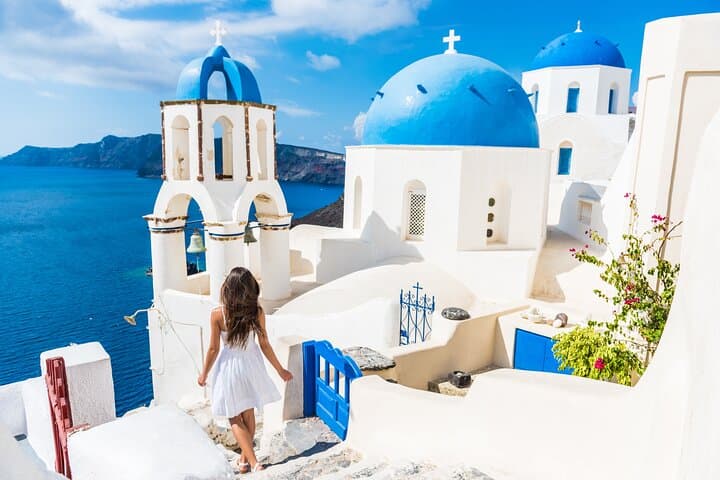
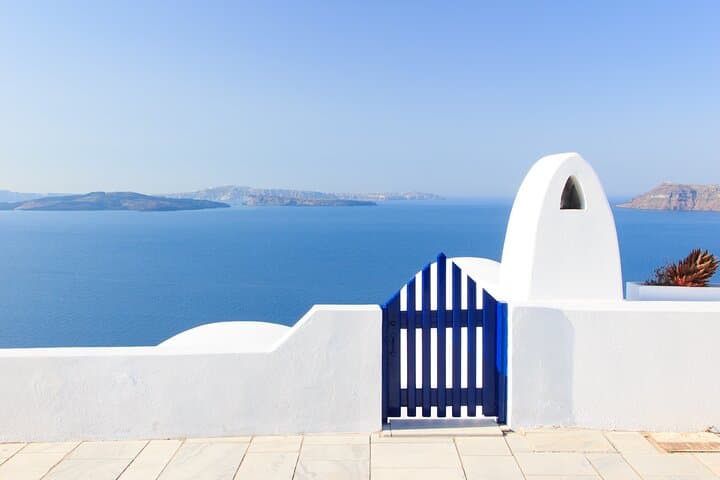
You step out of an air-conditioned car onto a narrow white lane as the Aegean uncoils below—salt-bright air, a wind that tugs at your sunhat, and stairways that seem to tumble toward the sea. The guide smiles, gestures toward a blue-domed church perched like punctuation, and the village unfurls: stacked houses, steep alleys, and terraces that write the island’s story in light.
You step out of an air-conditioned car onto a narrow white lane as the Aegean uncoils below—salt-bright air, a wind that tugs at your sunhat, and stairways that seem to tumble toward the sea. The guide smiles, gestures toward a blue-domed church perched like punctuation, and the village unfurls: stacked houses, steep alleys, and terraces that write the island’s story in light.
Oia sits on the northern rim of Santorini’s caldera, carved by the massive volcanic eruption of the late Bronze Age. The cliffs are volcanic tuff and pumice; their exposed strata tell of explosive geologic change that shaped the Aegean coastline and the island’s maritime culture. Oia’s Cycladic architecture—whitewashed walls, narrow streets, and cubic forms—grew from both necessity and craft: compact homes to shelter from wind and sun, and stonework that resists erosion.
The village’s rhythm is as much cultural as scenic: fishermen’s bays, family-run galleries, and churches with bell towers that punctuate the wind. Your private guide threads local history and island lore into the walk, pointing out hidden courtyards and the best window-framed vistas of the volcanic islands across the caldera.
Practical guidance: plan this as a late-afternoon outing, arrive at least 60–90 minutes before sunset for prime viewing and fewer crowds, and wear sturdy shoes for uneven stone steps. Hydrate—water is scarce on narrow lanes—and carry sun protection; the wind can be sharp even on warm nights. With a private driver and door-to-door pickup, the tour trades in crowds for context: a compact, three-hour introduction to Oia that balances panoramic spectacle with local detail.