THE ADVENTURE COLLECTIVE® · Independent discovery and booking for outdoor travel

A private day hike in the Annapurna region brings mountain views, village culture, and managed trails within reach of travelers based in Pokhara or Besisahar. Expect stone steps, terraced farmland, and a local guide who shapes the route to your pace.
A private day hike in the Annapurna region brings mountain views, village culture, and managed trails within reach of travelers based in Pokhara or Besisahar. Expect stone steps, terraced farmland, and a local guide who shapes the route to your pace.
You step out of the jeep and the mountains answer first—their ridgelines pushing light across terraced fields while a thin river dares you to follow it upstream.
Verified experiences and guided adventures in the surrounding area.
Operated by Rupesh Pariyar · Besisahar, Gandaki Province
You step out of the jeep and the mountains answer first—their ridgelines pushing light across terraced fields while a thin river dares you to follow it upstream.
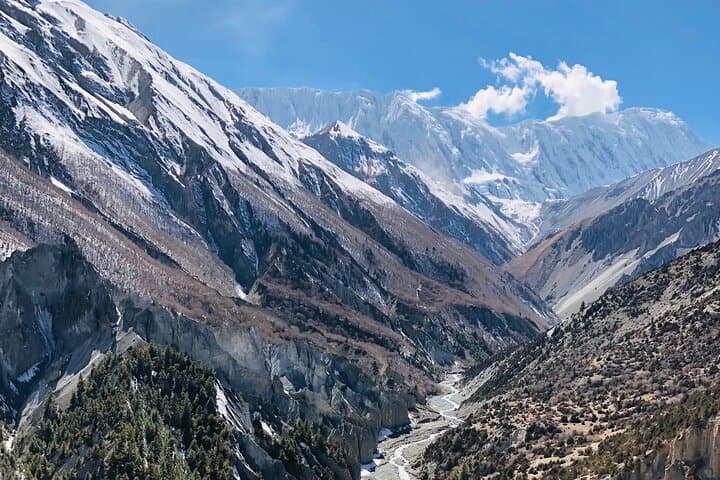
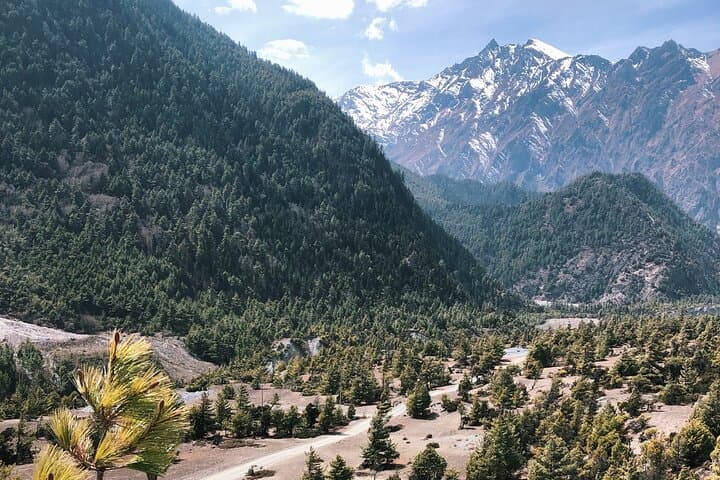
This private day hike through the Annapurna region threads subtropical forests, stone-built villages and open viewpoints that look toward Annapurna I and the jagged spine of the Himalaya. The landscape records tectonic violence and glacial sculpting: young, rising ranges with steep valleys carved by rivers and seasonal monsoon flows.
Locally the trail is as much cultural terrain as natural; Gurung and Magar communities maintain terraced farmland, chhortens and teahouse culture. Traders and mule trains once linked these passes to Lhasa, and the route still carries that edge of long-distance movement—today it’s trekkers and local guides swapping stories over simple dal bhat.
Practical guidance: expect an 8-hour outing with steady climbs and uneven stone steps—moderate fitness and comfortable footwear are musts. Altitude on a single-day route is usually limited, but weather changes fast: mornings can be crisp and monsoon afternoons wet. Carry at least 2 liters of water, layered clothing, and rain protection. A local guide not only navigates trails but negotiates tea-house stops and village access, and can tailor pacing to your group.
Timing matters: aim for clear-season months (autumn or spring) for long views; winter brings cold and limited services, summer monsoon brings green slopes and slippery trails. With a private guide you get flexibility—shorten the route, linger at viewpoints, or spend more time in a village to witness daily life.
moderate.
8 hours.
Suitable for hikers who regularly walk 6–10 miles with elevation gain; expect sustained uphill sections and uneven terrain.
No technical experience is required, but you should have moderate fitness—regular walking with some uphill is helpful.
Typical day routes in the Annapurna foothills have limited exposure to high altitude, but if you plan higher objectives, acclimatize gradually and consult your guide.
Some areas of the Annapurna region require TIMS or conservation area permits; a licensed guide will advise and arrange needed permits.
Yes—private guides commonly tailor pace, lunch stops, and route length to match fitness and interests.
The trails in the Annapurna region were long-used trade and pilgrimage routes; modern trekking routes evolved after the 1970s as road access and trekking infrastructure expanded.
The Annapurna Conservation Area Project manages trails and permits to protect biodiversity and local livelihoods—pack out waste and support local teahouses to reduce impact.
Rupesh Pariyar operates guided outdoor trips and adventures with an emphasis on safety, stewardship, and memorable experiences.
You step out of the jeep and the mountains answer first—their ridgelines pushing light across terraced fields while a thin river dares you to follow it upstream.
You step out of the jeep and the mountains answer first—their ridgelines pushing light across terraced fields while a thin river dares you to follow it upstream.
This private day hike through the Annapurna region threads subtropical forests, stone-built villages and open viewpoints that look toward Annapurna I and the jagged spine of the Himalaya. The landscape records tectonic violence and glacial sculpting: young, rising ranges with steep valleys carved by rivers and seasonal monsoon flows.
Locally the trail is as much cultural terrain as natural; Gurung and Magar communities maintain terraced farmland, chhortens and teahouse culture. Traders and mule trains once linked these passes to Lhasa, and the route still carries that edge of long-distance movement—today it’s trekkers and local guides swapping stories over simple dal bhat.
Practical guidance: expect an 8-hour outing with steady climbs and uneven stone steps—moderate fitness and comfortable footwear are musts. Altitude on a single-day route is usually limited, but weather changes fast: mornings can be crisp and monsoon afternoons wet. Carry at least 2 liters of water, layered clothing, and rain protection. A local guide not only navigates trails but negotiates tea-house stops and village access, and can tailor pacing to your group.
Timing matters: aim for clear-season months (autumn or spring) for long views; winter brings cold and limited services, summer monsoon brings green slopes and slippery trails. With a private guide you get flexibility—shorten the route, linger at viewpoints, or spend more time in a village to witness daily life.