THE ADVENTURE COLLECTIVE® · Independent discovery and booking for outdoor travel

Walk Roman lanes and Gothic plazas with a local guide who threads history, civil-war scars, and Catalan culture into a compact 2–3 hour private tour. Ideal for first-time visitors who want context, hidden corners, and flexible pacing.
Walk Roman lanes and Gothic plazas with a local guide who threads history, civil-war scars, and Catalan culture into a compact 2–3 hour private tour. Ideal for first-time visitors who want context, hidden corners, and flexible pacing.
The guide falls into step beside you as morning light slips between narrow stone alleys, the air carrying sea-salt and espresso. You move through layered streets where Roman gridlines meet medieval lanes, each plaza a micro-stage of Barcelona’s evolving story.
Verified experiences and guided adventures in the surrounding area.
Operated by TOURS FROM PARIS · Barcelona, Catalonia
The guide falls into step beside you as morning light slips between narrow stone alleys, the air carrying sea-salt and espresso. You move through layered streets where Roman gridlines meet medieval lanes, each plaza a micro-stage of Barcelona’s evolving story.
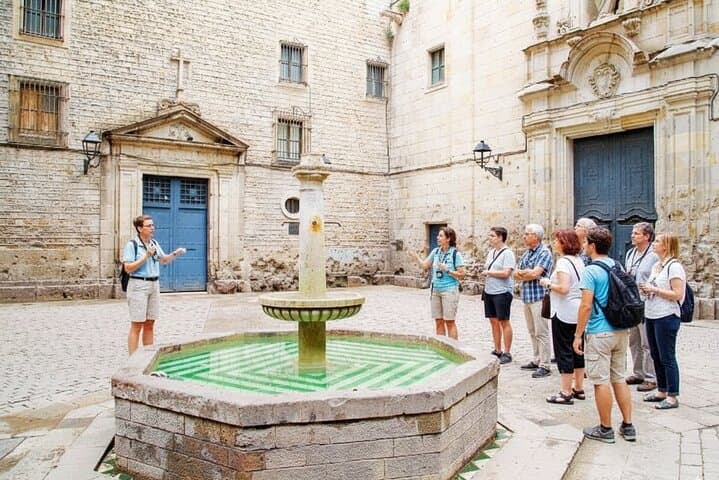
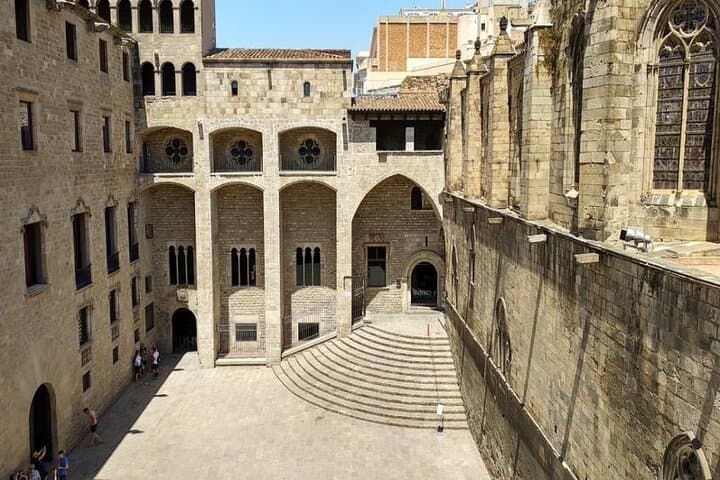
Start in the Gothic Quarter, built atop the Roman city of Barcino; flagstones here still trace ancient blocks and the cathedral’s Gothic façade rises from centuries of civic life. Head toward Santa Maria del Pi and San Felipe Neri, where bullet marks from the Spanish Civil War punctuate baroque stone and point to the neighborhood’s modern identity. Cross into El Born, once a merchant quarter shaped by Mediterranean trade; its old market and tight lanes reveal artisan workshops and contemporary tapas bars stitched into historic bones.
Geology is subtle but present — the city sits on a coastal plain bounded by the Collserola hills, and the stone used in older buildings reflects local quarries and medieval construction techniques. Culturally, Catalan language and traditions surface in shopfronts and plaques; a private guide will decode names, symbols and hidden legends that maps alone don’t explain.
Practical side: the tour is 2–3 hours on mostly flat but uneven cobbles; comfortable, broken-in shoes are essential. Morning or late afternoon limits heat and crowds; keep belongings secure against pickpockets, and ask your guide about tailored themes (Jewish Quarter, night legends) to match interests. Wheelchair-accessible routes are available on request, and a private format makes pacing flexible for families or focused historical inquiry.
easy.
2–3 hours.
Suitable for most fitness levels; involves standing and walking on uneven surfaces for a couple of hours.
The private walking tour runs about 2–3 hours and can be adjusted slightly to meet your pace or interests.
Yes—it's designed for all fitness levels; the private format allows for frequent rests and route adjustments for mobility needs.
This tour typically covers outdoor sites and commentary; admission fees to paid attractions (if requested) are usually extra—confirm with the operator when booking.
Yes—optional thematic variations are offered; request your preferred focus when reserving to tailor the route and stories.
Barcelona grew from the Roman settlement of Barcino into a medieval maritime power; the Gothic Quarter preserves layers from Roman foundations to Catalan Gothic churches and civil-war-era scars.
High visitor traffic strains narrow historic streets—stick to marked paths, avoid touching fragile facades, and support local conservation by choosing licensed guides and respecting signage.
TOURS FROM PARIS operates guided outdoor trips and adventures with an emphasis on safety, stewardship, and memorable experiences.
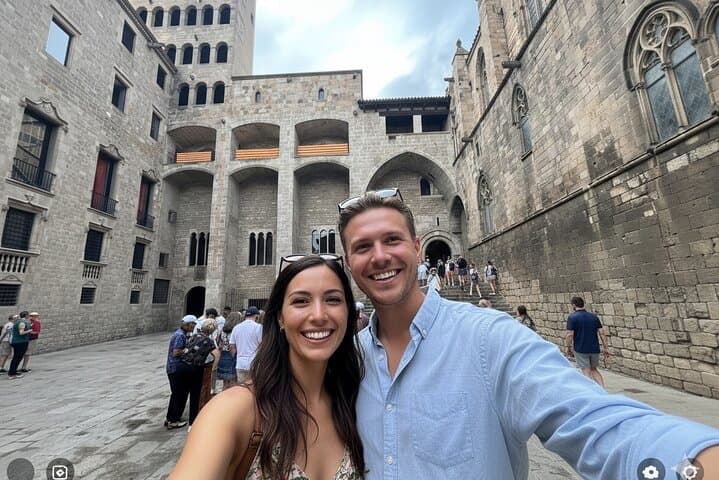
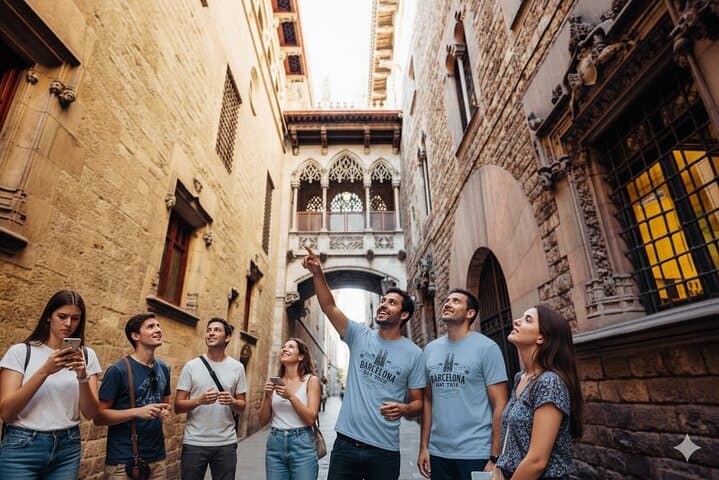
The guide falls into step beside you as morning light slips between narrow stone alleys, the air carrying sea-salt and espresso. You move through layered streets where Roman gridlines meet medieval lanes, each plaza a micro-stage of Barcelona’s evolving story.
The guide falls into step beside you as morning light slips between narrow stone alleys, the air carrying sea-salt and espresso. You move through layered streets where Roman gridlines meet medieval lanes, each plaza a micro-stage of Barcelona’s evolving story.
Start in the Gothic Quarter, built atop the Roman city of Barcino; flagstones here still trace ancient blocks and the cathedral’s Gothic façade rises from centuries of civic life. Head toward Santa Maria del Pi and San Felipe Neri, where bullet marks from the Spanish Civil War punctuate baroque stone and point to the neighborhood’s modern identity. Cross into El Born, once a merchant quarter shaped by Mediterranean trade; its old market and tight lanes reveal artisan workshops and contemporary tapas bars stitched into historic bones.
Geology is subtle but present — the city sits on a coastal plain bounded by the Collserola hills, and the stone used in older buildings reflects local quarries and medieval construction techniques. Culturally, Catalan language and traditions surface in shopfronts and plaques; a private guide will decode names, symbols and hidden legends that maps alone don’t explain.
Practical side: the tour is 2–3 hours on mostly flat but uneven cobbles; comfortable, broken-in shoes are essential. Morning or late afternoon limits heat and crowds; keep belongings secure against pickpockets, and ask your guide about tailored themes (Jewish Quarter, night legends) to match interests. Wheelchair-accessible routes are available on request, and a private format makes pacing flexible for families or focused historical inquiry.