THE ADVENTURE COLLECTIVE® · Independent discovery and booking for outdoor travel

See Rome’s landmarks with minimal walking on a private golf-cart tour that moves from Spanish Steps to the Colosseum. Comfortable, accessible and guided, it’s a quick way to layer history, architecture and nighttime lighting into a single outing.
See Rome’s landmarks with minimal walking on a private golf-cart tour that moves from Spanish Steps to the Colosseum. Comfortable, accessible and guided, it’s a quick way to layer history, architecture and nighttime lighting into a single outing.
You roll down a Roman street as statues and fountains catch the late light—cobblestones click under the golf cart’s tires while the Tiber murmurs nearby, daring you to look up and track the city’s sweep of history.
Verified experiences and guided adventures in the surrounding area.
Operated by Fun Moving Golf cart tour · Rome, Lazio
You roll down a Roman street as statues and fountains catch the late light—cobblestones click under the golf cart’s tires while the Tiber murmurs nearby, daring you to look up and track the city’s sweep of history.
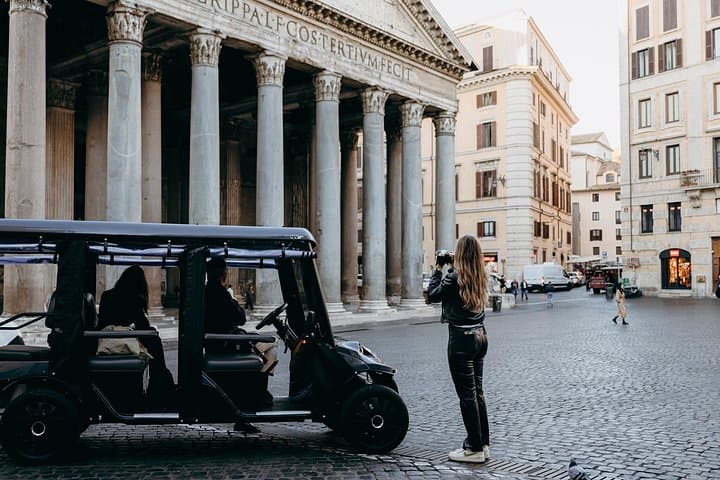
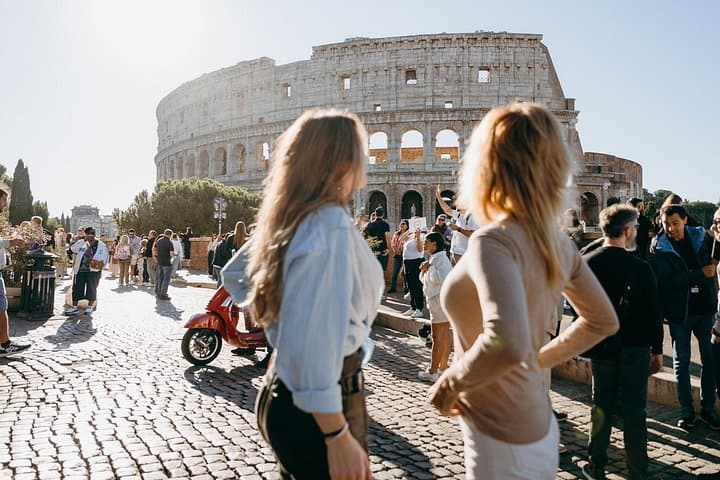
This private golf-cart tour covers Rome’s high points in an efficient, comfortable rhythm: Spanish Steps, Trevi Fountain, Piazza Navona and a close approach to the Pantheon and Colosseum. The route follows layers of urban geology—ancient travertine and volcanic tufa foundations topped by Baroque facades—and threads through piazzas that have hosted markets, triumphs and public life for two millennia.
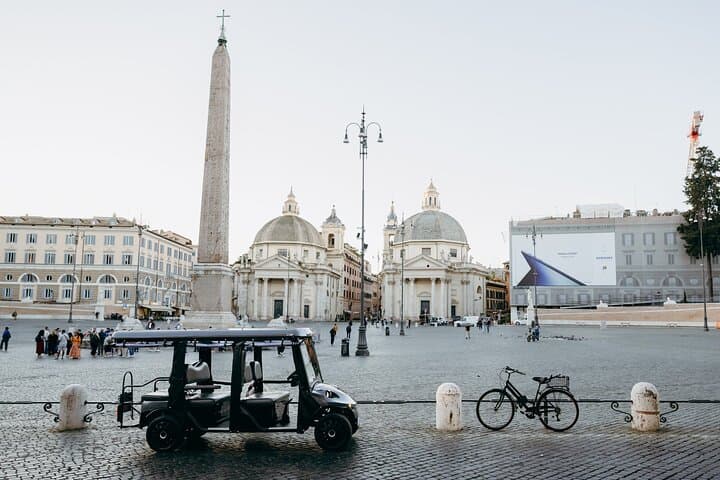
Expect a mix of slow, scenic pulls into historic squares and short, pedestrian-only legs (Trevi requires a brief 1–2 minute walk). Guides contextualize monuments with compact history: obelisks brought from Egypt, Bernini’s fountains, and the Roman Forum’s civic scaffolding. At night, illuminated façades simplify the skyline into striking silhouettes and let the cart glide past landmarks with fewer crowds.
Practical notes: the tour is wheelchair-accessible and family-friendly, but it isn’t a substitute for walking tours if you want in-depth archaeological access. Wear supportive shoes for the short strolls, carry a refillable water bottle, and schedule in the cooler hours of morning or evening to avoid peak heat and crowds.
This is a low-effort, high-context way to orient yourself in Rome—ideal for first-time visitors, travelers with mobility limits, or anyone wanting efficient photo stops and insider talking points before heading out on foot.
easy.
2–3 hours.
Light activity level; fine for most fitness levels but requires brief standing and short walks
Yes—this tour is listed as wheelchair-accessible; inform the operator when booking so they can prepare and advise on any short walking segments.
No—admissions are not included; the itinerary focuses on external viewpoints and piazzas, though you can arrange separate entry times for sites like the Colosseum.
Most walking is brief (1–5 minutes) to reach pedestrian areas such as Trevi Fountain; guides can substitute stops to minimize walking if needed.
Tours are private but capacity varies by vehicle; confirm maximum guests and any child seat needs at booking—infant seats are available on request.
Rome’s streets layer Republican, Imperial and Baroque eras—obelisk transport, Bernini’s fountains and medieval piazzas all occupy the same urban fabric.
Respect pedestrian-only zones, avoid feeding wildlife, and use refillable bottles; small decisions help preserve fragile stone and reduce litter in heavily visited squares.
Fun Moving Golf cart tour operates guided outdoor trips and adventures with an emphasis on safety, stewardship, and memorable experiences.
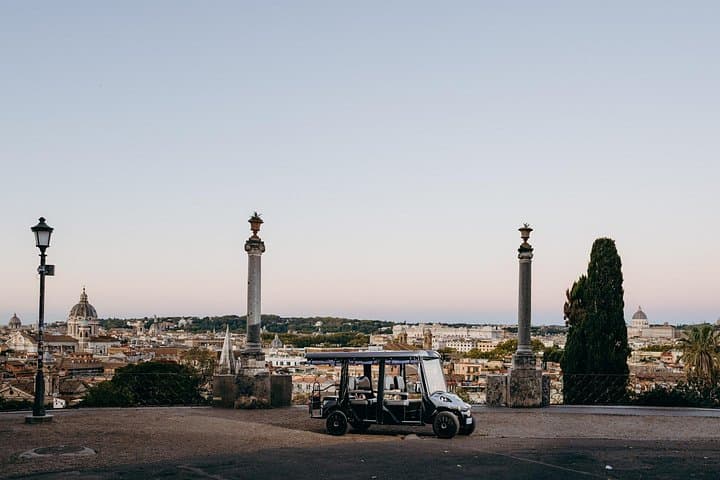
You roll down a Roman street as statues and fountains catch the late light—cobblestones click under the golf cart’s tires while the Tiber murmurs nearby, daring you to look up and track the city’s sweep of history.
You roll down a Roman street as statues and fountains catch the late light—cobblestones click under the golf cart’s tires while the Tiber murmurs nearby, daring you to look up and track the city’s sweep of history.
This private golf-cart tour covers Rome’s high points in an efficient, comfortable rhythm: Spanish Steps, Trevi Fountain, Piazza Navona and a close approach to the Pantheon and Colosseum. The route follows layers of urban geology—ancient travertine and volcanic tufa foundations topped by Baroque facades—and threads through piazzas that have hosted markets, triumphs and public life for two millennia.
Expect a mix of slow, scenic pulls into historic squares and short, pedestrian-only legs (Trevi requires a brief 1–2 minute walk). Guides contextualize monuments with compact history: obelisks brought from Egypt, Bernini’s fountains, and the Roman Forum’s civic scaffolding. At night, illuminated façades simplify the skyline into striking silhouettes and let the cart glide past landmarks with fewer crowds.
Practical notes: the tour is wheelchair-accessible and family-friendly, but it isn’t a substitute for walking tours if you want in-depth archaeological access. Wear supportive shoes for the short strolls, carry a refillable water bottle, and schedule in the cooler hours of morning or evening to avoid peak heat and crowds.
This is a low-effort, high-context way to orient yourself in Rome—ideal for first-time visitors, travelers with mobility limits, or anyone wanting efficient photo stops and insider talking points before heading out on foot.