THE ADVENTURE COLLECTIVE® · Independent discovery and booking for outdoor travel

A three-day private circuit from Delhi visiting the Taj Mahal, Agra Fort, Fatehpur Sikri and Jaipur’s Amber Fort and City Palace. Expect long drives, early starts, and guided visits that unpack Mughal and Rajput history with practical comfort.
A three-day private circuit from Delhi visiting the Taj Mahal, Agra Fort, Fatehpur Sikri and Jaipur’s Amber Fort and City Palace. Expect long drives, early starts, and guided visits that unpack Mughal and Rajput history with practical comfort.
You arrive on an early morning expressway as the city gives way to open plain; the Yamuna River cuts a pale line and the Taj Mahal first appears in marble against the sky, calm and deliberate. Over three days you move between eras—Mughal tombs on riverbanks, red-sandstone courts of Fatehpur Sikri, and the pink-walled palaces of Jaipur—each monument insisting on close attention.
Verified experiences and guided adventures in the surrounding area.
Operated by Travel Creators Of India · Agra, Uttar Pradesh
You arrive on an early morning expressway as the city gives way to open plain; the Yamuna River cuts a pale line and the Taj Mahal first appears in marble against the sky, calm and deliberate. Over three days you move between eras—Mughal tombs on riverbanks, red-sandstone courts of Fatehpur Sikri, and the pink-walled palaces of Jaipur—each monument insisting on close attention.
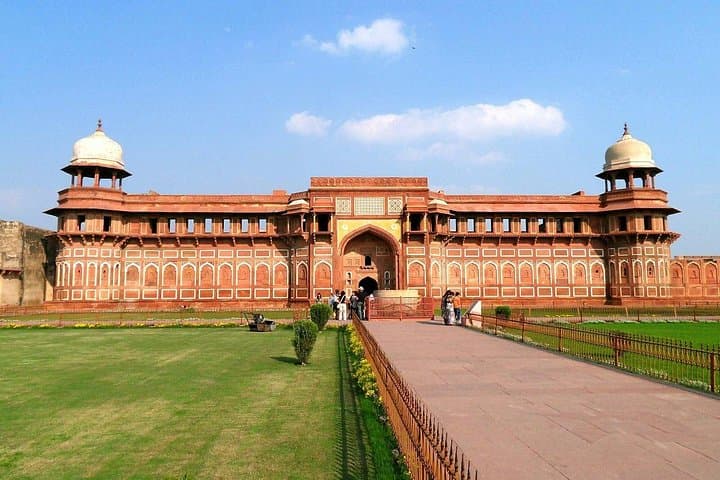
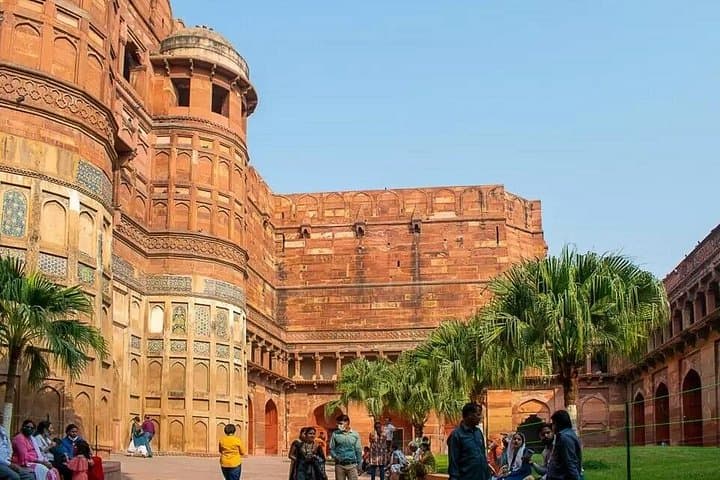
The route traces political and architectural layers: the Taj Mahal’s 17th-century Mughal craftsmanship, Agra Fort’s military geometry, Fatehpur Sikri’s red sandstone city founded by Akbar, and Jaipur’s 18th-century urban plan by Jai Singh II with its observatory. Geologically, the Gangetic plains’ alluvial soils allowed large masonry complexes; the region’s sandstone and marble define the color and weathering of the sites. Local culture remains vivid—street markets, vendors selling masala chai, and artisans in Jaipur’s bazaars keep craft traditions alive.
Practical guidance: expect roughly 3.5 hours by car Delhi–Agra (210 km) and about 4 hours Agra–Jaipur (240 km). Walking at monuments includes uneven stone steps and packed courtyards—moderate fitness helps. Start major sites early to avoid crowds and midday heat; the Taj closes on Fridays. Bring sun protection, refillable water, and footwear that can handle dust and stairs. Transfers are by air-conditioned private car with hotel or airport pickup; guide-led visits help skip navigation and give historical context. Travel respects local conservations—stay on marked paths, minimize plastic, and follow guide instructions. This tour is for travelers who want concentrated cultural immersion with practical comfort and time on the ground to experience India’s signature monuments.
moderate.
3 days.
Moderate fitness; able to walk 2–4 miles total per day on uneven surfaces and climb stairs
The Taj Mahal is closed to visitors on Fridays; plan your visit on another day or confirm with your guide.
Yes; the tour includes hotel or airport pickup and drop-off and transfers by air-conditioned private car as listed in inclusions.
Expect moderate walking—courtyards and forts require stair climbs and uneven surfaces; plan for 2–4 miles of walking per day.
Yes; the operator notes the tour can be adjusted to match preferences, subject to timing and entry restrictions.
The route connects Mughal-era Agra monuments and Akbar’s Fatehpur Sikri with Jaipur’s planned Rajput capital, illustrating Mughal and Rajput court culture across the 16th–18th centuries.
High visitor numbers stress fragile marble and painted surfaces; follow guide directions, avoid touching stonework and use refillable water to reduce plastic waste.
Travel Creators Of India operates guided outdoor trips and adventures with an emphasis on safety, stewardship, and memorable experiences.
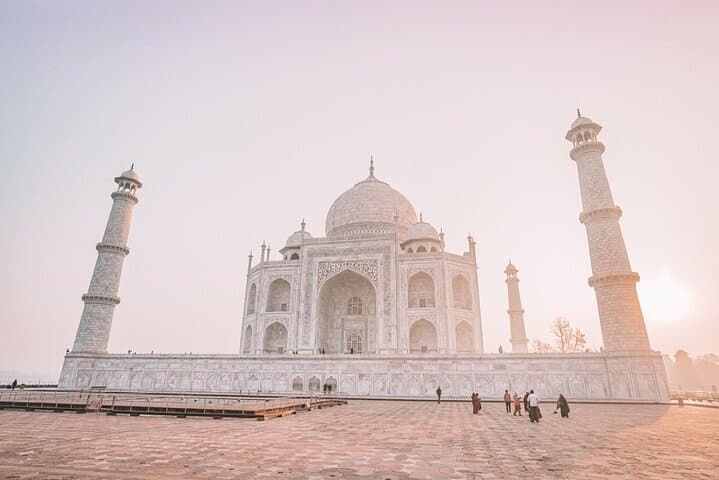
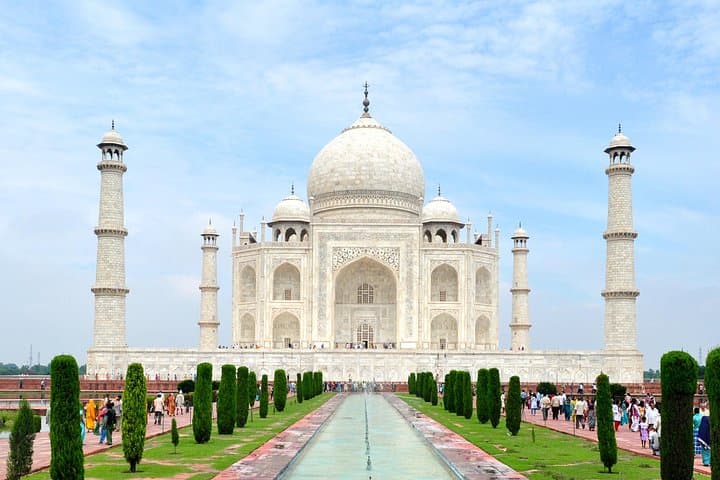
You arrive on an early morning expressway as the city gives way to open plain; the Yamuna River cuts a pale line and the Taj Mahal first appears in marble against the sky, calm and deliberate. Over three days you move between eras—Mughal tombs on riverbanks, red-sandstone courts of Fatehpur Sikri, and the pink-walled palaces of Jaipur—each monument insisting on close attention.
You arrive on an early morning expressway as the city gives way to open plain; the Yamuna River cuts a pale line and the Taj Mahal first appears in marble against the sky, calm and deliberate. Over three days you move between eras—Mughal tombs on riverbanks, red-sandstone courts of Fatehpur Sikri, and the pink-walled palaces of Jaipur—each monument insisting on close attention.
The route traces political and architectural layers: the Taj Mahal’s 17th-century Mughal craftsmanship, Agra Fort’s military geometry, Fatehpur Sikri’s red sandstone city founded by Akbar, and Jaipur’s 18th-century urban plan by Jai Singh II with its observatory. Geologically, the Gangetic plains’ alluvial soils allowed large masonry complexes; the region’s sandstone and marble define the color and weathering of the sites. Local culture remains vivid—street markets, vendors selling masala chai, and artisans in Jaipur’s bazaars keep craft traditions alive.
Practical guidance: expect roughly 3.5 hours by car Delhi–Agra (210 km) and about 4 hours Agra–Jaipur (240 km). Walking at monuments includes uneven stone steps and packed courtyards—moderate fitness helps. Start major sites early to avoid crowds and midday heat; the Taj closes on Fridays. Bring sun protection, refillable water, and footwear that can handle dust and stairs. Transfers are by air-conditioned private car with hotel or airport pickup; guide-led visits help skip navigation and give historical context. Travel respects local conservations—stay on marked paths, minimize plastic, and follow guide instructions. This tour is for travelers who want concentrated cultural immersion with practical comfort and time on the ground to experience India’s signature monuments.