THE ADVENTURE COLLECTIVE® · Independent discovery and booking for outdoor travel

Step off the highway and onto a slab of history. A private Gobustan tour pairs 6,000 rock engravings with steaming mud volcanoes and a compact crash course in Azerbaijan’s prehistoric and industrial past. Expect rugged terrain, wide light, and a guide who makes the stories click into place.
Step off the highway and onto a slab of history. A private Gobustan tour pairs 6,000 rock engravings with steaming mud volcanoes and a compact crash course in Azerbaijan’s prehistoric and industrial past. Expect rugged terrain, wide light, and a guide who makes the stories click into place.
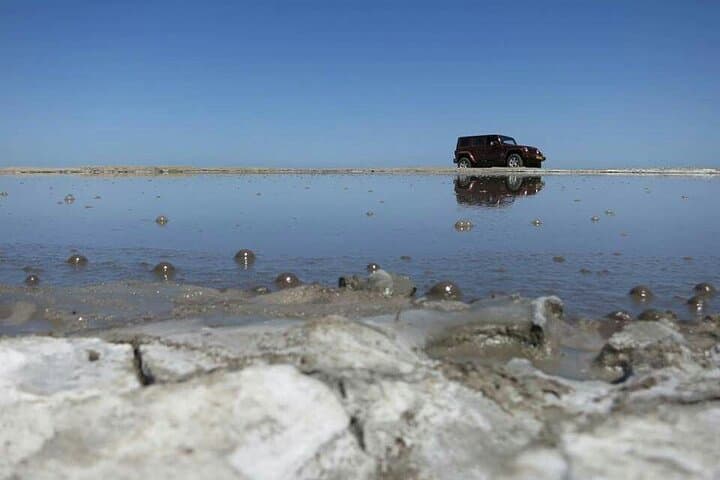
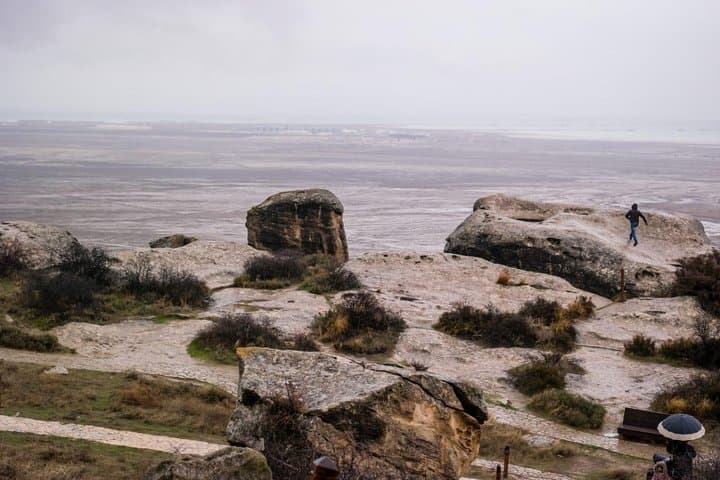
You arrive where the asphalt thins and the Caspian’s breath thins into steppe wind: a low plateau of weathered stone and pockmarked hills. On a private tour from Baku, the driver drops you near a scatter of boulders—walls of stone that keep stories older than most civilizations. The faces are not painted; they are cut. Horses, hunters, spirals and boats carved deep into the rock look out over an empty plain as if frozen in the middle of a long conversation.
Verified experiences and guided adventures in the surrounding area.
Operated by Caspi Tours · Baku, Qobustan District
You arrive where the asphalt thins and the Caspian’s breath thins into steppe wind: a low plateau of weathered stone and pockmarked hills. On a private tour from Baku, the driver drops you near a scatter of boulders—walls of stone that keep stories older than most civilizations. The faces are not painted; they are cut. Horses, hunters, spirals and boats carved deep into the rock look out over an empty plain as if frozen in the middle of a long conversation.
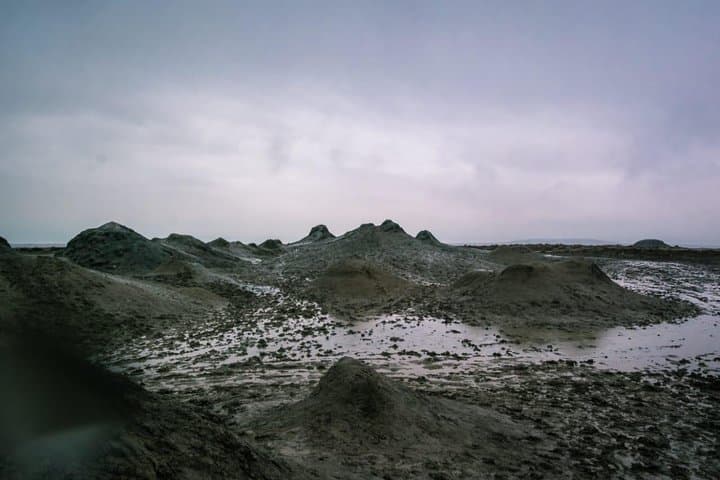
Gobustan National Park is a landscape that reads like a field notebook of human life. Over 537 hectares hold more than 6,000 petroglyphs dated anywhere from 5,000 to 40,000 years old. Archaeologists map changes in tool use, herd movement and ritual, while geologists point to the same ground for a different reason: the area is peppered with mud volcanoes, small chimneys that belch slow, mineral-rich mud and remind you that this shoreline sits atop a restless subterranean world.
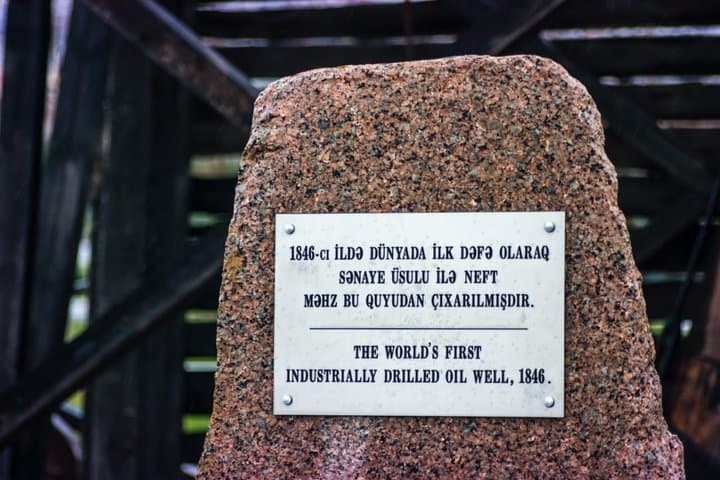
On a typical private tour you’ll pair the engraved plateaus with a visit to bubbling mud cones and a drive-past of regional landmarks—the restored Bibi-Heybat Mosque and the site of the mid-19th-century oil wells that became part of Azerbaijan’s early petroleum boom. That mix—prehistoric art, raw geology and industrial history—gives the day its texture.
Terrain ranges from packed earth to jagged rock ledges; many petroglyph panels require short, careful climbs and a steady step. The private transfer normally includes AC, bottled water and an English-speaking driver-guide, which takes the logistics out of your hands and leaves you with clear, practical choices: don’t touch the carvings, keep to marked paths, and give mud cones a wide berth—the ground around them can be unstable.
Timing matters. Morning light casts carvings into relief; late afternoon warms the mud volcanoes’ colors and cools the steppe. Weather can change fast: wind and sun dominate, and shade is scarce. The tour’s five-hour window is long enough for slow study but short enough to prevent heat fatigue.
For photographers and history-minded travelers alike, Gobustan rewards patience. Frame petroglyphs against the horizon to show scale, capture the slow churn of a mud cone, and keep a wide-angle lens ready for the sweep of the plain. Respectful behavior preserves the site for the next visitor—and for the people whose ancestors left those first marks on stone.
Practical takeaways: allow about an hour each way from Baku depending on traffic, bring sun protection and sturdy shoes, and plan on a moderate level of physical fitness to climb between panels. With careful planning, a private Gobustan tour turns a geological oddity into a layered day of discovery.
moderate.
5 hours.
Moderate fitness needed—short climbs and walking on uneven rock require stable footing and balance
Average drive time is about 1–1.5 hours each way depending on traffic; plan for roughly five hours total for the private tour.
Admission is typically not included in the base price; confirm with the operator and bring local currency or card for park entry.
Yes—photography is allowed, but do not use flash directly on carvings and avoid touching the rock surfaces for close-ups.
Children can enjoy the visit but require supervision on uneven surfaces and around mud volcanoes; the tour notes a need for moderate fitness.
Wear shoes you don’t mind getting splashed and layers for wind; avoid sandals since terrain near cones can be sticky and uneven.
Much of the reserve involves rocky, uneven ground and short climbs, so accessibility is limited—check with the operator for tailored arrangements.
Gobustan’s petroglyphs span the Stone Age through medieval times; the area also sits near early oil concessions that helped launch Azerbaijan’s 19th-century petroleum industry.
The park is UNESCO-listed and fragile—visitors should remain on marked paths, avoid touching rock art, and follow guide instructions to minimize erosion and vandalism.
Caspi Tours operates guided outdoor trips and adventures with an emphasis on safety, stewardship, and memorable experiences.
You arrive where the asphalt thins and the Caspian’s breath thins into steppe wind: a low plateau of weathered stone and pockmarked hills. On a private tour from Baku, the driver drops you near a scatter of boulders—walls of stone that keep stories older than most civilizations. The faces are not painted; they are cut. Horses, hunters, spirals and boats carved deep into the rock look out over an empty plain as if frozen in the middle of a long conversation.
You arrive where the asphalt thins and the Caspian’s breath thins into steppe wind: a low plateau of weathered stone and pockmarked hills. On a private tour from Baku, the driver drops you near a scatter of boulders—walls of stone that keep stories older than most civilizations. The faces are not painted; they are cut. Horses, hunters, spirals and boats carved deep into the rock look out over an empty plain as if frozen in the middle of a long conversation.
Gobustan National Park is a landscape that reads like a field notebook of human life. Over 537 hectares hold more than 6,000 petroglyphs dated anywhere from 5,000 to 40,000 years old. Archaeologists map changes in tool use, herd movement and ritual, while geologists point to the same ground for a different reason: the area is peppered with mud volcanoes, small chimneys that belch slow, mineral-rich mud and remind you that this shoreline sits atop a restless subterranean world.
On a typical private tour you’ll pair the engraved plateaus with a visit to bubbling mud cones and a drive-past of regional landmarks—the restored Bibi-Heybat Mosque and the site of the mid-19th-century oil wells that became part of Azerbaijan’s early petroleum boom. That mix—prehistoric art, raw geology and industrial history—gives the day its texture.
Terrain ranges from packed earth to jagged rock ledges; many petroglyph panels require short, careful climbs and a steady step. The private transfer normally includes AC, bottled water and an English-speaking driver-guide, which takes the logistics out of your hands and leaves you with clear, practical choices: don’t touch the carvings, keep to marked paths, and give mud cones a wide berth—the ground around them can be unstable.
Timing matters. Morning light casts carvings into relief; late afternoon warms the mud volcanoes’ colors and cools the steppe. Weather can change fast: wind and sun dominate, and shade is scarce. The tour’s five-hour window is long enough for slow study but short enough to prevent heat fatigue.
For photographers and history-minded travelers alike, Gobustan rewards patience. Frame petroglyphs against the horizon to show scale, capture the slow churn of a mud cone, and keep a wide-angle lens ready for the sweep of the plain. Respectful behavior preserves the site for the next visitor—and for the people whose ancestors left those first marks on stone.
Practical takeaways: allow about an hour each way from Baku depending on traffic, bring sun protection and sturdy shoes, and plan on a moderate level of physical fitness to climb between panels. With careful planning, a private Gobustan tour turns a geological oddity into a layered day of discovery.