THE ADVENTURE COLLECTIVE® · Independent discovery and booking for outdoor travel

A private full-day tour that pairs the towering Giza pyramids with the Step Pyramid at Saqqara and the ancient capital of Memphis. Expect an air-conditioned transfer, expert interpretation, an optional camel ride, and an authentic Egyptian lunch.
A private full-day tour that pairs the towering Giza pyramids with the Step Pyramid at Saqqara and the ancient capital of Memphis. Expect an air-conditioned transfer, expert interpretation, an optional camel ride, and an authentic Egyptian lunch.
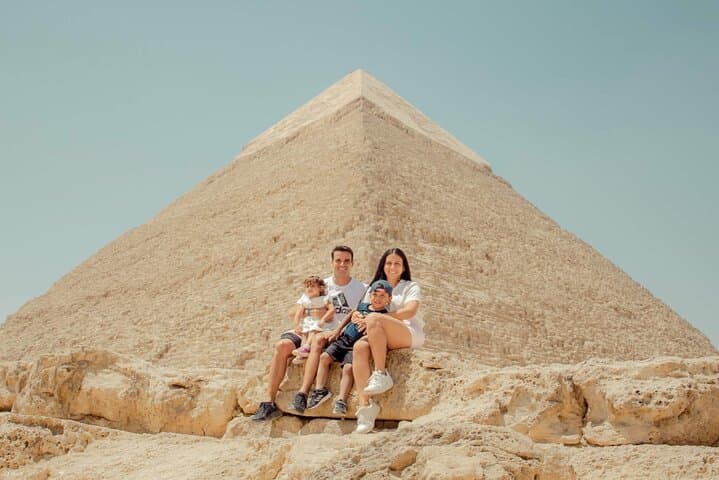
At dawn the Giza Plateau opens like a museum of stone — the Great Pyramid, its neighbors, and the Sphinx cut a hard profile against the sky. A private guide meets travelers at their hotel, drives out across cityscape into the sweep of desert, and drops them at the base of three pyramids where limestone blocks record millennia of wind and hands.
Verified experiences and guided adventures in the surrounding area.
Operated by Go Explore · Giza, Cairo Governorate
At dawn the Giza Plateau opens like a museum of stone — the Great Pyramid, its neighbors, and the Sphinx cut a hard profile against the sky. A private guide meets travelers at their hotel, drives out across cityscape into the sweep of desert, and drops them at the base of three pyramids where limestone blocks record millennia of wind and hands.
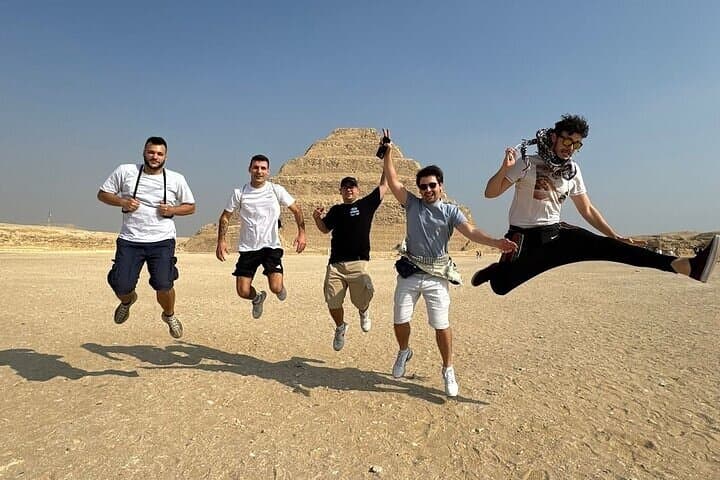
The tour then moves to Saqqara, 27 km southwest, where the Step Pyramid of Djoser marks a turning point in funerary architecture around 2700 BCE. Nearby Memphis, Egypt's first capital, preserves colossal statuary including a seated Ramses II and an alabaster sphinx, a quieter counterpoint to Giza's scale.
Geology here is straightforward: Pleistocene limestone and windblown sand both protect and erode monuments on the plateau, producing slick surfaces and loose footing in places. Culturally, guides explain funerary rites, hieroglyphic inscriptions, and the evolving role of the Nile in sustaining ancient cities.
Practical guidance: expect 6–8 hours on a private, air-conditioned vehicle with hotel pickup; bring sun protection and at least 1.5 liters of water, wear closed-toe walking shoes for uneven stone and sand, and carry small change for tips and entrance fees (admissions are typically not included).
Cameras are welcome but respect signage restricting tripods or interior photography.
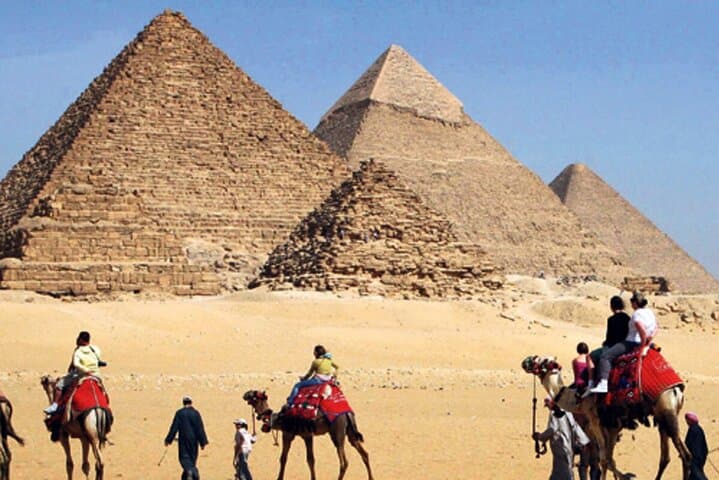
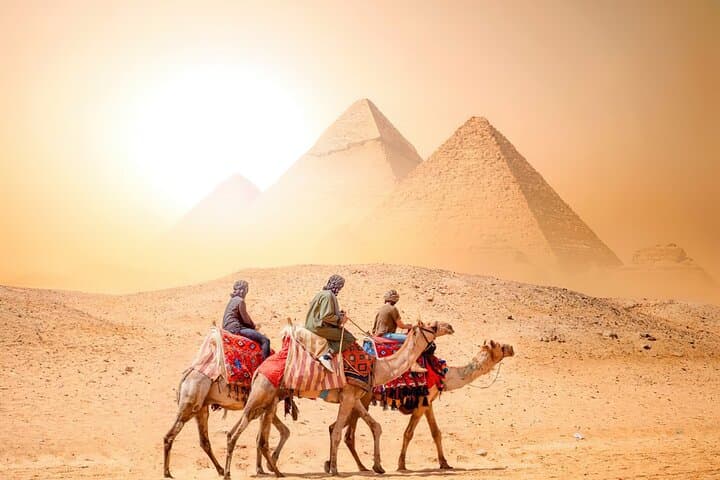
A camel ride offers iconic photos but is optional; ride wearing long pants and hold small items securely. Peak comfort comes from pacing the day: hydrate early, move between shade and sun, and follow your guide's route to avoid restricted zones.
moderate.
6–8 hours.
Suitable for travelers able to walk on uneven ground for several hours and climb short stone steps; not strenuous but requires stamina for a full day.
No, most entrance fees are not included; the operator typically handles logistics but guests should budget for individual admissions at Giza, Saqqara and Memphis.
The camel ride is optional; operators use experienced handlers, but riders should wear long pants, keep hands free of loose items, and disclose any health issues beforehand.
Accessibility is limited—ancient sites have uneven stone, steps, and sandy approaches; check with the operator about vehicle transport and specific access at each stop.
Private tours commonly offer English and other major languages upon request—confirm language preference when booking to ensure an appropriate guide.
Giza's major pyramids were built during Egypt's Old Kingdom (c. 2600–2500 BCE); Saqqara's Step Pyramid of Djoser, designed by Imhotep circa 2700 BCE, represents an earlier shift from mastaba tombs to stepped stone monuments.
High visitor numbers and wind-driven sand cause erosion and surface wear; stay on designated paths, avoid touching reliefs, and support local conservation by following guide instructions.
Go Explore operates guided outdoor trips and adventures with an emphasis on safety, stewardship, and memorable experiences.
At dawn the Giza Plateau opens like a museum of stone — the Great Pyramid, its neighbors, and the Sphinx cut a hard profile against the sky. A private guide meets travelers at their hotel, drives out across cityscape into the sweep of desert, and drops them at the base of three pyramids where limestone blocks record millennia of wind and hands.
At dawn the Giza Plateau opens like a museum of stone — the Great Pyramid, its neighbors, and the Sphinx cut a hard profile against the sky. A private guide meets travelers at their hotel, drives out across cityscape into the sweep of desert, and drops them at the base of three pyramids where limestone blocks record millennia of wind and hands.
The tour then moves to Saqqara, 27 km southwest, where the Step Pyramid of Djoser marks a turning point in funerary architecture around 2700 BCE. Nearby Memphis, Egypt's first capital, preserves colossal statuary including a seated Ramses II and an alabaster sphinx, a quieter counterpoint to Giza's scale.
Geology here is straightforward: Pleistocene limestone and windblown sand both protect and erode monuments on the plateau, producing slick surfaces and loose footing in places. Culturally, guides explain funerary rites, hieroglyphic inscriptions, and the evolving role of the Nile in sustaining ancient cities.
Practical guidance: expect 6–8 hours on a private, air-conditioned vehicle with hotel pickup; bring sun protection and at least 1.5 liters of water, wear closed-toe walking shoes for uneven stone and sand, and carry small change for tips and entrance fees (admissions are typically not included).
Cameras are welcome but respect signage restricting tripods or interior photography.
A camel ride offers iconic photos but is optional; ride wearing long pants and hold small items securely. Peak comfort comes from pacing the day: hydrate early, move between shade and sun, and follow your guide's route to avoid restricted zones.