THE ADVENTURE COLLECTIVE® · Independent discovery and booking for outdoor travel

Experience the Giza Plateau with a private guide: stand by the Great Pyramid, peer up at Khafre and Menkaure, take a short camel ride and enjoy a local lunch. This half-day tour pairs archaeological insight with practical tips for visiting in comfort.
Experience the Giza Plateau with a private guide: stand by the Great Pyramid, peer up at Khafre and Menkaure, take a short camel ride and enjoy a local lunch. This half-day tour pairs archaeological insight with practical tips for visiting in comfort.
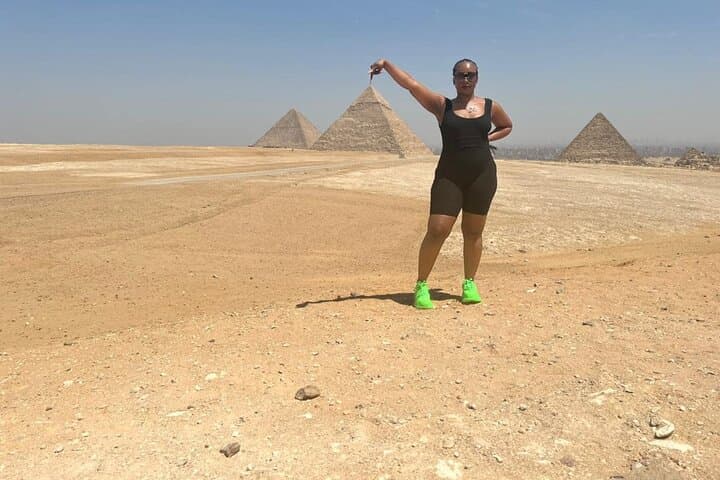
You step out of the air-conditioned car and the plateau opens like a stone harbor: three colossal pyramids rise from baked sand, wind shaping the air that brushes your face. Heat and history press in together—workers’ footprints long gone, stones left to stand as if daring you to measure their age.
Verified experiences and guided adventures in the surrounding area.
Operated by Hesham Egypt tour guide · Giza, Giza Governorate
You step out of the air-conditioned car and the plateau opens like a stone harbor: three colossal pyramids rise from baked sand, wind shaping the air that brushes your face. Heat and history press in together—workers’ footprints long gone, stones left to stand as if daring you to measure their age.
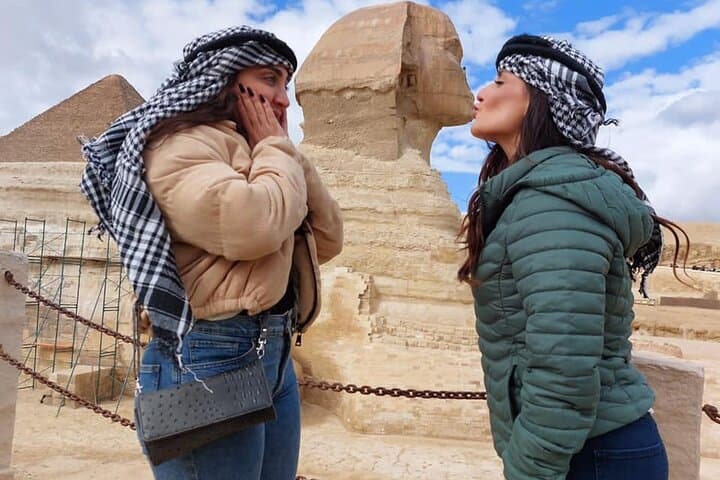
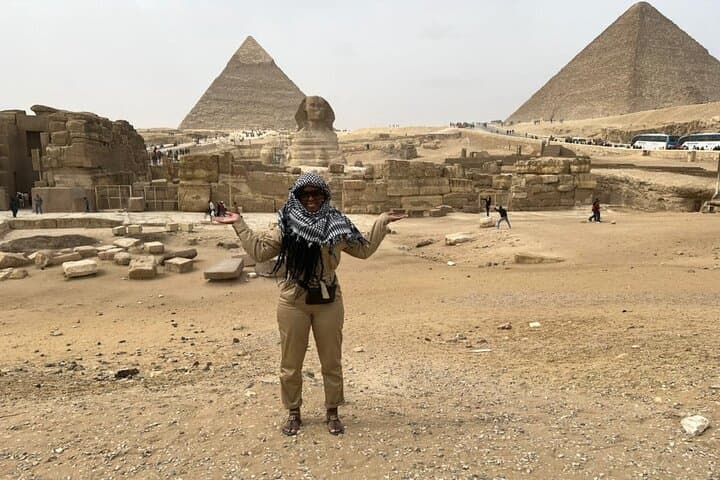
The Great Pyramid of Khufu dominates the site, built in the 4th Dynasty around 2550 BCE; its original casing and precision alignments still astonish engineers and visitors alike. Nearby, Khafre’s layered summit and Menkaure’s smaller, altered form trace shifting royal ambitions. The Sphinx, carved from sandstone, faces the sunrise with a gaze that has watched millennia pass. Geology is obvious here: limestone and bedrock, eroded by wind and time, make every surface part artifact and part landscape.
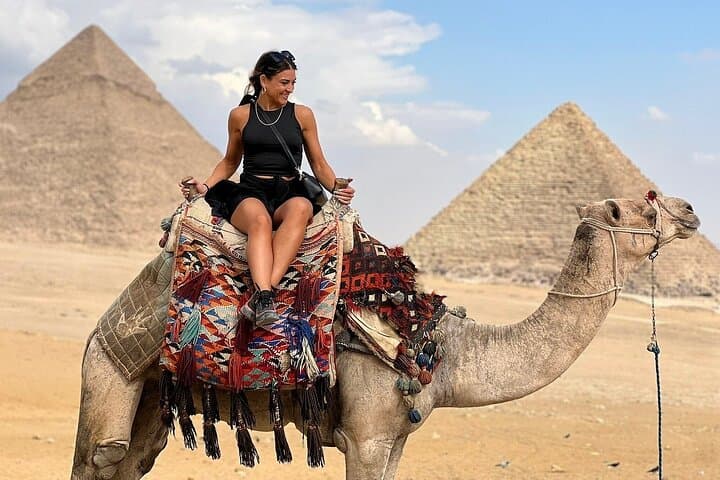
The tour blends archaeology with modern Cairo life: expect an informative local guide, a 15-minute camel panorama ride, and a simple lunch—koshary or falafel—before you return to the city. Practice respectful photography, follow pathway limits, and be mindful of ongoing conservation work; touching relics accelerates erosion.
Practical tips: visit early or late afternoon to avoid the hottest sun and the biggest crowds; carry at least 1–2 liters of water and sun protection; wear sturdy, closed-toe shoes for uneven limestone footing. The experience is low-impact physically but high in sensory detail—sand underfoot, the wind pushing across the plateau, and the quiet scale of ancient engineering spread out against Cairo’s modern skyline.
easy.
4 hours.
Minimal fitness required—able to stand and walk short distances on uneven limestone and sand.
This tour provides a guided visit to the Giza Plateau; standard site entrance is typically included with your booking, but entry inside pyramids usually requires a separate ticket—ask your operator in advance.
The itinerary specifies a 15-minute camel ride in the panoramic area of the plateau—suitable for first-time riders with handlers present.
Yes—this tour includes a simple lunch such as koshary or a falafel sandwich and bottled water as noted in the itinerary.
The plateau has uneven surfaces and sandy stretches; visitors with significant mobility limitations should contact the operator to arrange suitable transportation and assistance.
The main pyramids at Giza date to Egypt’s 4th Dynasty (circa 2550–2490 BCE); Khufu’s Great Pyramid was long the tallest man-made structure on Earth and is the sole surviving Wonder of the Ancient World.
Visitor pressure and wind-driven erosion threaten exposed stone; stay on designated paths, avoid touching masonry, and support operators who work with local conservation efforts and responsible camel handlers.
Hesham Egypt tour guide operates guided outdoor trips and adventures with an emphasis on safety, stewardship, and memorable experiences.
You step out of the air-conditioned car and the plateau opens like a stone harbor: three colossal pyramids rise from baked sand, wind shaping the air that brushes your face. Heat and history press in together—workers’ footprints long gone, stones left to stand as if daring you to measure their age.
You step out of the air-conditioned car and the plateau opens like a stone harbor: three colossal pyramids rise from baked sand, wind shaping the air that brushes your face. Heat and history press in together—workers’ footprints long gone, stones left to stand as if daring you to measure their age.
The Great Pyramid of Khufu dominates the site, built in the 4th Dynasty around 2550 BCE; its original casing and precision alignments still astonish engineers and visitors alike. Nearby, Khafre’s layered summit and Menkaure’s smaller, altered form trace shifting royal ambitions. The Sphinx, carved from sandstone, faces the sunrise with a gaze that has watched millennia pass. Geology is obvious here: limestone and bedrock, eroded by wind and time, make every surface part artifact and part landscape.
The tour blends archaeology with modern Cairo life: expect an informative local guide, a 15-minute camel panorama ride, and a simple lunch—koshary or falafel—before you return to the city. Practice respectful photography, follow pathway limits, and be mindful of ongoing conservation work; touching relics accelerates erosion.
Practical tips: visit early or late afternoon to avoid the hottest sun and the biggest crowds; carry at least 1–2 liters of water and sun protection; wear sturdy, closed-toe shoes for uneven limestone footing. The experience is low-impact physically but high in sensory detail—sand underfoot, the wind pushing across the plateau, and the quiet scale of ancient engineering spread out against Cairo’s modern skyline.