THE ADVENTURE COLLECTIVE® · Independent discovery and booking for outdoor travel

Explore the Giza Plateau with a private Egyptologist, camel ride, and access to select pyramids. This practical 4–5 hour tour includes hotel pickup, lunch and a stop at the Papyrus Museum.
Explore the Giza Plateau with a private Egyptologist, camel ride, and access to select pyramids. This practical 4–5 hour tour includes hotel pickup, lunch and a stop at the Papyrus Museum.
You step from an air-conditioned vehicle into a dry heat that seems to push the city back and lay the plateau bare before you. Sand sighs around the base of stone giants; camels lift their heads as if daring you to come closer. Your guide points out the straight, clean lines of the Great Pyramid, and the scale takes over—the desert refuses metaphor and insists on fact.
Verified experiences and guided adventures in the surrounding area.
Operated by Promo Trend Travel · Giza, Cairo Governorate
You step from an air-conditioned vehicle into a dry heat that seems to push the city back and lay the plateau bare before you. Sand sighs around the base of stone giants; camels lift their heads as if daring you to come closer. Your guide points out the straight, clean lines of the Great Pyramid, and the scale takes over—the desert refuses metaphor and insists on fact.
This place is 4,500 years of human engineering: Khufu’s Great Pyramid, Khafre’s still-capped peak, and Menkaure’s granite-clad base. The plateau’s limestone and imported Aswan granite tell a logistical story as much as a cultural one. Nearby, the Sphinx keeps watch over the funerary temple ruins where mummification and offerings once took place. A visit to the Papyrus Museum after the plateau frames how writing and record-keeping underpinned these ancient projects.
Practical notes: the tour runs 4–5 hours with hotel pickup in Cairo or Giza, Wi‑Fi in the vehicle, lunch included, and a licensed Egyptologist guiding the route. Entry into the Queen Hetepheres pyramid is open Sunday–Thursday; interior access to the Great Pyramid requires a special ticket your guide can arrange. The camel ride is typically offered at a panoramic vantage point for photos—expect vendors and tipping culture. Wheelchair access and infant accommodations are available, but surfaces on the plateau are uneven sand and basalt, so bring closed-toe shoes, sun protection, and water. Aim for early morning or late afternoon light to avoid peak heat and capture the best photos. Respect marked areas—climbing the monuments is prohibited and harms conservation efforts—so enjoy the scale from the paths designed for visitors.
easy.
4–5 hours.
Suitable for most fitness levels; requires short walks on sand and uneven surfaces but no climbing of monuments.
Interior access requires a special ticket separate from standard plateau admission; your guide can help secure one when available.
The tour lists a camel ride as included at the panoramic viewpoint, but riders often pay small additional fees or tips directly to handlers.
The tour and transportation are listed as wheelchair accessible, but the plateau itself has sandy, uneven areas—ask the operator about specific access plans when booking.
Tipping is customary—plan modest tips for your guide and separate small amounts for handlers; local cash is preferred.
The Giza complex dates to the Fourth Dynasty (c. 2600–2500 BCE); moving limestone and Aswan granite over long distances was central to pyramid construction.
Visitor routes are controlled to limit wear; climbing monuments is prohibited—follow guides and avoid touching ancient masonry to help preserve the site.
Promo Trend Travel operates guided outdoor trips and adventures with an emphasis on safety, stewardship, and memorable experiences.

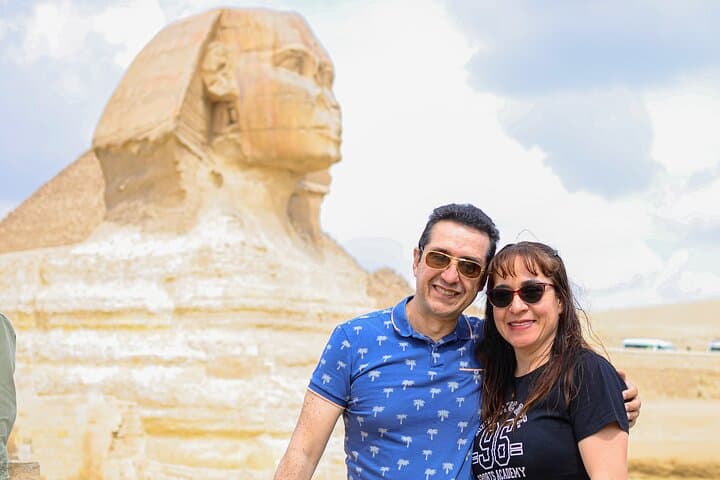


You step from an air-conditioned vehicle into a dry heat that seems to push the city back and lay the plateau bare before you. Sand sighs around the base of stone giants; camels lift their heads as if daring you to come closer. Your guide points out the straight, clean lines of the Great Pyramid, and the scale takes over—the desert refuses metaphor and insists on fact.
You step from an air-conditioned vehicle into a dry heat that seems to push the city back and lay the plateau bare before you. Sand sighs around the base of stone giants; camels lift their heads as if daring you to come closer. Your guide points out the straight, clean lines of the Great Pyramid, and the scale takes over—the desert refuses metaphor and insists on fact.
This place is 4,500 years of human engineering: Khufu’s Great Pyramid, Khafre’s still-capped peak, and Menkaure’s granite-clad base. The plateau’s limestone and imported Aswan granite tell a logistical story as much as a cultural one. Nearby, the Sphinx keeps watch over the funerary temple ruins where mummification and offerings once took place. A visit to the Papyrus Museum after the plateau frames how writing and record-keeping underpinned these ancient projects.
Practical notes: the tour runs 4–5 hours with hotel pickup in Cairo or Giza, Wi‑Fi in the vehicle, lunch included, and a licensed Egyptologist guiding the route. Entry into the Queen Hetepheres pyramid is open Sunday–Thursday; interior access to the Great Pyramid requires a special ticket your guide can arrange. The camel ride is typically offered at a panoramic vantage point for photos—expect vendors and tipping culture. Wheelchair access and infant accommodations are available, but surfaces on the plateau are uneven sand and basalt, so bring closed-toe shoes, sun protection, and water. Aim for early morning or late afternoon light to avoid peak heat and capture the best photos. Respect marked areas—climbing the monuments is prohibited and harms conservation efforts—so enjoy the scale from the paths designed for visitors.