THE ADVENTURE COLLECTIVE® · Independent discovery and booking for outdoor travel

Explore the Giza Plateau with a private Egyptologist, camera-ready viewpoints, and optional ATV or camel rides. Add Sakkara, Memphis, or the Grand Egyptian Museum to deepen the story of ancient Egypt.
Explore the Giza Plateau with a private Egyptologist, camera-ready viewpoints, and optional ATV or camel rides. Add Sakkara, Memphis, or the Grand Egyptian Museum to deepen the story of ancient Egypt.
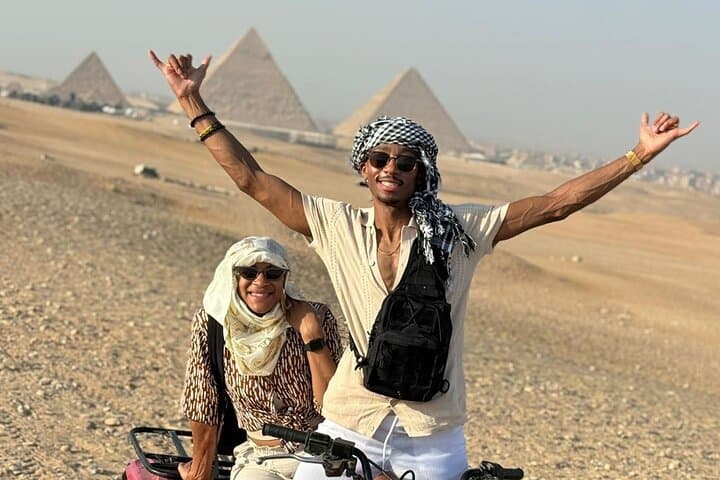
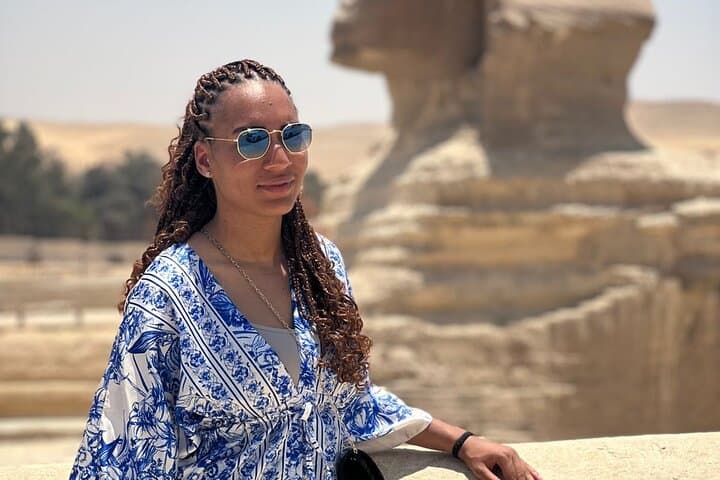
The heat lifts off the asphalt as your air-conditioned vehicle drops you at the edge of the Giza Plateau. Dust and stone meet the horizon; three pyramids loom like engineered mountains while the Sphinx keeps its patient watch. Your Egyptologist walks beside you, tracing the lines of dressed limestone and pointing out patched faces and original casing stones that hint at ancient geometry and lost sightlines.
Verified experiences and guided adventures in the surrounding area.
Operated by CGT Egypt Tours · Giza, Cairo Governorate
The heat lifts off the asphalt as your air-conditioned vehicle drops you at the edge of the Giza Plateau. Dust and stone meet the horizon; three pyramids loom like engineered mountains while the Sphinx keeps its patient watch. Your Egyptologist walks beside you, tracing the lines of dressed limestone and pointing out patched faces and original casing stones that hint at ancient geometry and lost sightlines.
This is a landscape shaped by human ambition and Nile-fed civilization. Khufu, Khafre, and Menkaure built successive monuments here; a short drive away, Djoser's step pyramid at Sakkara marks the move from mastaba tombs to stone architecture. Geologically, the plateau sits on Tura limestone; culturally, vendors, camel handlers, and modern Cairo life press at the site's edges, creating a lively human backdrop.
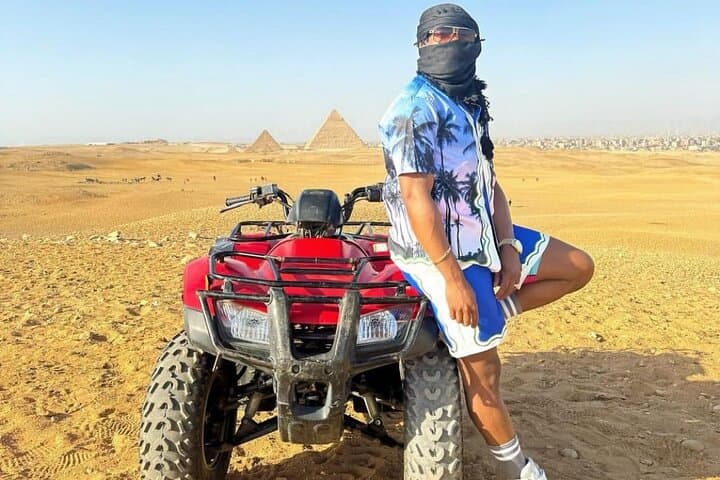
Options let you tailor the day: a one-hour quad loop across sandy tracks adds motion and dust to the static monuments; a 30-minute camel ride gives slow, swaying perspective for photographs; the Grand Egyptian Museum option extends the story indoors with newly conserved artifacts.
Practical edge: wear sturdy closed shoes for uneven limestone and sand, carry sun protection and refillable water, and plan for a 7–9 hour day with hotel transfers. Bring local currency for tips and small purchases; negotiate calmly in bazaars. Stick with your guide to avoid aggressive vendors and respect roped-off areas to help preserve fragile stonework.
moderate.
7–9 hours.
Light to moderate fitness; able to walk on uneven ground for several 30–60 minute periods and tolerate heat.
Main entrance fees listed in the tour inclusions are included; check your selected option for GEM or Sakkara which may have separate admissions.
Yes; options allow for both a camel ride (typically 30 minutes) and a quad/ATV loop, but confirm timing when booking to fit both into the schedule.
The tour is listed as suitable for all fitness levels; infants must sit on an adult's lap and special arrangements should be noted during booking.
Prices cover pickup from Downtown Cairo and Giza hotels; additional charges may apply for New Cairo, the New Administrative Capital, airport road, or 6th October City hotels.
The Giza complex dates to the Fourth Dynasty; Khufu's Great Pyramid originally rose around 139 meters and Sakkara's step pyramid by Djoser marks Egypt's move to stone monumental building.
High visitor volumes and urban encroachment stress the site; stay on marked paths, avoid touching carved surfaces, and follow guide instructions to support preservation.
CGT Egypt Tours operates guided outdoor trips and adventures with an emphasis on safety, stewardship, and memorable experiences.
The heat lifts off the asphalt as your air-conditioned vehicle drops you at the edge of the Giza Plateau. Dust and stone meet the horizon; three pyramids loom like engineered mountains while the Sphinx keeps its patient watch. Your Egyptologist walks beside you, tracing the lines of dressed limestone and pointing out patched faces and original casing stones that hint at ancient geometry and lost sightlines.
The heat lifts off the asphalt as your air-conditioned vehicle drops you at the edge of the Giza Plateau. Dust and stone meet the horizon; three pyramids loom like engineered mountains while the Sphinx keeps its patient watch. Your Egyptologist walks beside you, tracing the lines of dressed limestone and pointing out patched faces and original casing stones that hint at ancient geometry and lost sightlines.
This is a landscape shaped by human ambition and Nile-fed civilization. Khufu, Khafre, and Menkaure built successive monuments here; a short drive away, Djoser's step pyramid at Sakkara marks the move from mastaba tombs to stone architecture. Geologically, the plateau sits on Tura limestone; culturally, vendors, camel handlers, and modern Cairo life press at the site's edges, creating a lively human backdrop.
Options let you tailor the day: a one-hour quad loop across sandy tracks adds motion and dust to the static monuments; a 30-minute camel ride gives slow, swaying perspective for photographs; the Grand Egyptian Museum option extends the story indoors with newly conserved artifacts.
Practical edge: wear sturdy closed shoes for uneven limestone and sand, carry sun protection and refillable water, and plan for a 7–9 hour day with hotel transfers. Bring local currency for tips and small purchases; negotiate calmly in bazaars. Stick with your guide to avoid aggressive vendors and respect roped-off areas to help preserve fragile stonework.