THE ADVENTURE COLLECTIVE® · Independent discovery and booking for outdoor travel

Explore the Giza Plateau with a certified Egyptologist on a private, skip-the-line five-hour tour. Visit the Great Pyramid’s interior, the Valley Temple of Khafre, and the Great Sphinx with enhanced photography and historical depth.
Explore the Giza Plateau with a certified Egyptologist on a private, skip-the-line five-hour tour. Visit the Great Pyramid’s interior, the Valley Temple of Khafre, and the Great Sphinx with enhanced photography and historical depth.
You step from the car onto sun-warmed limestone and the plateau opens: three pyramid silhouettes cut the horizon while wind hisses sand across ancient blocks. Your Egyptologist’s voice threads history into the air as the panorama alters with every step — Khufu’s bulk to the left, Khafre’s shadowed face center, Menkaure smaller and austere to the right.
Verified experiences and guided adventures in the surrounding area.
Operated by Egypt Paradise Tours · Giza, Giza Governorate
You step from the car onto sun-warmed limestone and the plateau opens: three pyramid silhouettes cut the horizon while wind hisses sand across ancient blocks. Your Egyptologist’s voice threads history into the air as the panorama alters with every step — Khufu’s bulk to the left, Khafre’s shadowed face center, Menkaure smaller and austere to the right.
These structures are not merely monuments but calibrated instruments of an Old Kingdom that rearranged landscape and labor. Built about 4,500 years ago from quarried limestone and granite, the pyramids sit atop a geology of compacted desert marl; the Sphinx, carved from bedrock, has been scoured and restored through centuries. Local culture around Giza blends Coptic, Islamic, and modern Cairene life — expect roadside vendors, traditionally brewed coffee, and the persistent rhythms of the city beyond the dunes.
Practically: this private, air-conditioned five-hour tour offers skip-the-line access, a panoramic viewpoint, optional camel ride, entry into Khufu’s interior (not recommended for claustrophobic guests), the Valley Temple of Khafre, and a close visit to the Great Sphinx. Photography windows are generous; plan for strong sun, dusty conditions, and uneven surfaces. Bring a hat, sunscreen, and a small daypack; follow your guide’s route to protect fragile stone and respect restricted areas. Timing visits for early morning or late afternoon softens heat and light and reduces crowds. Expect steady walking on packed sand and stone, short climbs on ramps, and limited shade — but also an unparalleled, tactile connection to one of humanity’s oldest landscapes.
easy.
5 hours.
Requires low to moderate fitness: standing, walking on uneven ground, and short uphill ramps; suitable for most travelers without mobility limitations.
Yes — this tour includes optional entry into Khufu’s interior; note the passage is narrow, steep, and not recommended for those with claustrophobia or back problems.
An optional camel ride is offered as part of the tour; it may incur extra time and tipping and is subject to animal welfare practices, so decide based on comfort level.
Expect steady walking across the plateau with short climbs and stairs; total walking distance is moderate and manageable for most visitors who can stand and walk for several hours.
Tipping is customary; typical guidance is to tip the guide and driver separately depending on service quality (e.g., $5–$15 for driver, $10–$30+ for guide per group), adjusted for currency and local norms.
The Giza pyramids date to Egypt’s Fourth Dynasty (~c. 2600–2500 BCE); the Great Pyramid of Khufu is the largest and the only surviving structure of the ancient Seven Wonders.
Heavy visitation and wind-driven sand contribute to erosion; stick to designated paths, avoid touching reliefs, and support site preservation through official fees and responsible behavior.
Egypt Paradise Tours operates guided outdoor trips and adventures with an emphasis on safety, stewardship, and memorable experiences.
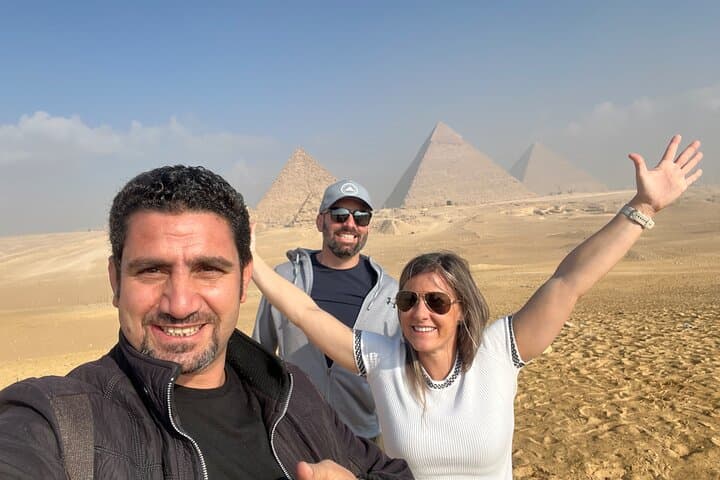
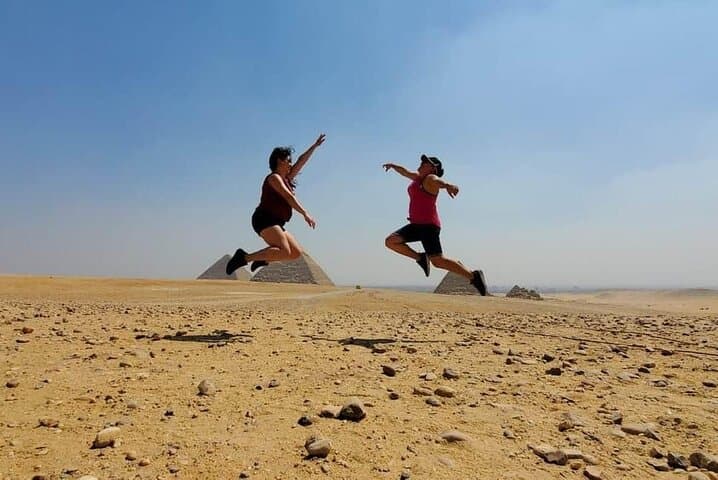
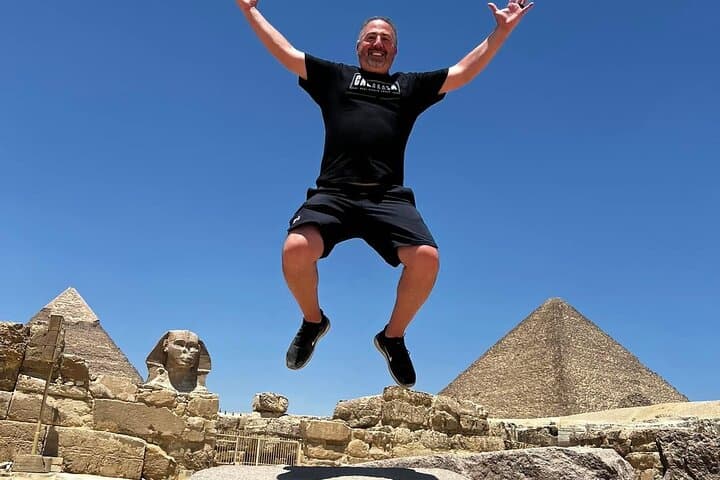
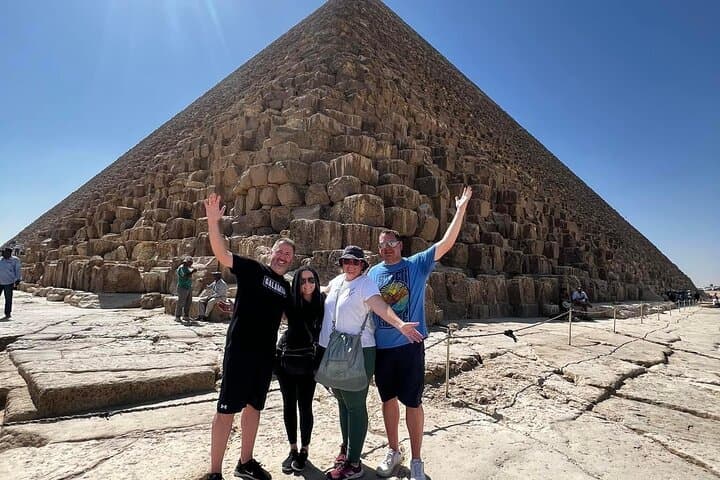
You step from the car onto sun-warmed limestone and the plateau opens: three pyramid silhouettes cut the horizon while wind hisses sand across ancient blocks. Your Egyptologist’s voice threads history into the air as the panorama alters with every step — Khufu’s bulk to the left, Khafre’s shadowed face center, Menkaure smaller and austere to the right.
You step from the car onto sun-warmed limestone and the plateau opens: three pyramid silhouettes cut the horizon while wind hisses sand across ancient blocks. Your Egyptologist’s voice threads history into the air as the panorama alters with every step — Khufu’s bulk to the left, Khafre’s shadowed face center, Menkaure smaller and austere to the right.
These structures are not merely monuments but calibrated instruments of an Old Kingdom that rearranged landscape and labor. Built about 4,500 years ago from quarried limestone and granite, the pyramids sit atop a geology of compacted desert marl; the Sphinx, carved from bedrock, has been scoured and restored through centuries. Local culture around Giza blends Coptic, Islamic, and modern Cairene life — expect roadside vendors, traditionally brewed coffee, and the persistent rhythms of the city beyond the dunes.
Practically: this private, air-conditioned five-hour tour offers skip-the-line access, a panoramic viewpoint, optional camel ride, entry into Khufu’s interior (not recommended for claustrophobic guests), the Valley Temple of Khafre, and a close visit to the Great Sphinx. Photography windows are generous; plan for strong sun, dusty conditions, and uneven surfaces. Bring a hat, sunscreen, and a small daypack; follow your guide’s route to protect fragile stone and respect restricted areas. Timing visits for early morning or late afternoon softens heat and light and reduces crowds. Expect steady walking on packed sand and stone, short climbs on ramps, and limited shade — but also an unparalleled, tactile connection to one of humanity’s oldest landscapes.