THE ADVENTURE COLLECTIVE® · Independent discovery and booking for outdoor travel

Explore the Giza Plateau with a private Egyptologist guide, skip-the-line access, and an optional camel ride and interior pyramid entry. This 4–6 hour tour blends hands-on history, desert vistas, and practical logistics to get the most from a single day at the pyramids.
Explore the Giza Plateau with a private Egyptologist guide, skip-the-line access, and an optional camel ride and interior pyramid entry. This 4–6 hour tour blends hands-on history, desert vistas, and practical logistics to get the most from a single day at the pyramids.
You step from the air-conditioned car and the plateaus’ sand seems to hold its breath — the three great pyramids rise, heavy with time, under an uncompromising sky. Your guide leads you across compacted desert, pointing out the aligned faces of Khufu, Khafre and Menkaure while the Sphinx watches, its profile worn but unmistakable.
Verified experiences and guided adventures in the surrounding area.
Operated by Blue Nile Tours · Giza, Giza Governorate
You step from the air-conditioned car and the plateaus’ sand seems to hold its breath — the three great pyramids rise, heavy with time, under an uncompromising sky. Your guide leads you across compacted desert, pointing out the aligned faces of Khufu, Khafre and Menkaure while the Sphinx watches, its profile worn but unmistakable.
The Giza Plateau is raw geology and layered human ambition: Tura limestone casing, quarried blocks, and mortar lines that reveal construction techniques from around 2560–2490 BC. Stories of pharaonic funerary rites and the mummification temples are visible in ruined pillars and causeways, while the Solar Boat Museum beside Khufu preserves a funerary vessel meant to carry a king into the afterlife.
Culture here is immediate — local camel handlers offer short rides across the sands and vendors sell mint tea and postcards by the panoramic viewpoint where photographers wait for light to drop. Expect sun, dust, and uneven footing more than shade.
Practical guidance: wear sturdy, closed shoes for walking on limestone and gravel, carry water and sun protection, and budget 4–6 hours to include hotel transfers and optional entry inside pyramids if booked. Skip-the-line tickets and a private Egyptologist guide streamline the experience, but entry into interior chambers is often limited by visitor caps and conservation rules.
Respect the site: stay on marked paths, don’t climb the monuments, pack out waste, and allow extra time for security checks — these measures protect the oldest remaining wonders of the ancient world while keeping your visit smooth and memorable.
easy.
4–6 hours.
Suitable for most fitness levels; involves walking on uneven ground and short periods standing
Interior access is sometimes available but often limited; choose the all-inclusive option and confirm in advance since permits and visitor caps vary.
A short camel ride is offered with certain options — confirm at booking; rides are typically 15–20 minutes and led by local handlers.
Basic restroom facilities and a nearby visitor center are available; lunch can be included depending on the option you select or provided at nearby restaurants.
Children are welcome, but the site’s uneven terrain and steps make access difficult for wheelchairs; discuss mobility needs when booking to arrange closer drop-off points.
The Great Pyramid of Khufu was constructed c. 2560 BC and remained the tallest man-made structure for millennia; the complex reflects Old Kingdom funerary architecture and ritual landscapes.
Visitor caps and restricted interior access aim to limit wear on ancient stone — follow guide directions, avoid touching delicate masonry, and take your trash with you.
Blue Nile Tours operates guided outdoor trips and adventures with an emphasis on safety, stewardship, and memorable experiences.
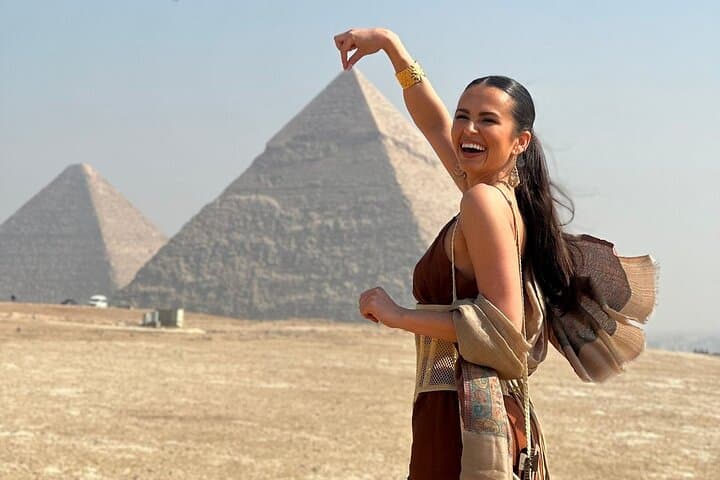
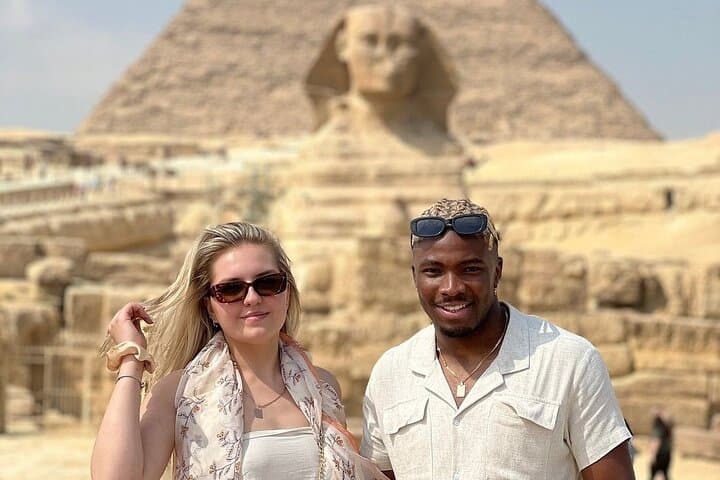
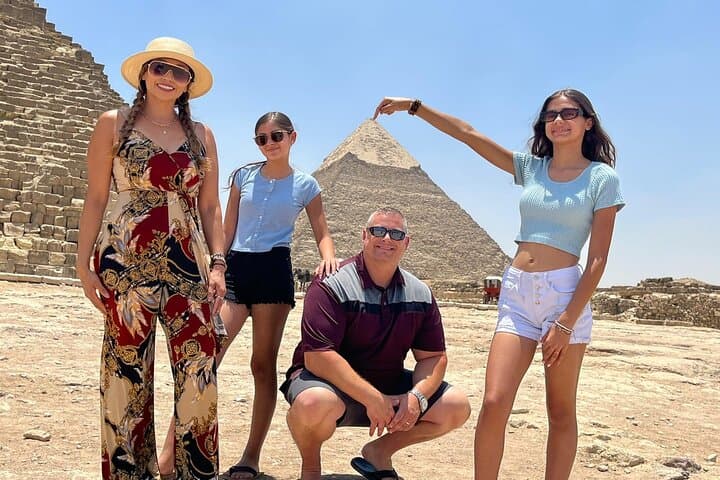
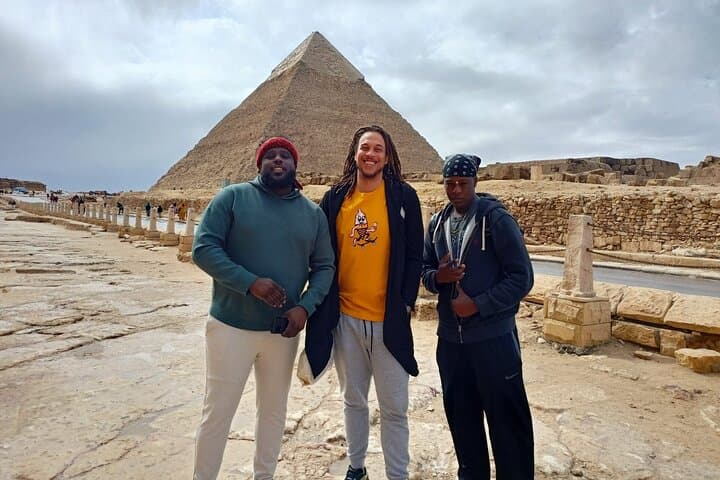
You step from the air-conditioned car and the plateaus’ sand seems to hold its breath — the three great pyramids rise, heavy with time, under an uncompromising sky. Your guide leads you across compacted desert, pointing out the aligned faces of Khufu, Khafre and Menkaure while the Sphinx watches, its profile worn but unmistakable.
You step from the air-conditioned car and the plateaus’ sand seems to hold its breath — the three great pyramids rise, heavy with time, under an uncompromising sky. Your guide leads you across compacted desert, pointing out the aligned faces of Khufu, Khafre and Menkaure while the Sphinx watches, its profile worn but unmistakable.
The Giza Plateau is raw geology and layered human ambition: Tura limestone casing, quarried blocks, and mortar lines that reveal construction techniques from around 2560–2490 BC. Stories of pharaonic funerary rites and the mummification temples are visible in ruined pillars and causeways, while the Solar Boat Museum beside Khufu preserves a funerary vessel meant to carry a king into the afterlife.
Culture here is immediate — local camel handlers offer short rides across the sands and vendors sell mint tea and postcards by the panoramic viewpoint where photographers wait for light to drop. Expect sun, dust, and uneven footing more than shade.
Practical guidance: wear sturdy, closed shoes for walking on limestone and gravel, carry water and sun protection, and budget 4–6 hours to include hotel transfers and optional entry inside pyramids if booked. Skip-the-line tickets and a private Egyptologist guide streamline the experience, but entry into interior chambers is often limited by visitor caps and conservation rules.
Respect the site: stay on marked paths, don’t climb the monuments, pack out waste, and allow extra time for security checks — these measures protect the oldest remaining wonders of the ancient world while keeping your visit smooth and memorable.