THE ADVENTURE COLLECTIVE® · Independent discovery and booking for outdoor travel

Stand before the Great Pyramid, ride a camel across the plateau, and sit down to an authentic Egyptian lunch on a private, skip-the-line tour. This VIP experience pairs focused history with practical guidance for first-time visitors.
Stand before the Great Pyramid, ride a camel across the plateau, and sit down to an authentic Egyptian lunch on a private, skip-the-line tour. This VIP experience pairs focused history with practical guidance for first-time visitors.
You arrive onto the Giza Plateau and the skyline reorganizes itself: three monumental silhouettes cut the horizon, the sun throwing hard light across stepped limestone faces. The guide opens with a measured quiet that lets the stones speak — Khufu’s enormous profile, Khafre’s remnant casing near the peak, Menkaure’s refined proportions — and you walk where millennia of footsteps have left dust and story.
Verified experiences and guided adventures in the surrounding area.
Operated by Nova Egypt Tours · Giza, Giza Governorate
You arrive onto the Giza Plateau and the skyline reorganizes itself: three monumental silhouettes cut the horizon, the sun throwing hard light across stepped limestone faces. The guide opens with a measured quiet that lets the stones speak — Khufu’s enormous profile, Khafre’s remnant casing near the peak, Menkaure’s refined proportions — and you walk where millennia of footsteps have left dust and story.
These are royal tombs from Egypt’s Fourth Dynasty, roughly 4,500 years old, built from massive limestone and quarried stone. Geologically the plateau sits on Tura limestone bedding and older Mokattam depositional layers, which gave builders durable blocks and a palette that once gleamed in polished white casing. Culturally the site is a civic stage: the Sphinx watches on as both archaeological puzzle and icon of state power.
Practicality guides the rest of the day. This private tour typically runs about 5–6 hours and includes admission, an air-conditioned transfer, lunch, bottled water and a short 15-minute camel ride across the sands. Expect uneven footing, loose sand, exposed sun and sudden gusts; views from the elevated western lookout give the classic three-pyramid alignment for photography.
Plan your timing: mornings and late afternoons are cooler and kinder for photos; carry hydration and sun protection; comfortable, closed-toe shoes handle limestone and sand better than sandals. Bring Egyptian pounds for small purchases and tips; allow space in your schedule for brief negotiations with local vendors and camel handlers. The plateau rewards curiosity — stand, look up, and let the scale of human endeavor reframe what you thought possible.
moderate.
5–6 hours.
Moderate: you should be comfortable walking on loose sand and climbing short uneven steps; not suitable for limited mobility without assistance.
Yes — this private tour lists admission fees and a short camel ride as included in the itinerary.
The advertised camel ride is about 15 minutes; children can usually ride with adult supervision but check safety and age limits with the operator before booking.
Interior access to the Great Pyramid is subject to availability and separate ticketing; many private tours focus on exteriors and viewpoints unless interior entry is specifically arranged in advance.
Tipping is customary: consider tipping your guide and driver 10-15% of the tour cost as a baseline and a small tip to camel handlers (a few Egyptian pounds) after the ride.
The Giza pyramids were built during Egypt’s Fourth Dynasty; Khufu’s Great Pyramid was originally about 146 meters tall and constructed from millions of blocks around 2500 BCE.
Erosion, modern pollution and tourist pressure threaten surfaces and surrounding sands; visitors can minimize impact by staying on designated paths and avoiding climbing on structures.
Nova Egypt Tours operates guided outdoor trips and adventures with an emphasis on safety, stewardship, and memorable experiences.
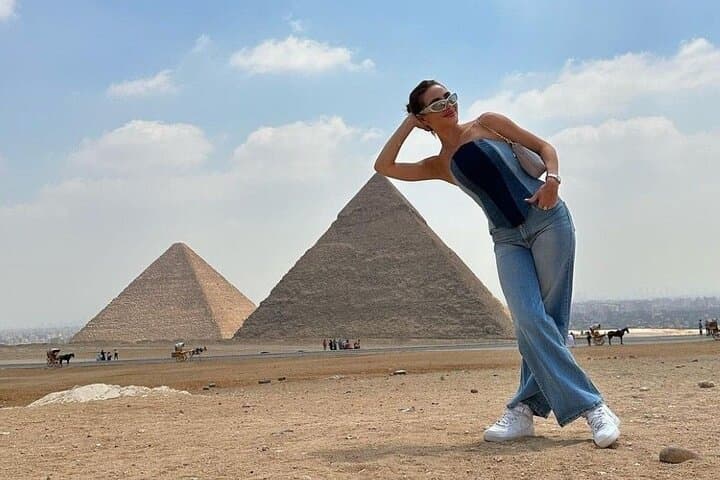
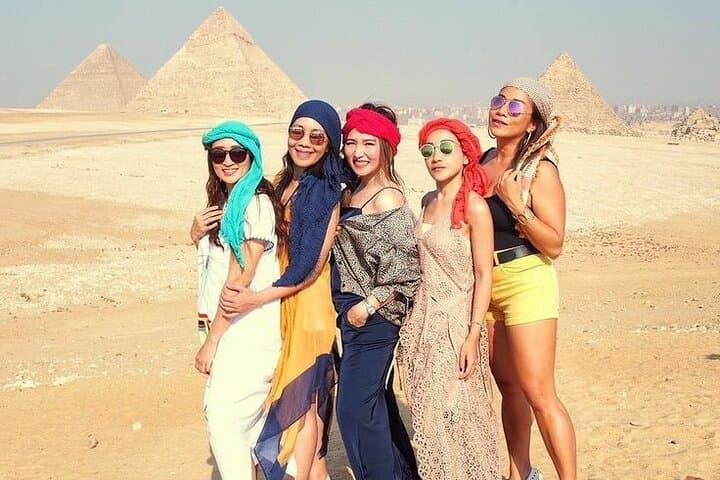
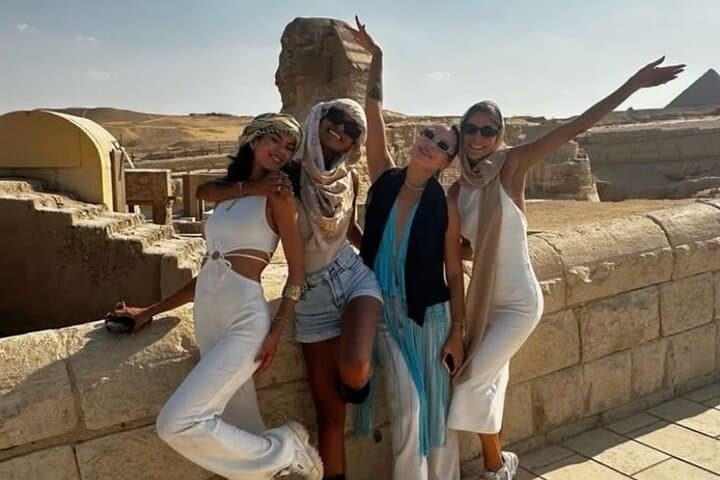
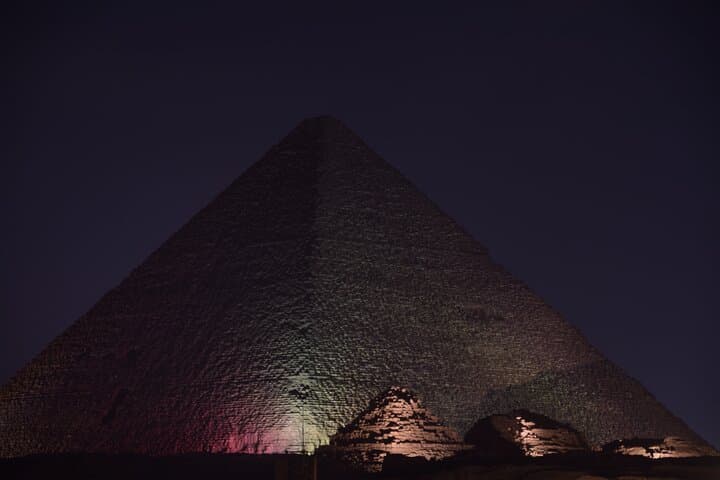
You arrive onto the Giza Plateau and the skyline reorganizes itself: three monumental silhouettes cut the horizon, the sun throwing hard light across stepped limestone faces. The guide opens with a measured quiet that lets the stones speak — Khufu’s enormous profile, Khafre’s remnant casing near the peak, Menkaure’s refined proportions — and you walk where millennia of footsteps have left dust and story.
You arrive onto the Giza Plateau and the skyline reorganizes itself: three monumental silhouettes cut the horizon, the sun throwing hard light across stepped limestone faces. The guide opens with a measured quiet that lets the stones speak — Khufu’s enormous profile, Khafre’s remnant casing near the peak, Menkaure’s refined proportions — and you walk where millennia of footsteps have left dust and story.
These are royal tombs from Egypt’s Fourth Dynasty, roughly 4,500 years old, built from massive limestone and quarried stone. Geologically the plateau sits on Tura limestone bedding and older Mokattam depositional layers, which gave builders durable blocks and a palette that once gleamed in polished white casing. Culturally the site is a civic stage: the Sphinx watches on as both archaeological puzzle and icon of state power.
Practicality guides the rest of the day. This private tour typically runs about 5–6 hours and includes admission, an air-conditioned transfer, lunch, bottled water and a short 15-minute camel ride across the sands. Expect uneven footing, loose sand, exposed sun and sudden gusts; views from the elevated western lookout give the classic three-pyramid alignment for photography.
Plan your timing: mornings and late afternoons are cooler and kinder for photos; carry hydration and sun protection; comfortable, closed-toe shoes handle limestone and sand better than sandals. Bring Egyptian pounds for small purchases and tips; allow space in your schedule for brief negotiations with local vendors and camel handlers. The plateau rewards curiosity — stand, look up, and let the scale of human endeavor reframe what you thought possible.