THE ADVENTURE COLLECTIVE® · Independent discovery and booking for outdoor travel

Stand on the Giza Plateau beside camels and the Great Pyramid on a private 4-hour tour that pairs archaeology with a short camel ride. Learn how to navigate the site, what’s included in basic entry, and how to prepare for heat, crowds and optional interior tickets.
Stand on the Giza Plateau beside camels and the Great Pyramid on a private 4-hour tour that pairs archaeology with a short camel ride. Learn how to navigate the site, what’s included in basic entry, and how to prepare for heat, crowds and optional interior tickets.
You arrive on the Giza Plateau as the city falls away and the desert asserts itself—wind nudges warm sand across the stone, a camel exhales like a small engine beside you, and the Great Pyramid rises raw against the sky. The guide gestures toward the three great tombs; their faces hold the light and shadow of millennia.
Verified experiences and guided adventures in the surrounding area.
Operated by Egypt Tours Online · Giza, Giza Governorate
You arrive on the Giza Plateau as the city falls away and the desert asserts itself—wind nudges warm sand across the stone, a camel exhales like a small engine beside you, and the Great Pyramid rises raw against the sky. The guide gestures toward the three great tombs; their faces hold the light and shadow of millennia.
The necropolis dates to Egypt’s Fourth Dynasty (c. 2600–2500 BC). The pyramids are built of local limestone and granite quarried nearby; beneath tourist paths lie evidence of worker villages and ancient causeways that linked valley temples to mortuary complexes. The Sphinx—part lion, part human—keeps its watch over the complex, its weathered face revealing centuries of restoration and human reverence.
Expect compacted sand, loose scree, and short stone steps rather than steep climbs—total walking on this private 4-hour loop is typically 2–4 km with negligible elevation gain. Cultural color comes from vendors, camel handlers and small storefronts selling papyrus and perfumes; learn to negotiate politely and carry small bills for tips.
Practical edge: bring sun protection, a refillable water bottle, and sturdy closed-toe shoes for uneven limestone. Entry in most tours covers the basic plateau; interior entry into Khufu or pyramid chambers is often extra and limited. Avoid climbing on monuments—rules protect fragile stone and your safety. Time your visit for early morning or late afternoon to dodge the heat and capture the best light for photography.
moderate.
4 hours.
Suitable for most people who can walk 2–4 km on uneven ground; not recommended for those with serious spine or heart issues.
Basic entry to the Giza Plateau is usually included, but access into the interior chambers (e.g., Khufu) is extra and limited—confirm with your operator before arrival.
Yes—this private tour includes a camel ride around the pyramids; handlers typically charge a tip for photo help and mounting assistance.
The plateau has uneven sand and stone; accessibility is limited and some areas are not wheelchair-compatible—contact the operator to arrange assisted transport if needed.
Early morning or late afternoon offers cooler temperatures and softer light for photos; mid-day is hottest and busiest.
The Giza complex was built during Egypt’s Old Kingdom (c. 2600–2500 BC) as royal funerary complexes and associated worker settlements.
The site is vulnerable to erosion, pollution and overtourism; stay on designated paths, avoid touching ancient stone, and follow guide instructions to reduce impact.
Egypt Tours Online operates guided outdoor trips and adventures with an emphasis on safety, stewardship, and memorable experiences.
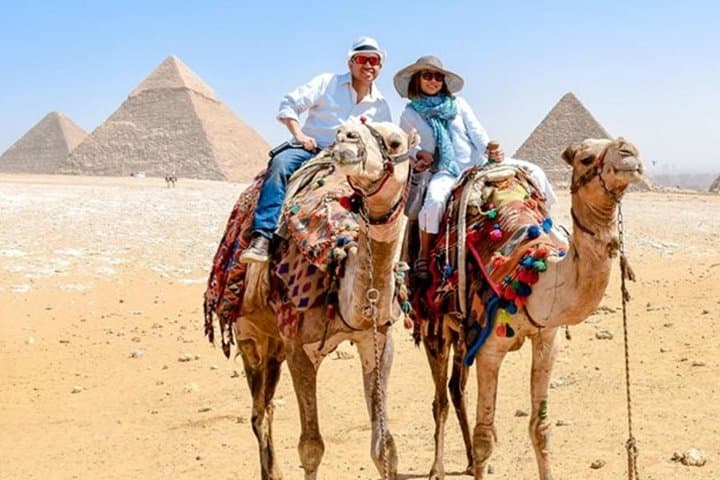
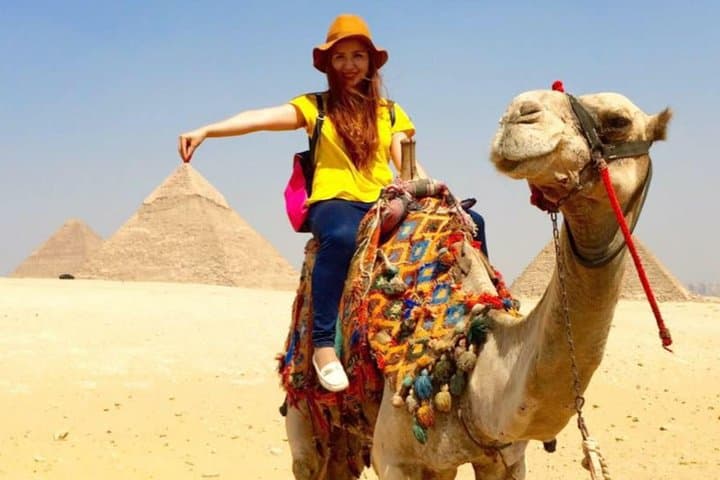


You arrive on the Giza Plateau as the city falls away and the desert asserts itself—wind nudges warm sand across the stone, a camel exhales like a small engine beside you, and the Great Pyramid rises raw against the sky. The guide gestures toward the three great tombs; their faces hold the light and shadow of millennia.
You arrive on the Giza Plateau as the city falls away and the desert asserts itself—wind nudges warm sand across the stone, a camel exhales like a small engine beside you, and the Great Pyramid rises raw against the sky. The guide gestures toward the three great tombs; their faces hold the light and shadow of millennia.
The necropolis dates to Egypt’s Fourth Dynasty (c. 2600–2500 BC). The pyramids are built of local limestone and granite quarried nearby; beneath tourist paths lie evidence of worker villages and ancient causeways that linked valley temples to mortuary complexes. The Sphinx—part lion, part human—keeps its watch over the complex, its weathered face revealing centuries of restoration and human reverence.
Expect compacted sand, loose scree, and short stone steps rather than steep climbs—total walking on this private 4-hour loop is typically 2–4 km with negligible elevation gain. Cultural color comes from vendors, camel handlers and small storefronts selling papyrus and perfumes; learn to negotiate politely and carry small bills for tips.
Practical edge: bring sun protection, a refillable water bottle, and sturdy closed-toe shoes for uneven limestone. Entry in most tours covers the basic plateau; interior entry into Khufu or pyramid chambers is often extra and limited. Avoid climbing on monuments—rules protect fragile stone and your safety. Time your visit for early morning or late afternoon to dodge the heat and capture the best light for photography.