THE ADVENTURE COLLECTIVE® · Independent discovery and booking for outdoor travel

A private full-day transfer from Alexandria Port places you at the foot of the Great Pyramids and the Sphinx with a licensed Egyptologist. Expect long travel, close-up history lessons, a camel photo stop, and lunch with pyramid views.
A private full-day transfer from Alexandria Port places you at the foot of the Great Pyramids and the Sphinx with a licensed Egyptologist. Expect long travel, close-up history lessons, a camel photo stop, and lunch with pyramid views.
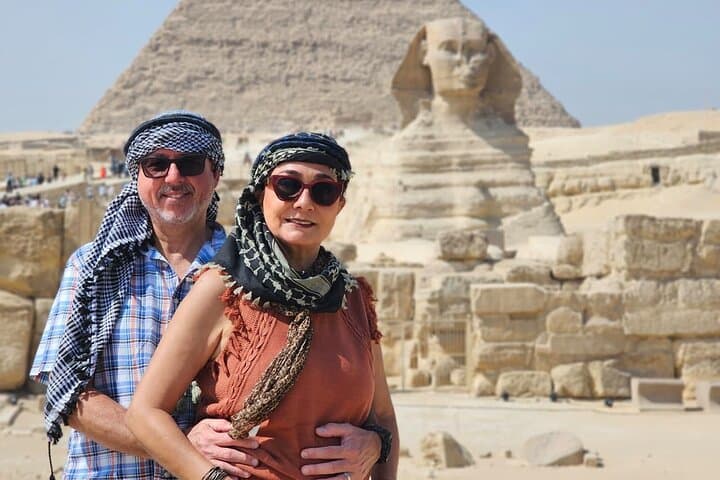
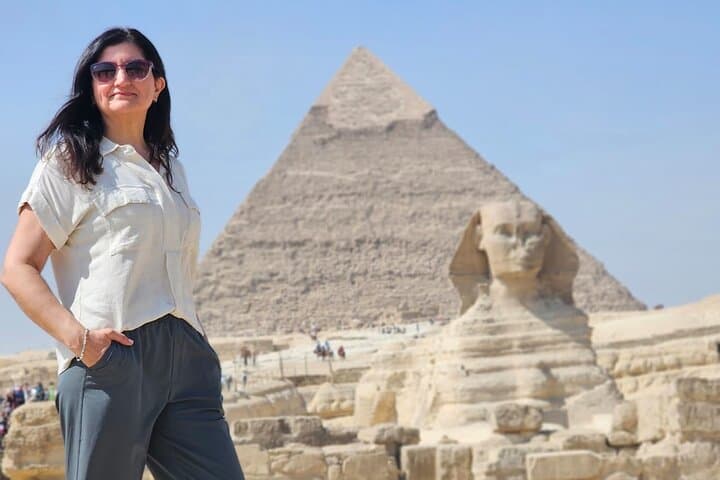
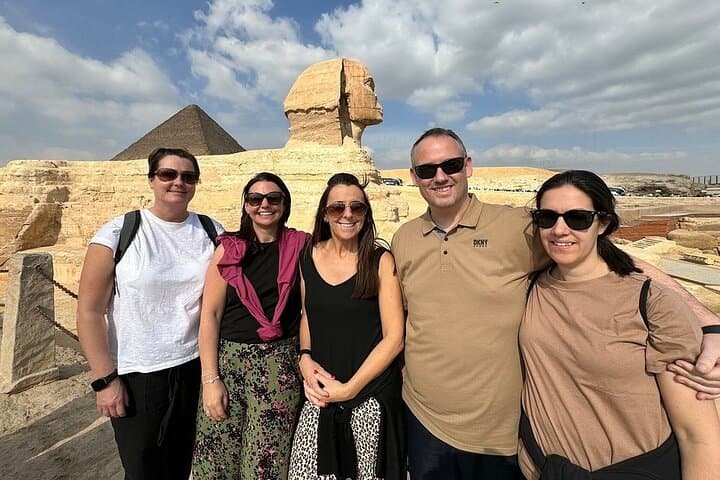
The day opens on the deck of a cruise ship as the Alexandria port recedes and a long ribbon of highway cuts across the Nile Delta toward the rim of the Sahara. By late morning you arrive at the Giza Plateau: sun-baked stone, wind that measures distance by how it pulls sand across the desert, and three pyramids rising like engineered mountains against Cairo’s haze.
Verified experiences and guided adventures in the surrounding area.
Operated by Misk Tours · Giza, Giza Governorate
The day opens on the deck of a cruise ship as the Alexandria port recedes and a long ribbon of highway cuts across the Nile Delta toward the rim of the Sahara. By late morning you arrive at the Giza Plateau: sun-baked stone, wind that measures distance by how it pulls sand across the desert, and three pyramids rising like engineered mountains against Cairo’s haze.
These monuments—Khufu’s Great Pyramid, Khafre’s slightly smaller neighbor, and Menkaure’s compact structure—date to the Fourth Dynasty (c. 2600–2500 BCE). Geology here is simple and brutal: limestone bedrock quarried and set into layered platforms that still hold millennia of human labor. The Sphinx watches from its shoulder, a carved-face guardian whose original paint and details have faded but whose scale remains immediate.
Culturally, a licensed Egyptologist guides the narrative: funerary practice, solar cults, and the logistics of moving multi-ton blocks. You’ll likely pause for a short camel ride that frames the pyramids for photos, and a lunch at a nearby restaurant gives you time to digest both food and history.
Practically, expect uneven footing, hot sun, and crowds. Admission and round-trip transfers from Alexandria Port are included in the private package, but carry ID and modest clothing for sensitive sites. Allow 12–14 hours for the transit-heavy day, bring sun protection and cash for souvenirs, and plan to respect posted boundaries—climbing the pyramids is prohibited. This is a long but singularly direct encounter with one of the ancient world’s most literal achievements.
moderate.
12–14 hours.
Able to handle a full day of travel and walking on uneven, sandy surfaces; minimal climbing required.
Yes—this private tour includes entrance fees to the Giza Plateau as part of the package.
Expect several hours each way—total door-to-door time typically results in a 12–14 hour day depending on traffic and port procedures.
A short camel ride is included for photo opportunities but participation is optional and prices for longer rides may vary locally for additional time.
Yes—the itinerary is rated easy physically, but consider the long transit time and sun exposure when traveling with very young children or those with mobility limits.
The Giza pyramids were constructed during Egypt’s Old Kingdom (c. 2600–2500 BCE); Khufu’s Great Pyramid is the only surviving structure listed among the ancient Seven Wonders.
Site management enforces walkways and ticketing to reduce wear; visitors should avoid touching carved stone and respect no-climb rules to preserve fragile surfaces.
Misk Tours operates guided outdoor trips and adventures with an emphasis on safety, stewardship, and memorable experiences.

The day opens on the deck of a cruise ship as the Alexandria port recedes and a long ribbon of highway cuts across the Nile Delta toward the rim of the Sahara. By late morning you arrive at the Giza Plateau: sun-baked stone, wind that measures distance by how it pulls sand across the desert, and three pyramids rising like engineered mountains against Cairo’s haze.
The day opens on the deck of a cruise ship as the Alexandria port recedes and a long ribbon of highway cuts across the Nile Delta toward the rim of the Sahara. By late morning you arrive at the Giza Plateau: sun-baked stone, wind that measures distance by how it pulls sand across the desert, and three pyramids rising like engineered mountains against Cairo’s haze.
These monuments—Khufu’s Great Pyramid, Khafre’s slightly smaller neighbor, and Menkaure’s compact structure—date to the Fourth Dynasty (c. 2600–2500 BCE). Geology here is simple and brutal: limestone bedrock quarried and set into layered platforms that still hold millennia of human labor. The Sphinx watches from its shoulder, a carved-face guardian whose original paint and details have faded but whose scale remains immediate.
Culturally, a licensed Egyptologist guides the narrative: funerary practice, solar cults, and the logistics of moving multi-ton blocks. You’ll likely pause for a short camel ride that frames the pyramids for photos, and a lunch at a nearby restaurant gives you time to digest both food and history.
Practically, expect uneven footing, hot sun, and crowds. Admission and round-trip transfers from Alexandria Port are included in the private package, but carry ID and modest clothing for sensitive sites. Allow 12–14 hours for the transit-heavy day, bring sun protection and cash for souvenirs, and plan to respect posted boundaries—climbing the pyramids is prohibited. This is a long but singularly direct encounter with one of the ancient world’s most literal achievements.