THE ADVENTURE COLLECTIVE® · Independent discovery and booking for outdoor travel

Drive onto the Giza Plateau with a private Egyptologist guide to explore the Great Pyramids and Sphinx, enjoy a traditional Egyptian lunch and a short camel ride. This practical half-day tour pairs on-site history with easy logistics—hotel pickup, private car and insights that bring the Old Kingdom to life.
Drive onto the Giza Plateau with a private Egyptologist guide to explore the Great Pyramids and Sphinx, enjoy a traditional Egyptian lunch and a short camel ride. This practical half-day tour pairs on-site history with easy logistics—hotel pickup, private car and insights that bring the Old Kingdom to life.
The first sight of the Giza Plateau arrests you: sun-baked limestone slopes rise against the Cairo haze, casting long, hard shadows across the desert. Your private guide steers a short drive from the city and the three great pyramids—Khufu, Khafre and Menkaure—loom into view, their weathered faces layered with millennia of wind and sand.
Verified experiences and guided adventures in the surrounding area.
Operated by Ohh Egypt · Giza, Giza Governorate
The first sight of the Giza Plateau arrests you: sun-baked limestone slopes rise against the Cairo haze, casting long, hard shadows across the desert. Your private guide steers a short drive from the city and the three great pyramids—Khufu, Khafre and Menkaure—loom into view, their weathered faces layered with millennia of wind and sand.
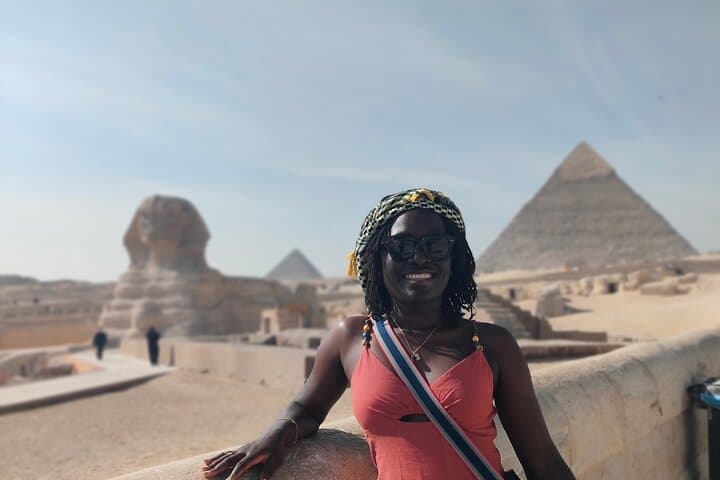
This is Old Kingdom ground. Built in the 4th Dynasty (around 2500 BCE), the pyramids are royal tombs of pharaohs whose names—Khufu (Cheops), Khafre (Chephren) and Menkaure—still anchor Egyptian history. The Great Sphinx, a limestone guardian carved with a royal visage and lion’s body, watches the horizon where the Nile valley drops away; the plateau’s geology is primarily Eocene limestone, quarried on-site by ancient builders.
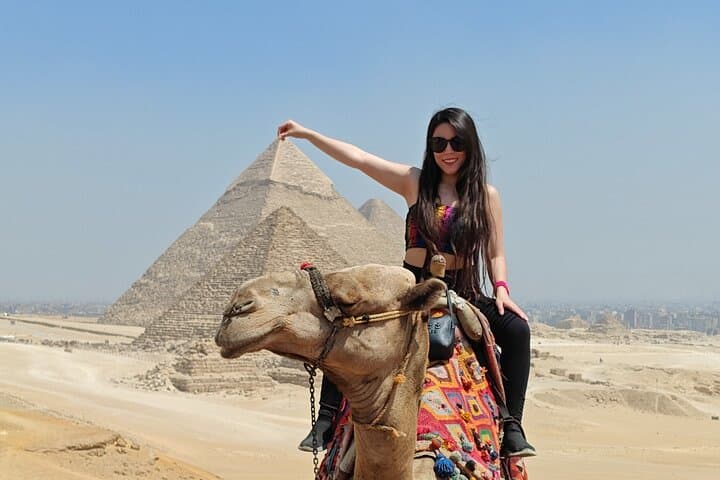
Cultural texture arrives in small details: vendors offering hibiscus tea, camel handlers ready with a short ride, and the omnipresent rhythm of bargaining at nearby stalls. Note that entering an inner chamber or “inside” pyramid typically requires an additional ticket and depends on site rules and availability.
Practical guidance: this private half-day runs about six hours with hotel pickup, short walks on uneven stone and packed sand, and a provided lunch. Bring sun protection, refillable water, and sturdy shoes for rocky surfaces. Visit early or late in the day to avoid peak heat and to capture better light for photos. Expect security screening, modest dress for cultural respect, and small cash for tips and purchases. With a good guide, the ruins become readable—each block and passage reveals a plan that survived millennia.
moderate.
6 hours.
Moderate fitness required—able to walk on uneven surfaces for several short intervals and tolerate desert heat
Inner-chamber access is often a separate ticket and can be subject to daily limits or closures; confirm with the operator before arrival.
Camel rides included on many packages are short—typically around 15–30 minutes—suitable for photos and a brief desert experience.
This tour includes hotel pickup in central Cairo and Giza hotels; confirm your pickup point and time when booking.
The site has uneven terrain and some steep steps; travelers with serious mobility or spinal issues should check with the operator—this trip is not recommended for those with severe back or heart problems.
The Giza complex dates to Egypt’s 4th Dynasty (c. 2600–2500 BCE); the pyramids served as royal tombs and components of funerary complexes tied to solar and afterlife beliefs.
Visitor volume, souvenir vendors and dust transport pose ongoing conservation challenges; stick to marked paths, avoid climbing monuments and support licensed guides to reduce impact.
Ohh Egypt operates guided outdoor trips and adventures with an emphasis on safety, stewardship, and memorable experiences.
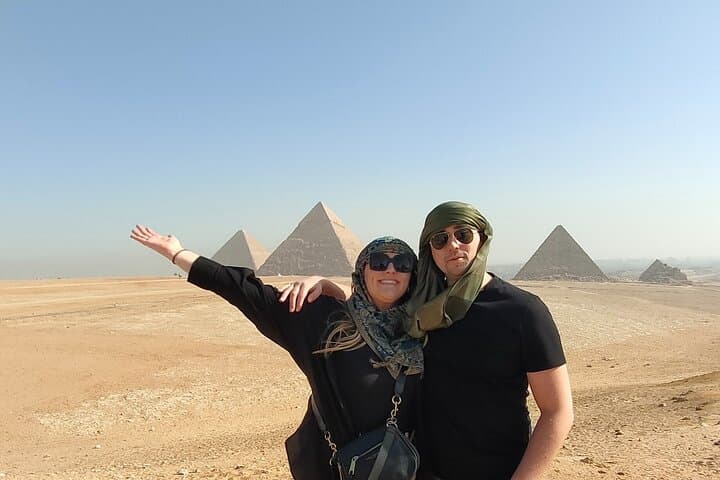
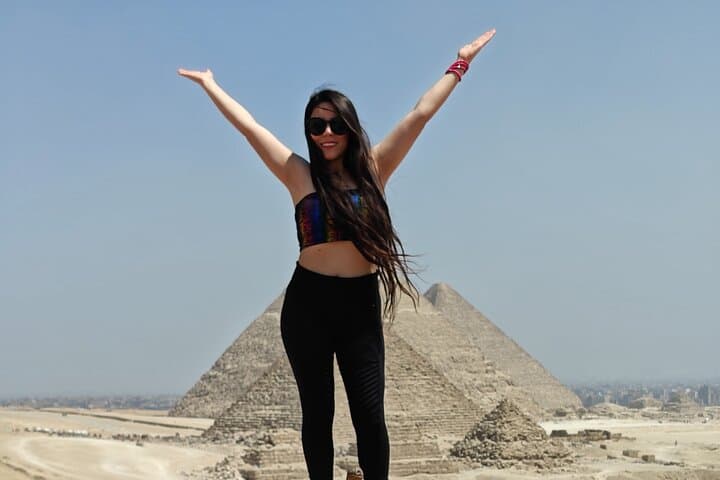
The first sight of the Giza Plateau arrests you: sun-baked limestone slopes rise against the Cairo haze, casting long, hard shadows across the desert. Your private guide steers a short drive from the city and the three great pyramids—Khufu, Khafre and Menkaure—loom into view, their weathered faces layered with millennia of wind and sand.
The first sight of the Giza Plateau arrests you: sun-baked limestone slopes rise against the Cairo haze, casting long, hard shadows across the desert. Your private guide steers a short drive from the city and the three great pyramids—Khufu, Khafre and Menkaure—loom into view, their weathered faces layered with millennia of wind and sand.
This is Old Kingdom ground. Built in the 4th Dynasty (around 2500 BCE), the pyramids are royal tombs of pharaohs whose names—Khufu (Cheops), Khafre (Chephren) and Menkaure—still anchor Egyptian history. The Great Sphinx, a limestone guardian carved with a royal visage and lion’s body, watches the horizon where the Nile valley drops away; the plateau’s geology is primarily Eocene limestone, quarried on-site by ancient builders.
Cultural texture arrives in small details: vendors offering hibiscus tea, camel handlers ready with a short ride, and the omnipresent rhythm of bargaining at nearby stalls. Note that entering an inner chamber or “inside” pyramid typically requires an additional ticket and depends on site rules and availability.
Practical guidance: this private half-day runs about six hours with hotel pickup, short walks on uneven stone and packed sand, and a provided lunch. Bring sun protection, refillable water, and sturdy shoes for rocky surfaces. Visit early or late in the day to avoid peak heat and to capture better light for photos. Expect security screening, modest dress for cultural respect, and small cash for tips and purchases. With a good guide, the ruins become readable—each block and passage reveals a plan that survived millennia.