THE ADVENTURE COLLECTIVE® · Independent discovery and booking for outdoor travel

Spend a full day with a private guide exploring the Giza Plateau’s three pyramids, the Great Sphinx and the Egyptian Museum. This easy-paced, 8-hour tour blends up-close archaeology, panoramic viewpoints and museum highlights including Tutankhamun’s treasures.
Spend a full day with a private guide exploring the Giza Plateau’s three pyramids, the Great Sphinx and the Egyptian Museum. This easy-paced, 8-hour tour blends up-close archaeology, panoramic viewpoints and museum highlights including Tutankhamun’s treasures.
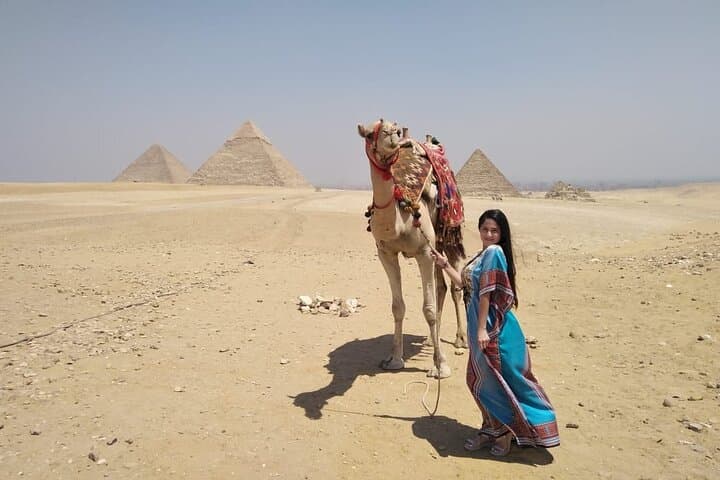
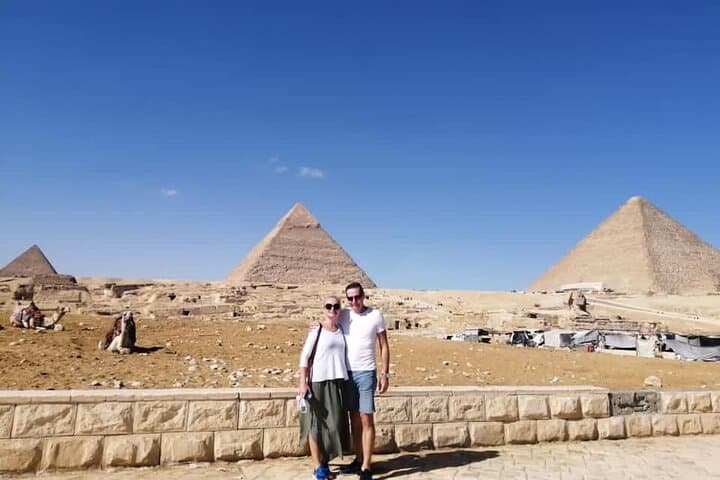
Morning light strips the desert into hard shadows as your private guide lifts the gate to the Giza Plateau. You step onto flat, wind-scrubbed rock where three colossal pyramids—Khufu (Cheops), Khafre (Chephren) and Menkaure (Mykerinus)—press their geometry against the sky. The plateau’s panorama point gives a final sweep: a photographer’s frame where scale and silence argue for attention.
Verified experiences and guided adventures in the surrounding area.
Operated by Hesham Egypt tour guide · Giza, Giza Governorate
Morning light strips the desert into hard shadows as your private guide lifts the gate to the Giza Plateau. You step onto flat, wind-scrubbed rock where three colossal pyramids—Khufu (Cheops), Khafre (Chephren) and Menkaure (Mykerinus)—press their geometry against the sky. The plateau’s panorama point gives a final sweep: a photographer’s frame where scale and silence argue for attention.
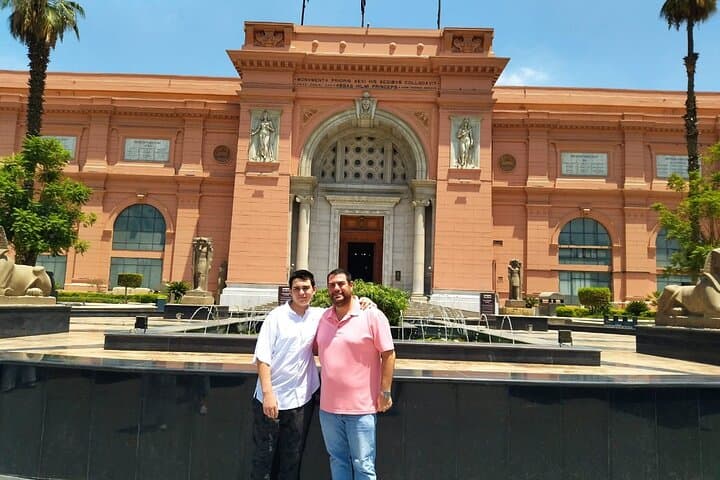
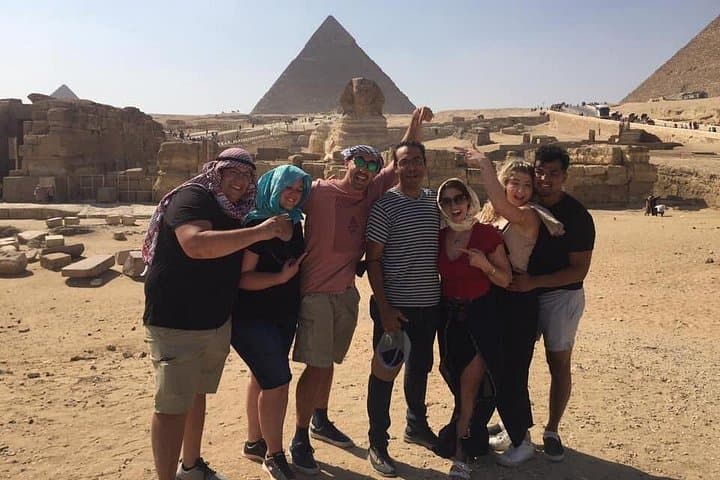
These monuments date to Egypt’s Old Kingdom (c. 2600–2500 BCE); the Great Pyramid remains the most intact remnant of humanity’s earliest large-scale architecture. Nearby the Sphinx keeps its ancient watch, and the Valley Temple recalls the ritual of mummification practiced beside the pyramid complexes. Later, the Egyptian Museum in downtown Cairo contrasts sand and stone with polished cases holding over 250,000 artifacts, including Tutankhamun’s funerary treasure discovered in 1922.
Expect an easy-paced, eight-hour private itinerary: hotel pickup in an air-conditioned vehicle, guided walks across the plateau, an optional short camel ride, time at the Valley Temple and a three-hour visit to the museum. Terrain is mostly flat but uneven rock and short sandy stretches demand stable footwear. Sun is relentless—shade sparse—so plan early starts and steady hydration. Cameras are welcome at the pyramids; some museum exhibits may restrict flash photography.
Practical tips: carry local currency for entry tickets and tips, wear breathable layers, and leave large backpacks at your hotel. The trip balances spectacle and context—ancient stones, city energy, and museum artifacts—offering a full-day primer on Cairo’s past and present.
easy.
8 hours.
Suitable for most fitness levels; requires the ability to walk short distances on uneven ground and step up onto low ledges.
No; most private tours do not include site entrance fees—confirm with the operator and bring local currency to purchase tickets on arrival.
Camel rides around the pyramids are usually optional and priced separately; negotiate price in advance through your guide to avoid surprises.
The museum has limited accessibility; many historic sites have uneven ground and steps—contact the tour operator in advance to arrange suitable accommodations.
Flash photography is often restricted for conservation reasons; follow posted signs and staff instructions to protect fragile artifacts.
The Giza pyramids were built in Egypt’s Old Kingdom (c. 2600–2500 BCE) as royal tombs; the Egyptian Museum houses artifacts spanning over 5,000 years of Egyptian civilization including Tutankhamun’s 1922-discovered treasure.
High visitor numbers stress fragile stone and museum collections; stick to marked paths, avoid touching monuments, and support licensed guides who follow preservation best practices.
Hesham Egypt tour guide operates guided outdoor trips and adventures with an emphasis on safety, stewardship, and memorable experiences.
Morning light strips the desert into hard shadows as your private guide lifts the gate to the Giza Plateau. You step onto flat, wind-scrubbed rock where three colossal pyramids—Khufu (Cheops), Khafre (Chephren) and Menkaure (Mykerinus)—press their geometry against the sky. The plateau’s panorama point gives a final sweep: a photographer’s frame where scale and silence argue for attention.
Morning light strips the desert into hard shadows as your private guide lifts the gate to the Giza Plateau. You step onto flat, wind-scrubbed rock where three colossal pyramids—Khufu (Cheops), Khafre (Chephren) and Menkaure (Mykerinus)—press their geometry against the sky. The plateau’s panorama point gives a final sweep: a photographer’s frame where scale and silence argue for attention.
These monuments date to Egypt’s Old Kingdom (c. 2600–2500 BCE); the Great Pyramid remains the most intact remnant of humanity’s earliest large-scale architecture. Nearby the Sphinx keeps its ancient watch, and the Valley Temple recalls the ritual of mummification practiced beside the pyramid complexes. Later, the Egyptian Museum in downtown Cairo contrasts sand and stone with polished cases holding over 250,000 artifacts, including Tutankhamun’s funerary treasure discovered in 1922.
Expect an easy-paced, eight-hour private itinerary: hotel pickup in an air-conditioned vehicle, guided walks across the plateau, an optional short camel ride, time at the Valley Temple and a three-hour visit to the museum. Terrain is mostly flat but uneven rock and short sandy stretches demand stable footwear. Sun is relentless—shade sparse—so plan early starts and steady hydration. Cameras are welcome at the pyramids; some museum exhibits may restrict flash photography.
Practical tips: carry local currency for entry tickets and tips, wear breathable layers, and leave large backpacks at your hotel. The trip balances spectacle and context—ancient stones, city energy, and museum artifacts—offering a full-day primer on Cairo’s past and present.