THE ADVENTURE COLLECTIVE® · Independent discovery and booking for outdoor travel

Spend a private day tracing Egypt’s layers: camel beside the Giza pyramids, artifacts at the Egyptian Museum, then the vibrant stalls of Khan el-Khalili. Expect short walks on sand, an expert Egyptologist guide, and an 8-hour loop through history and market life.
Spend a private day tracing Egypt’s layers: camel beside the Giza pyramids, artifacts at the Egyptian Museum, then the vibrant stalls of Khan el-Khalili. Expect short walks on sand, an expert Egyptologist guide, and an 8-hour loop through history and market life.
You step off the air-conditioned car and the desert air meets you — dry, warm, and edged with the low rumble of traffic from greater Cairo. The pyramids loom ahead, geometric and indifferent, their ancient faces catching the sun while the Sphinx watches the approach like an old guardian.
Verified experiences and guided adventures in the surrounding area.
Operated by Fay Tours · Giza, Giza Governorate
You step off the air-conditioned car and the desert air meets you — dry, warm, and edged with the low rumble of traffic from greater Cairo. The pyramids loom ahead, geometric and indifferent, their ancient faces catching the sun while the Sphinx watches the approach like an old guardian.
This private full-day tour threads three distinct layers of Egyptian history: the limestone of the Giza Plateau carved into the Sphinx and the Great Pyramid roughly 4,500 years ago, the troves of pharaonic gold and mummies in the Egyptian Museum near Tahrir Square, and the living market culture of Khan el-Khalili, which has traded goods since the medieval Mamluk period.
Geology here is blunt — wind-polished bedrock and quarried stone that built empires — while the museum stores fragile organic history that time could not erase. Local culture alternates between formal reverence for antiquities and the exuberant commerce of the bazaar; both are best navigated with a knowledgeable guide.
Practical guidance: plan for an 8-hour day with vehicle transfers between sites and short walks on uneven sandy ground at Giza. Camel rides beside the pyramids are brief and typically under 20 minutes; bring a camera, sun protection, and a sense of patience for bargaining at the bazaar. Wear comfortable, closed-toe shoes and modest clothing for museum and mosque-adjacent areas. Hydrate frequently — Cairo’s sun can be relentless — and follow your Egyptologist’s directions to avoid sensitive archeological zones.
This itinerary balances spectacle with context: it’s a compact, private way to touch Egypt’s layered past without rushing through it.
easy.
8 hours.
Light-moderate — suitable for travelers who can manage several short walks and get on/off a camel; no strenuous hiking required.
Camel rides included with tours are typically short — often 10–20 minutes — designed for photos and a quick experience beside the pyramids rather than long treks.
The museum has accessibility provisions, but some older display areas and crowded rooms can be challenging; contact your operator ahead to confirm arrangements.
Access inside pyramids is sometimes available but restricted; entry may require additional tickets and is subject to site regulations on the day of your visit.
Tipping is customary in Egypt; if service meets expectations, tip guides and drivers at the end of the day — bring small notes in local currency.
The Great Pyramid of Khufu and the surrounding plateau date to Egypt’s Old Kingdom (circa 26th century BCE); the Sphinx is commonly associated with Khafre’s era.
Heavy visitor traffic and urban pollution strain monuments and museum artifacts; follow guidelines, avoid touching antiquities, and support licensed guides and conservation-minded vendors.
Fay Tours operates guided outdoor trips and adventures with an emphasis on safety, stewardship, and memorable experiences.
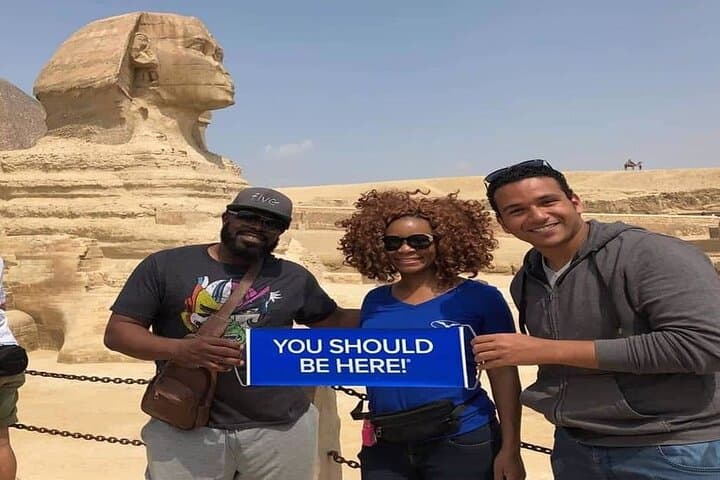
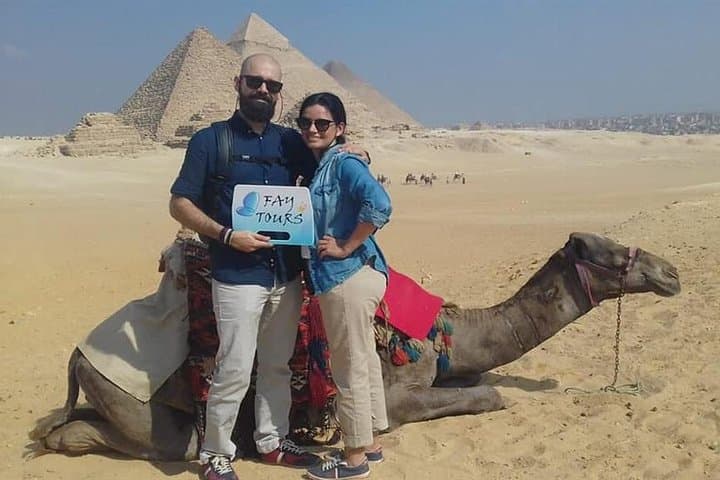
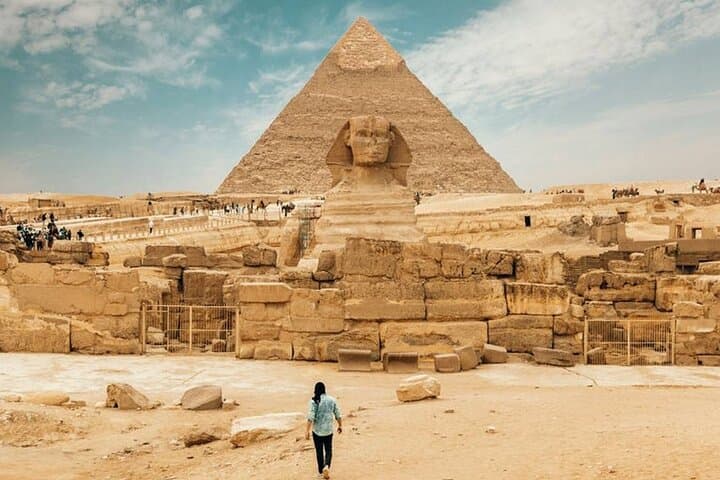
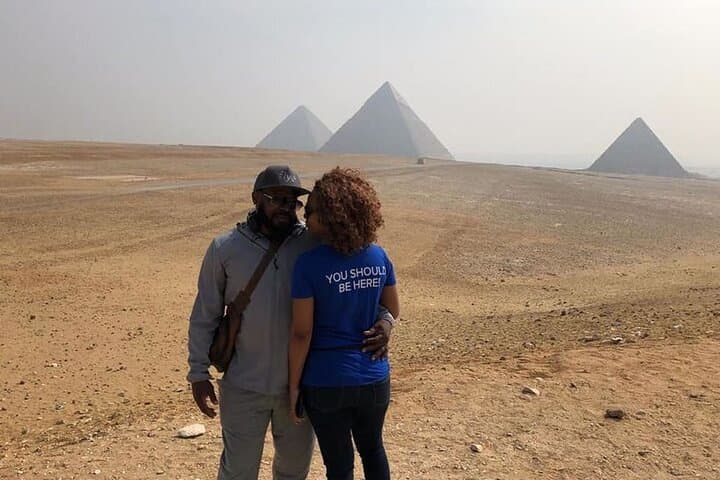
You step off the air-conditioned car and the desert air meets you — dry, warm, and edged with the low rumble of traffic from greater Cairo. The pyramids loom ahead, geometric and indifferent, their ancient faces catching the sun while the Sphinx watches the approach like an old guardian.
You step off the air-conditioned car and the desert air meets you — dry, warm, and edged with the low rumble of traffic from greater Cairo. The pyramids loom ahead, geometric and indifferent, their ancient faces catching the sun while the Sphinx watches the approach like an old guardian.
This private full-day tour threads three distinct layers of Egyptian history: the limestone of the Giza Plateau carved into the Sphinx and the Great Pyramid roughly 4,500 years ago, the troves of pharaonic gold and mummies in the Egyptian Museum near Tahrir Square, and the living market culture of Khan el-Khalili, which has traded goods since the medieval Mamluk period.
Geology here is blunt — wind-polished bedrock and quarried stone that built empires — while the museum stores fragile organic history that time could not erase. Local culture alternates between formal reverence for antiquities and the exuberant commerce of the bazaar; both are best navigated with a knowledgeable guide.
Practical guidance: plan for an 8-hour day with vehicle transfers between sites and short walks on uneven sandy ground at Giza. Camel rides beside the pyramids are brief and typically under 20 minutes; bring a camera, sun protection, and a sense of patience for bargaining at the bazaar. Wear comfortable, closed-toe shoes and modest clothing for museum and mosque-adjacent areas. Hydrate frequently — Cairo’s sun can be relentless — and follow your Egyptologist’s directions to avoid sensitive archeological zones.
This itinerary balances spectacle with context: it’s a compact, private way to touch Egypt’s layered past without rushing through it.