THE ADVENTURE COLLECTIVE® · Independent discovery and booking for outdoor travel

Stand where kings were crowned and secrets slept for millennia: a private day tour across the Giza Plateau, a close encounter with the Sphinx, and a visit to the new Grand Egyptian Museum. Practical tips for timing, gear and etiquette help you make the most of the day.
Stand where kings were crowned and secrets slept for millennia: a private day tour across the Giza Plateau, a close encounter with the Sphinx, and a visit to the new Grand Egyptian Museum. Practical tips for timing, gear and etiquette help you make the most of the day.
You arrive on the Giza Plateau under a bright, dry sky: sand crunches underfoot, a low wind lifts dust across the base of the pyramids, and the great limestone faces throw long, geometric shadows. The first sight—Khufu’s Great Pyramid—dominates the horizon, a raw expression of human engineering that has weathered millennia.
Verified experiences and guided adventures in the surrounding area.
Operated by iEgypt · Giza, Giza Governorate
You arrive on the Giza Plateau under a bright, dry sky: sand crunches underfoot, a low wind lifts dust across the base of the pyramids, and the great limestone faces throw long, geometric shadows. The first sight—Khufu’s Great Pyramid—dominates the horizon, a raw expression of human engineering that has weathered millennia.
This route threads archaeology, geology and living Cairo culture. Built around 4,500 years ago, Khufu, Khafre and Menkaure’s tombs reveal both the scale of ancient funerary ambition and the local limestone and bedrock that shaped their forms. Nearby, the Sphinx presents a worn pharaoh’s face carved into a natural rock outcrop; its erosion tells as much about environmental change as it does about craftsmanship.
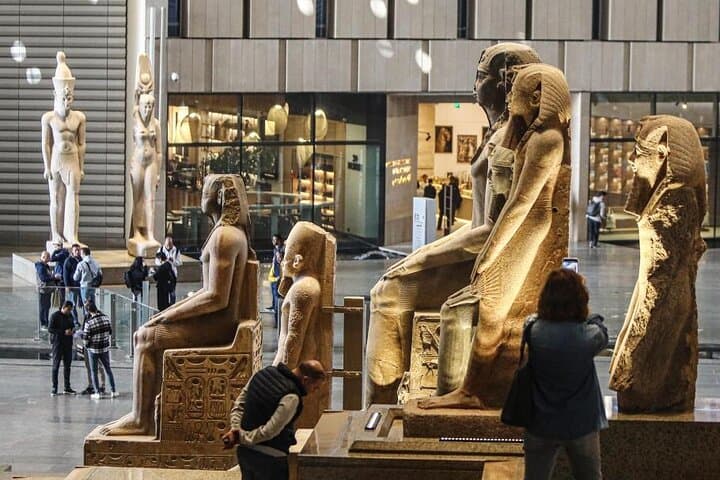
A modern counterpoint awaits at the Grand Egyptian Museum, where recent conservation labs and Tutankhamun galleries reframe objects once buried for centuries. Between sites expect vibrant street life—camel handlers, craft vendors and neighborhood mosques—each adding texture to the visit.
Practical guidance: the tour is a full-day private transfer with hotel pickup, usually 4–7 hours. Wear sturdy shoes for uneven desert pavements, sun protection, and carry water—temperatures climb fast. Photography is welcome but drone use and climbing monuments are prohibited. Confirm which entrances are included with your operator; the itinerary typically covers the plateau and Sphinx and visits the GEM. Plan early mornings to avoid crowds and hottest hours, and leave time for the Grand Egyptian Museum’s galleries, which require several focused hours to appreciate properly.
easy.
4–7 hours.
Suitable for most fitness levels; requires standing and walking on uneven surfaces for several hours.
The tour typically includes entry to the Giza plateau and Sphinx viewpoint; confirm with the operator whether Grand Egyptian Museum admission is included.
Yes—camel or horse rides to the panorama point are commonly offered during the visit; confirm availability and price with your guide.
Photography policies vary by gallery; casual photography is usually permitted, but flash and tripods may be restricted—follow signage and staff instructions.
Yes; the itinerary is labeled suitable for all fitness levels, but expect some walking and sun exposure—plan rest and shade breaks as needed.
The Giza pyramids were constructed in the Old Kingdom (circa 26th–25th centuries B.C.) as monumental burial complexes for pharaohs, reflecting advanced engineering and centralized labor organization.
High visitor numbers and natural erosion threaten fragile surfaces; stay on designated paths, avoid touching carved stone and follow guide instructions to reduce impact.
iEgypt operates guided outdoor trips and adventures with an emphasis on safety, stewardship, and memorable experiences.



You arrive on the Giza Plateau under a bright, dry sky: sand crunches underfoot, a low wind lifts dust across the base of the pyramids, and the great limestone faces throw long, geometric shadows. The first sight—Khufu’s Great Pyramid—dominates the horizon, a raw expression of human engineering that has weathered millennia.
You arrive on the Giza Plateau under a bright, dry sky: sand crunches underfoot, a low wind lifts dust across the base of the pyramids, and the great limestone faces throw long, geometric shadows. The first sight—Khufu’s Great Pyramid—dominates the horizon, a raw expression of human engineering that has weathered millennia.
This route threads archaeology, geology and living Cairo culture. Built around 4,500 years ago, Khufu, Khafre and Menkaure’s tombs reveal both the scale of ancient funerary ambition and the local limestone and bedrock that shaped their forms. Nearby, the Sphinx presents a worn pharaoh’s face carved into a natural rock outcrop; its erosion tells as much about environmental change as it does about craftsmanship.
A modern counterpoint awaits at the Grand Egyptian Museum, where recent conservation labs and Tutankhamun galleries reframe objects once buried for centuries. Between sites expect vibrant street life—camel handlers, craft vendors and neighborhood mosques—each adding texture to the visit.
Practical guidance: the tour is a full-day private transfer with hotel pickup, usually 4–7 hours. Wear sturdy shoes for uneven desert pavements, sun protection, and carry water—temperatures climb fast. Photography is welcome but drone use and climbing monuments are prohibited. Confirm which entrances are included with your operator; the itinerary typically covers the plateau and Sphinx and visits the GEM. Plan early mornings to avoid crowds and hottest hours, and leave time for the Grand Egyptian Museum’s galleries, which require several focused hours to appreciate properly.