THE ADVENTURE COLLECTIVE® · Independent discovery and booking for outdoor travel

A private 5–6 hour tour that pairs guided history at the Great Pyramids and Sphinx with a 15-minute camel ride and koshry lunch. Ideal for travelers who want a focused, hassle-free visit with local insight.
A private 5–6 hour tour that pairs guided history at the Great Pyramids and Sphinx with a 15-minute camel ride and koshry lunch. Ideal for travelers who want a focused, hassle-free visit with local insight.
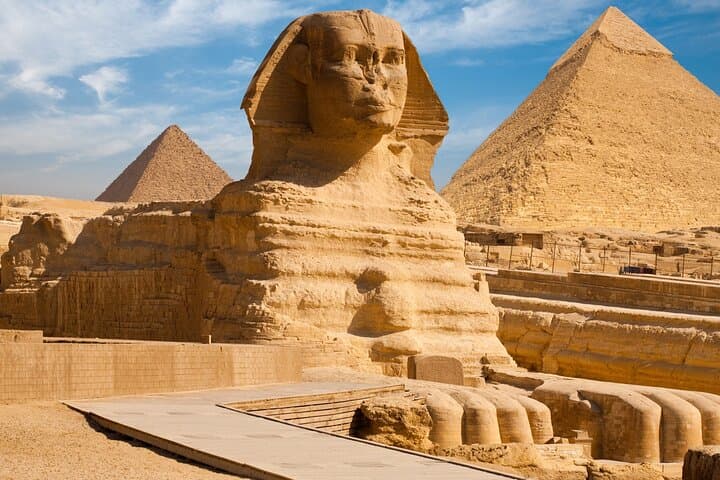
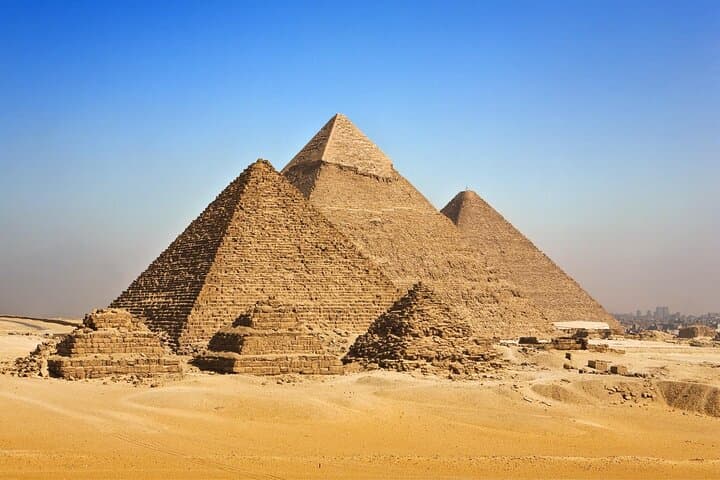
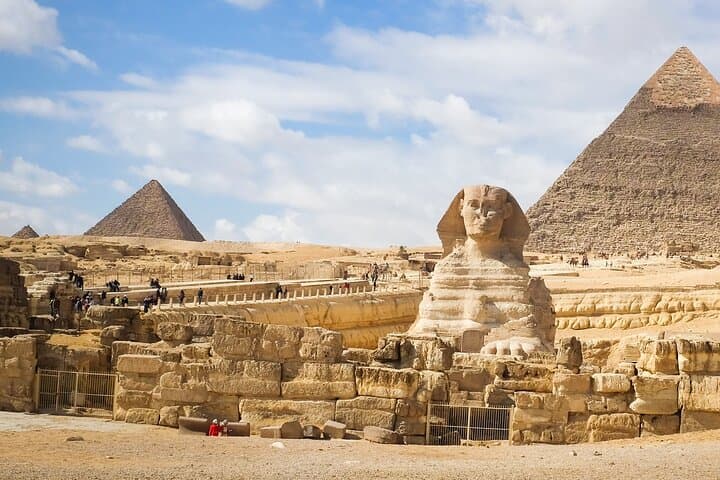
The plateau opens like a warm, wind-swept theater: limestone blocks catching the sun, sand nudging at bootlaces, and the Sphinx turning its stone face toward the rising day. On this private 5–6 hour circuit, a guide navigates the crowd and the stories—pointing out angled causeways, the layered casing stones on Khafre’s pyramid, and the scale of the Great Pyramid of Khufu.
Verified experiences and guided adventures in the surrounding area.
Operated by Tripianto · Giza, Giza Governorate
The plateau opens like a warm, wind-swept theater: limestone blocks catching the sun, sand nudging at bootlaces, and the Sphinx turning its stone face toward the rising day. On this private 5–6 hour circuit, a guide navigates the crowd and the stories—pointing out angled causeways, the layered casing stones on Khafre’s pyramid, and the scale of the Great Pyramid of Khufu.
Built during Egypt’s Fourth Dynasty, the Giza monuments are royal tombs cut and set from massive limestone and bedrock, with the Sphinx hewn from a single sandstone ridge. Geology meets human ambition here: quarried blocks, mortarless courses, and subtle solar alignments that oriented each face to a cardinal point. Culture is present in smaller details—the solar boat housed nearby, the imprint of Coptic and Islamic-era nearby activity, and modern vendors who keep the site alive.
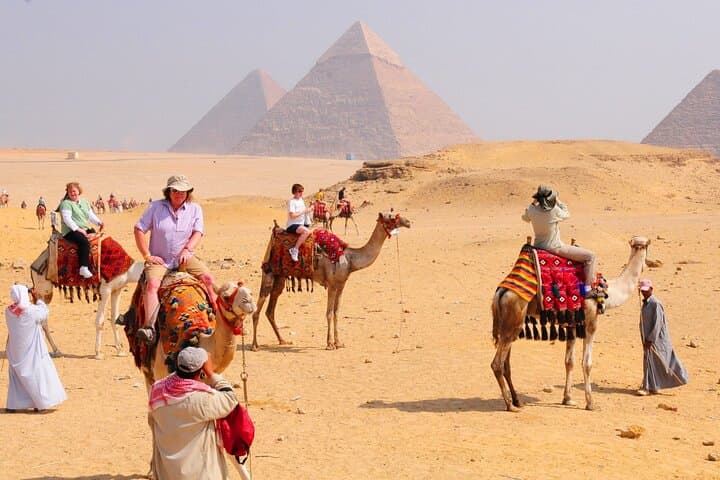
Practically speaking, expect a private pickup in a climate-controlled vehicle, roughly four hours on the plateau for close-up viewing and photography, a short 15-minute camel ride, and a plated lunch (koshary). Bottled water is provided; major entrance fees are commonly handled separately depending on the operator. Wear sturdy, closed-toe shoes for uneven footing, carry sun protection, and plan to move between sun-drenched viewpoints and brief shaded spots.
Timing is everything: early morning light cools the stones and tightens the shadows for photographs, while late afternoon softens the plateau’s contrast. Respect signage, follow your guide’s route to reduce erosion, and leave extra time for traffic between Cairo and Giza—it can add 20–60 minutes depending on the hour.
easy.
5–6 hours.
Suitable for most fitness levels; requires short walks on uneven ground and brief standing periods for photos.
Entrance fees are often not included by default; confirm with your operator—this private tour lists transport, lunch, camel ride, and bottled water as included.
The tour includes a supervised 15-minute camel ride on the plateau; animals are handled by local handlers, but follow the guide’s safety briefing.
The operator indicates wheelchair-accessible transport and surfaces in some areas, but access around the plateau is limited—check specific needs in advance.
Expect about 4 hours on the plateau within a 5–6 hour private tour; round-trip pickup from Cairo hotels is included in the itinerary.
The Giza complex dates to Egypt’s Fourth Dynasty (c. 2600–2500 BCE); Khufu’s Great Pyramid stood as the world’s tallest structure for millennia and served as a royal tomb complex tied to solar funerary beliefs.
Erosion, urban encroachment, and visitor wear are ongoing concerns; follow marked paths, avoid touching vulnerable stone, and support licensed guides and local conservation fees when offered.
Tripianto operates guided outdoor trips and adventures with an emphasis on safety, stewardship, and memorable experiences.
The plateau opens like a warm, wind-swept theater: limestone blocks catching the sun, sand nudging at bootlaces, and the Sphinx turning its stone face toward the rising day. On this private 5–6 hour circuit, a guide navigates the crowd and the stories—pointing out angled causeways, the layered casing stones on Khafre’s pyramid, and the scale of the Great Pyramid of Khufu.
The plateau opens like a warm, wind-swept theater: limestone blocks catching the sun, sand nudging at bootlaces, and the Sphinx turning its stone face toward the rising day. On this private 5–6 hour circuit, a guide navigates the crowd and the stories—pointing out angled causeways, the layered casing stones on Khafre’s pyramid, and the scale of the Great Pyramid of Khufu.
Built during Egypt’s Fourth Dynasty, the Giza monuments are royal tombs cut and set from massive limestone and bedrock, with the Sphinx hewn from a single sandstone ridge. Geology meets human ambition here: quarried blocks, mortarless courses, and subtle solar alignments that oriented each face to a cardinal point. Culture is present in smaller details—the solar boat housed nearby, the imprint of Coptic and Islamic-era nearby activity, and modern vendors who keep the site alive.
Practically speaking, expect a private pickup in a climate-controlled vehicle, roughly four hours on the plateau for close-up viewing and photography, a short 15-minute camel ride, and a plated lunch (koshary). Bottled water is provided; major entrance fees are commonly handled separately depending on the operator. Wear sturdy, closed-toe shoes for uneven footing, carry sun protection, and plan to move between sun-drenched viewpoints and brief shaded spots.
Timing is everything: early morning light cools the stones and tightens the shadows for photographs, while late afternoon softens the plateau’s contrast. Respect signage, follow your guide’s route to reduce erosion, and leave extra time for traffic between Cairo and Giza—it can add 20–60 minutes depending on the hour.