THE ADVENTURE COLLECTIVE® · Independent discovery and booking for outdoor travel

Spend a private day at Egypt’s ancient heart: see the Giza pyramids and Sphinx, ride a camel across the plateau, then explore Sakkara’s Step Pyramid. This practical guide explains what to expect, how to prepare, and local tips to make the most of the eight-hour tour.
Spend a private day at Egypt’s ancient heart: see the Giza pyramids and Sphinx, ride a camel across the plateau, then explore Sakkara’s Step Pyramid. This practical guide explains what to expect, how to prepare, and local tips to make the most of the eight-hour tour.
The sun rises over the Giza Plateau and the three great pyramids—Khufu, Khafre and Menkaure—cut sharp silhouettes against a blue-washed sky. You step from air-conditioned transport onto wind-scoured stone and sand; the plateau’s flatness makes every contour of the monuments readable, and the desert seems to dare you to look closer.
Verified experiences and guided adventures in the surrounding area.
Operated by Egypt Top Tours · Giza, Giza Governorate
The sun rises over the Giza Plateau and the three great pyramids—Khufu, Khafre and Menkaure—cut sharp silhouettes against a blue-washed sky. You step from air-conditioned transport onto wind-scoured stone and sand; the plateau’s flatness makes every contour of the monuments readable, and the desert seems to dare you to look closer.
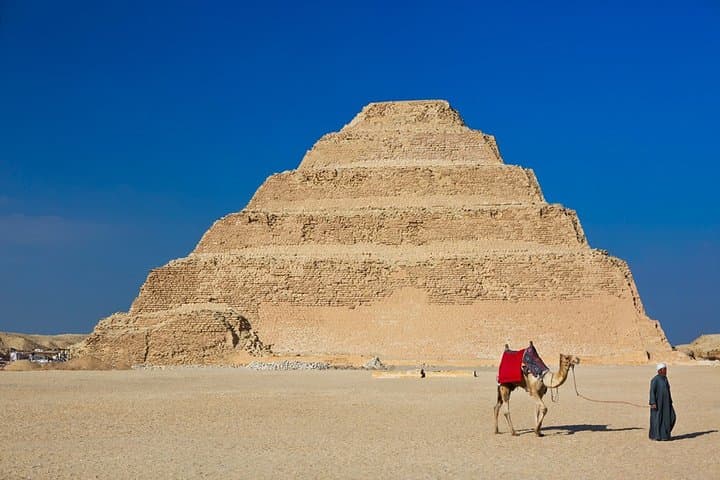
This private day tour pairs the iconic Giza complex with Sakkara’s Step Pyramid, built for King Djoser around 2630 BC and widely regarded as the world’s oldest major stone structure. Geologically, both sites sit on a plateau of Eocene limestone; quarrying here supplied blocks for the pyramids and left the bedrock forms that the Sphinx was carved from. Culturally, you’ll move through 4,500 years of funerary architecture—from stepped mastabas to the soaring geometry of the Giza tombs—guided by an Egyptologist who places monuments beside the pharaohs and priests who ordered them.
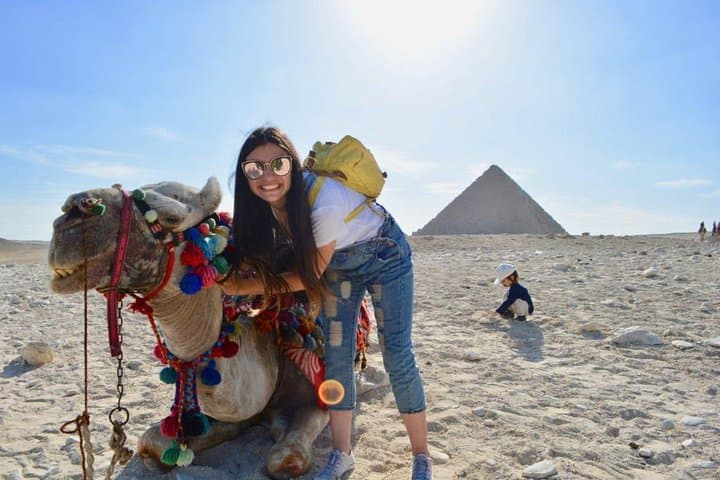
Expect mostly flat walking across compact sand and paved service roads, brief climbs up viewing terraces and uneven stone at gateways. The optional 30-minute camel ride offers a slow, windward perspective; camels browse the horizon and the guide reads the lay of the land.
Practical notes: plan for an 8-hour day with hotel pickup and drop-off, carry sun protection and plenty of water, and wear sturdy shoes for short ascents and rough stone. Photography is excellent in the morning light; afternoons are warmer and can be hazy. Respect barriers, avoid touching fragile masonry, and budget for on-site entrance tickets, gratuities and any interior pyramid access if you want it.
easy.
6–8 hours.
Light fitness—comfortable walking over flat to uneven ground; no long sustained climbs but be prepared for a few steps and sandy stretches.
Entrance fees and optional interior pyramid tickets are often not included—confirm at booking. The tour typically includes transport, guide, bottled water and a short camel ride if selected.
Expect roughly 3–5 km of walking over the day, mostly flat between viewpoints and monuments, with short climbs onto terraces and navigating rough stone.
Smart casual is suggested; modest clothing that covers shoulders and knees is respectful at historic sites, and a hat or scarf helps with sun protection.
The 30-minute camel ride is short and paced slowly, but it involves mounting an animal and balancing on uneven movement—ask about alternative transport if mobility is limited.
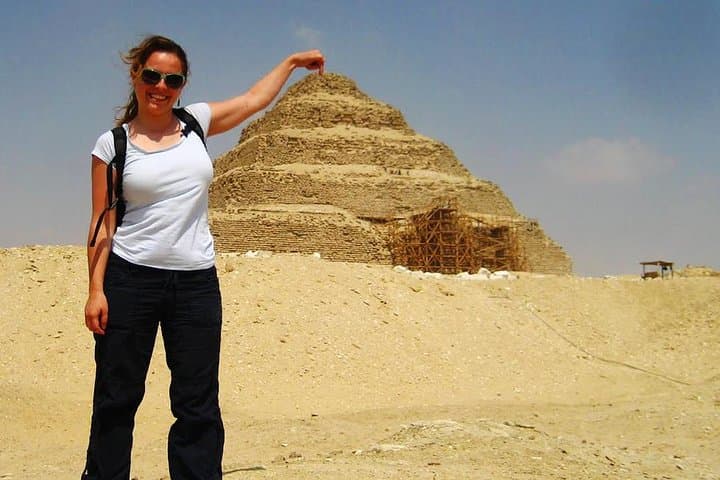
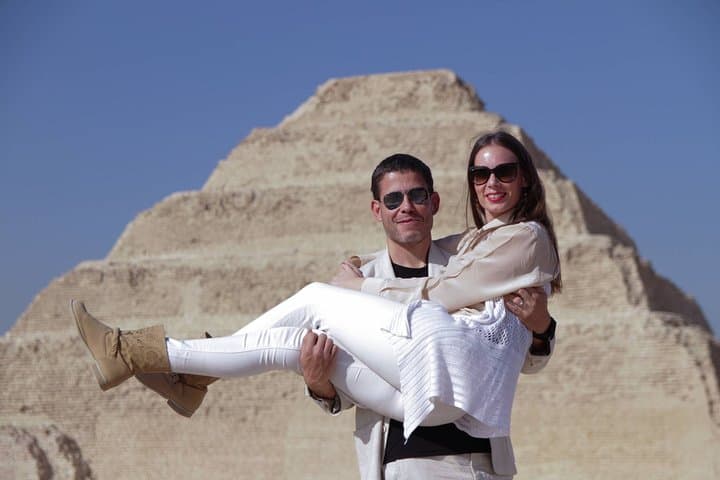
The Step Pyramid at Saqqara (c. 2630 BC) represents an early shift from mudbrick mastabas to large-scale stone construction that paved the way for the Giza pyramids.
Heavy tourism accelerates erosion and wear on ancient stone—stay on marked paths, don’t touch carvings, and support licensed guides and site fees that fund conservation.
Egypt Top Tours operates guided outdoor trips and adventures with an emphasis on safety, stewardship, and memorable experiences.
The sun rises over the Giza Plateau and the three great pyramids—Khufu, Khafre and Menkaure—cut sharp silhouettes against a blue-washed sky. You step from air-conditioned transport onto wind-scoured stone and sand; the plateau’s flatness makes every contour of the monuments readable, and the desert seems to dare you to look closer.
The sun rises over the Giza Plateau and the three great pyramids—Khufu, Khafre and Menkaure—cut sharp silhouettes against a blue-washed sky. You step from air-conditioned transport onto wind-scoured stone and sand; the plateau’s flatness makes every contour of the monuments readable, and the desert seems to dare you to look closer.
This private day tour pairs the iconic Giza complex with Sakkara’s Step Pyramid, built for King Djoser around 2630 BC and widely regarded as the world’s oldest major stone structure. Geologically, both sites sit on a plateau of Eocene limestone; quarrying here supplied blocks for the pyramids and left the bedrock forms that the Sphinx was carved from. Culturally, you’ll move through 4,500 years of funerary architecture—from stepped mastabas to the soaring geometry of the Giza tombs—guided by an Egyptologist who places monuments beside the pharaohs and priests who ordered them.
Expect mostly flat walking across compact sand and paved service roads, brief climbs up viewing terraces and uneven stone at gateways. The optional 30-minute camel ride offers a slow, windward perspective; camels browse the horizon and the guide reads the lay of the land.
Practical notes: plan for an 8-hour day with hotel pickup and drop-off, carry sun protection and plenty of water, and wear sturdy shoes for short ascents and rough stone. Photography is excellent in the morning light; afternoons are warmer and can be hazy. Respect barriers, avoid touching fragile masonry, and budget for on-site entrance tickets, gratuities and any interior pyramid access if you want it.