THE ADVENTURE COLLECTIVE® · Independent discovery and booking for outdoor travel

A private, expert-guided tour that pairs the monumental scale of Giza’s pyramids and Sphinx with the intimate history of Coptic and Islamic Cairo. Expect a full day of walking, local architecture, and curated cultural stops.
A private, expert-guided tour that pairs the monumental scale of Giza’s pyramids and Sphinx with the intimate history of Coptic and Islamic Cairo. Expect a full day of walking, local architecture, and curated cultural stops.
You arrive on the Giza Plateau with wind-creased sand and the bulk of the Great Pyramid filling the horizon; sunlight strips the limestone to ochre and bronze as your guide points out the mortar lines still faintly visible after four millennia.
Verified experiences and guided adventures in the surrounding area.
Operated by Deluxe Tours Egypt · Giza, Giza Governorate
You arrive on the Giza Plateau with wind-creased sand and the bulk of the Great Pyramid filling the horizon; sunlight strips the limestone to ochre and bronze as your guide points out the mortar lines still faintly visible after four millennia.
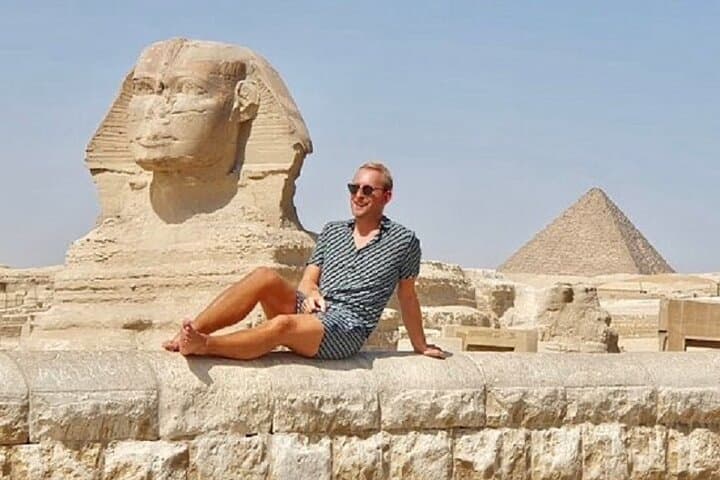
The route threads from the pyramids and the carved stare of the Sphinx into the low-slung stone lanes of Coptic Cairo, then into the carved minarets and crowded alleys of Islamic Cairo. Geological history is obvious here: the plateau is a raised river terrace of Nile sediments, the city itself grown on layers of human settlement. Coptic sites like the Hanging Church preserve early-Christian mosaics and wooden iconography; Al-Azhar and the Mamluk architecture of Khan el-Khalili reveal centuries of Islamic scholarship and trade. Expect to move between open desert, broad paved courtyards, and narrow souk streets with uneven stone underfoot.
Plan pragmatically: start early to avoid heat and crowds, carry plenty of water, and leave time for the Solar Boat Museum and a quiet coffee on Al‑Muizz Street if your schedule allows. Respectful clothing is required in mosques; modest, breathable layers work best. Photography is widely allowed at the plateau but check restrictions in religious sites. Strollers will struggle on sand and older stone stairways; good walking shoes and sunscreen make the day far more comfortable. A private Egyptologist guide and air‑conditioned transfer are typical inclusions—expect a day of steady walking punctuated by moments of stark, ancient scale and lively modern streets that still trade in spices and stories.
moderate.
6–8 hours.
You should be comfortable walking several miles on uneven ground and desert sand with occasional stairs and crowded streets.
Yes—this tour lists admissions to the Pyramids, Sphinx, selected Coptic sites, Al‑Azhar, Khan el‑Khalili and the Hanging Church as included.
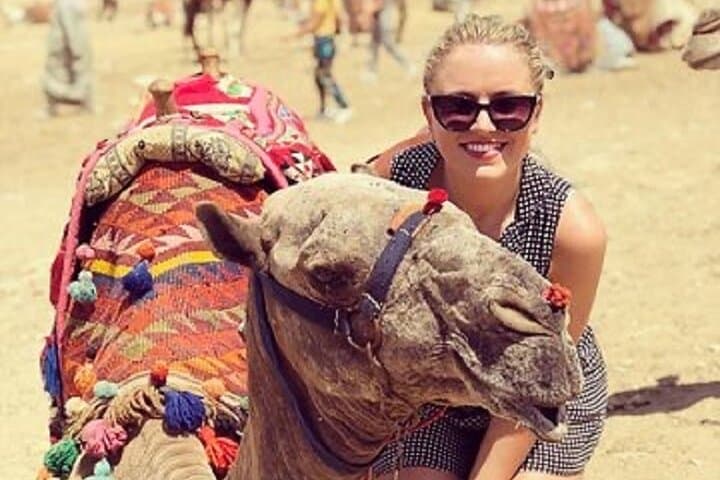
Camel rides are commonly available at the plateau but are usually extra and negotiated on site rather than included in the standard tour price.
Some areas, like paved courtyards and the air-conditioned vehicle, are accessible; however, sand, steps and narrow alleys limit wheelchair and stroller access.
Standard policy allows a full refund if you cancel at least 24 hours before departure—confirm specifics with the provider when booking.
The Giza pyramids date to Egypt’s Old Kingdom (c. 2600–2500 BCE); Coptic Cairo preserves Christian communities and churches from late antiquity, while Islamic Cairo grew into a medieval center of learning under the Fatimids and Mamluks.
Tourism impacts include erosion of footpaths on the plateau and pressure on fragile archaeological features—stick to marked areas and heed guide instructions to help preserve sites.
Deluxe Tours Egypt operates guided outdoor trips and adventures with an emphasis on safety, stewardship, and memorable experiences.
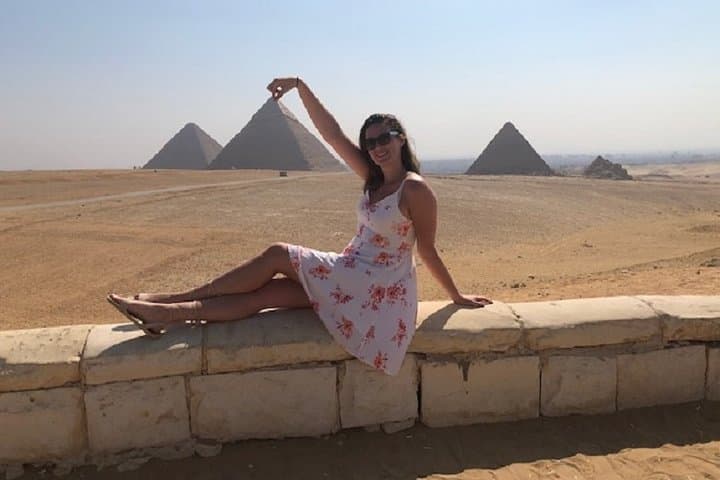
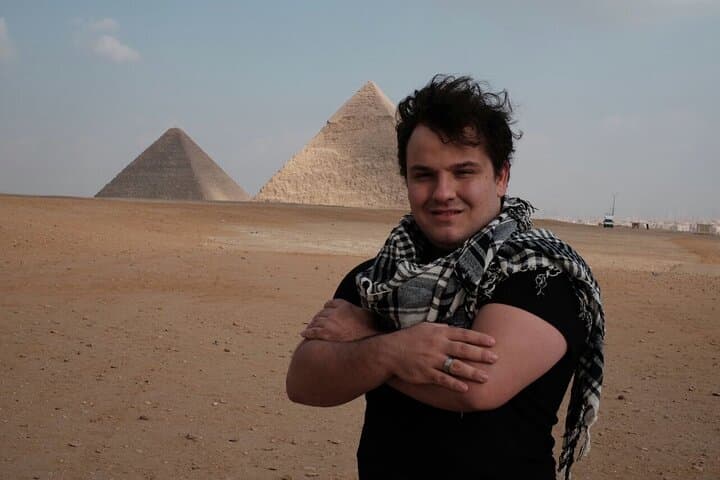
You arrive on the Giza Plateau with wind-creased sand and the bulk of the Great Pyramid filling the horizon; sunlight strips the limestone to ochre and bronze as your guide points out the mortar lines still faintly visible after four millennia.
You arrive on the Giza Plateau with wind-creased sand and the bulk of the Great Pyramid filling the horizon; sunlight strips the limestone to ochre and bronze as your guide points out the mortar lines still faintly visible after four millennia.
The route threads from the pyramids and the carved stare of the Sphinx into the low-slung stone lanes of Coptic Cairo, then into the carved minarets and crowded alleys of Islamic Cairo. Geological history is obvious here: the plateau is a raised river terrace of Nile sediments, the city itself grown on layers of human settlement. Coptic sites like the Hanging Church preserve early-Christian mosaics and wooden iconography; Al-Azhar and the Mamluk architecture of Khan el-Khalili reveal centuries of Islamic scholarship and trade. Expect to move between open desert, broad paved courtyards, and narrow souk streets with uneven stone underfoot.
Plan pragmatically: start early to avoid heat and crowds, carry plenty of water, and leave time for the Solar Boat Museum and a quiet coffee on Al‑Muizz Street if your schedule allows. Respectful clothing is required in mosques; modest, breathable layers work best. Photography is widely allowed at the plateau but check restrictions in religious sites. Strollers will struggle on sand and older stone stairways; good walking shoes and sunscreen make the day far more comfortable. A private Egyptologist guide and air‑conditioned transfer are typical inclusions—expect a day of steady walking punctuated by moments of stark, ancient scale and lively modern streets that still trade in spices and stories.