THE ADVENTURE COLLECTIVE® · Independent discovery and booking for outdoor travel

Walk the Giza Plateau with a private guide and encounter Khufu’s Great Pyramid, Khafre and Menkaure, plus the Sphinx from multiple vantage points. This 3–5 hour archaeological tour mixes measured history with practical tips for visiting a living ancient site.
Walk the Giza Plateau with a private guide and encounter Khufu’s Great Pyramid, Khafre and Menkaure, plus the Sphinx from multiple vantage points. This 3–5 hour archaeological tour mixes measured history with practical tips for visiting a living ancient site.
You step from an air-conditioned car onto sun-warmed limestone and the plateau opens—an expanse of sand that holds millennia. Wind pushes at your jacket and the stones seem to hold their own slow patience; the Great Pyramid rises like a weathered engine, its edges catching light as the guide outlines scale and purpose.
Verified experiences and guided adventures in the surrounding area.
Operated by Ibrahim Mowafik - tour guide-egyptologist- archaeologist · Giza, Giza Governorate
You step from an air-conditioned car onto sun-warmed limestone and the plateau opens—an expanse of sand that holds millennia. Wind pushes at your jacket and the stones seem to hold their own slow patience; the Great Pyramid rises like a weathered engine, its edges catching light as the guide outlines scale and purpose.
The three main pyramids belong to the Old Kingdom: Khufu’s massive tomb (c. 2580–2560 BCE), Khafre’s slightly smaller neighbor and Menkaure’s compact monument. Geology shapes the story here: local limestone forms the core; harder granite was hauled for inner chambers, and remnants of polished casing hint at how these monuments once reflected the sun.
Modern Cairo sits close, and the site is as much a living cultural crossroads as an archaeological record—camel handlers, varnished tourist kiosks and the Solar Boat Museum create a collage of past and present. Your guide will explain construction theories, funerary rites and the plateau’s relation to the Nile floodplain.
Practical guidance: expect 3–5 hours of touring with short walks on uneven sand and stone; stairs to interior chambers can be narrow and low. Entry to pyramid interiors requires separate tickets and can be limited by Egyptian authorities; exterior climbing is prohibited. Bring sun protection, a full water bottle and a camera with spare batteries. Early morning or late afternoon visits reduce heat and crowds and give better light for photos. Follow your guide’s instructions, keep to marked areas and budget small local cash for optional camel rides or additional museum fees.
easy.
3–5 hours.
Suitable for most travelers; involves standing, short walks on uneven terrain and narrow steps to interior chambers.
Interior access requires a separate, limited ticket and is controlled by Egyptian authorities; check availability in advance and be prepared for narrow, low tunnels.
Camel or horse rides are optional and usually paid locally to handlers; discuss timing and cost with your guide on site.
Yes—this tour is physically easy, but infants must sit on an adult’s lap during transport and some interior spaces may be cramped for small children.
Exterior climbing is prohibited for preservation and safety; follow posted rules and your guide’s directions to avoid fines and damage to the monuments.
The pyramids on the Giza Plateau were built during Egypt’s Old Kingdom—Khufu’s Great Pyramid is the largest, dating to around 2560 BCE.
The site is fragile: avoid touching carved surfaces, stay on marked paths and respect rules against exterior climbing to help preserve the monuments.
Ibrahim Mowafik - tour guide-egyptologist- archaeologist operates guided outdoor trips and adventures with an emphasis on safety, stewardship, and memorable experiences.
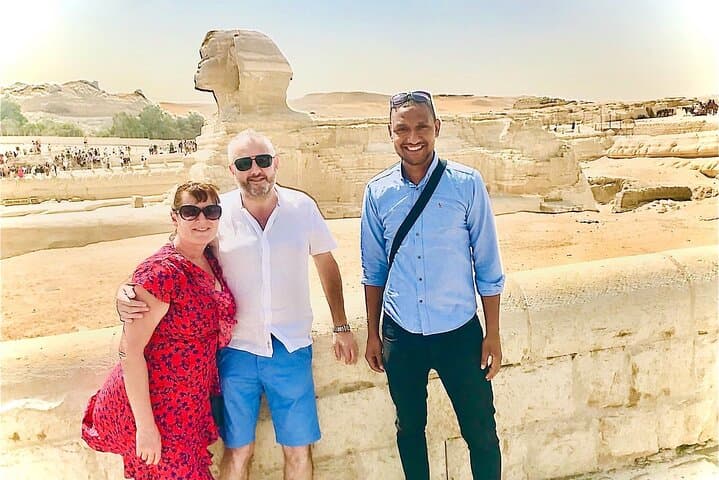
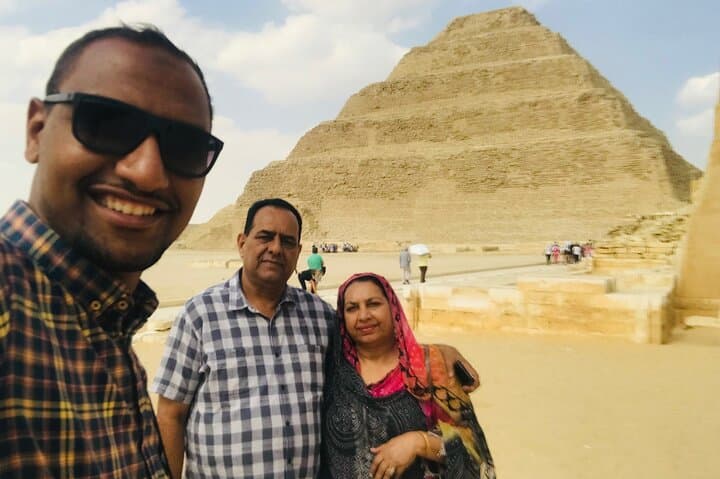
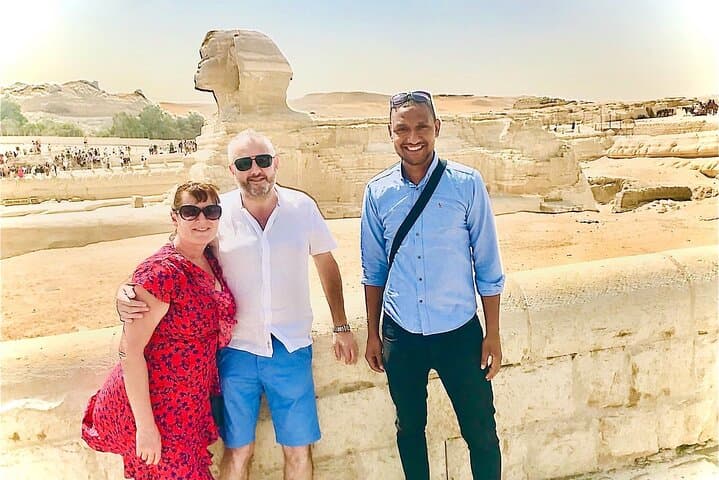
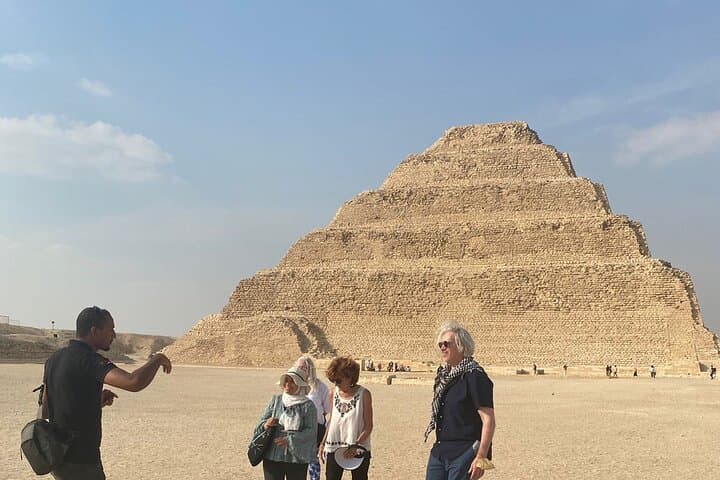
You step from an air-conditioned car onto sun-warmed limestone and the plateau opens—an expanse of sand that holds millennia. Wind pushes at your jacket and the stones seem to hold their own slow patience; the Great Pyramid rises like a weathered engine, its edges catching light as the guide outlines scale and purpose.
You step from an air-conditioned car onto sun-warmed limestone and the plateau opens—an expanse of sand that holds millennia. Wind pushes at your jacket and the stones seem to hold their own slow patience; the Great Pyramid rises like a weathered engine, its edges catching light as the guide outlines scale and purpose.
The three main pyramids belong to the Old Kingdom: Khufu’s massive tomb (c. 2580–2560 BCE), Khafre’s slightly smaller neighbor and Menkaure’s compact monument. Geology shapes the story here: local limestone forms the core; harder granite was hauled for inner chambers, and remnants of polished casing hint at how these monuments once reflected the sun.
Modern Cairo sits close, and the site is as much a living cultural crossroads as an archaeological record—camel handlers, varnished tourist kiosks and the Solar Boat Museum create a collage of past and present. Your guide will explain construction theories, funerary rites and the plateau’s relation to the Nile floodplain.
Practical guidance: expect 3–5 hours of touring with short walks on uneven sand and stone; stairs to interior chambers can be narrow and low. Entry to pyramid interiors requires separate tickets and can be limited by Egyptian authorities; exterior climbing is prohibited. Bring sun protection, a full water bottle and a camera with spare batteries. Early morning or late afternoon visits reduce heat and crowds and give better light for photos. Follow your guide’s instructions, keep to marked areas and budget small local cash for optional camel rides or additional museum fees.