THE ADVENTURE COLLECTIVE® · Independent discovery and booking for outdoor travel

Spend a full day exploring the Giza Plateau and Cairo’s Egyptian Museum on a private tour that pairs close-up pyramid walks and a short camel ride with curated artifact viewing. Expect uneven limestone footing, strong sun, and guided context from ancient builders to 20th-century archaeologists.
Spend a full day exploring the Giza Plateau and Cairo’s Egyptian Museum on a private tour that pairs close-up pyramid walks and a short camel ride with curated artifact viewing. Expect uneven limestone footing, strong sun, and guided context from ancient builders to 20th-century archaeologists.
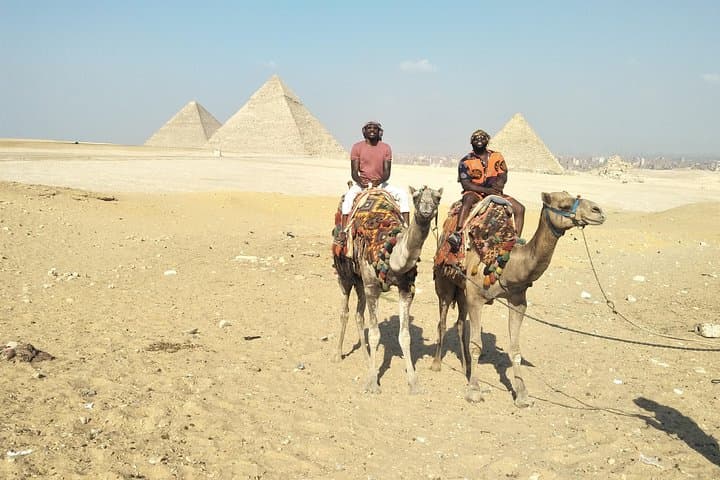
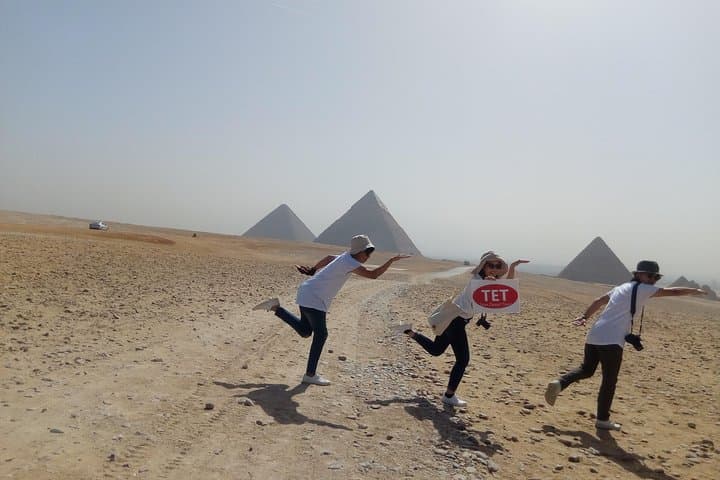
The heat of the plateau meets you first: a dry wind that seems to push the sand along the stones as you step from an air-conditioned vehicle onto the Giza Plateau.
Verified experiences and guided adventures in the surrounding area.
Operated by True Egypt - Day Tours · Giza, Giza Governorate
The heat of the plateau meets you first: a dry wind that seems to push the sand along the stones as you step from an air-conditioned vehicle onto the Giza Plateau.
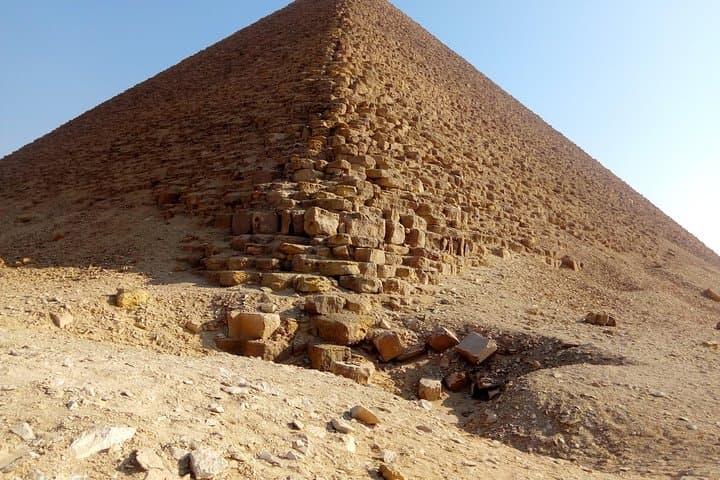
From the base of the Great Pyramid you feel scale more than see it—blocks of limestone and granite stacked into an imposing geometry that has watched the Nile flood and cities rise for millennia. Your private guide moves between facts and gestures: Khufu’s quarrying and alignment, the Sphinx’s restored face, and the plateau’s thin, wind-polished soil where desert lizards dart away like small clocks.
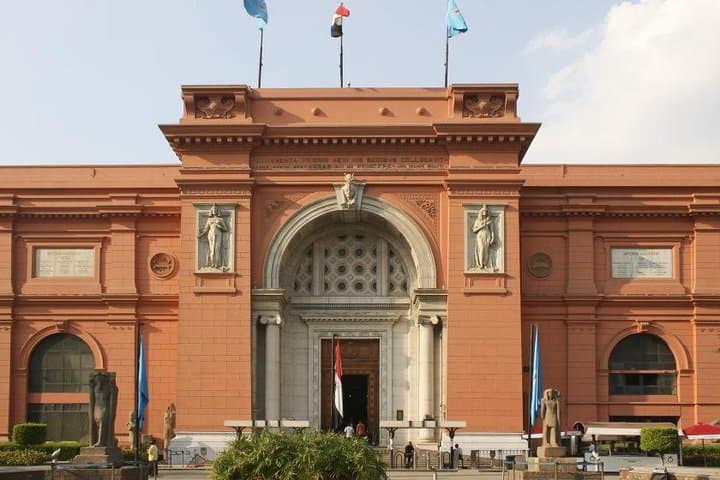
History here is tactile—cheops (Khufu) and his successors left burial chambers, causeways and a record in stone; the Egyptian Museum in downtown Cairo then gathers thousands of artifacts into rooms that trace the arc from predynastic tools to Tutankhamun’s gold mask discovered in 1922. Geologically, the limestone bedrock that anchors the pyramids was quarried locally, its strata readable to trained eyes.
Practical notes: this is a full-day, low-impact outing with substantial walking on uneven surfaces, and moments exposed to sun and dust. Bring sun protection, sturdy shoes for uneven limestone and paths, and small-change for tips and water. Photography is permitted in most outdoor areas but more restricted inside museum galleries.
Plan for an early start to avoid the harshest sun, and allow time to move between the plateau and downtown Cairo—urban traffic can double transit times. Respect local customs around dress and interaction; the sites are managed with preservation in mind, so follow guides and posted rules to protect these millennia-old structures.
easy.
8 hours.
Suitable for most fitness levels; includes several hours of walking on uneven, sandy, or rocky surfaces
Most private tours include entry fees, but confirm with the operator; some special museum rooms or temporary exhibits may have separate charges.
Camel rides at Giza are typically short—10–20 minutes—suitable for photos and a brief experience rather than long-distance travel.
Access varies: the Giza Plateau has uneven terrain that limits mobility; the Egyptian Museum offers more level floors but check in advance for elevator availability.
Photography policies change—flash and tripods are often restricted in certain galleries; your guide can advise on current rules and permits if needed.
The Great Pyramid was built c. 2560 BCE for Pharaoh Khufu (Cheops); the Egyptian Museum, opened in 1901, houses much of Cairo’s pre-modern archaeological collections including Tutankhamun’s treasures.
Heavy tourist traffic and urban pollution stress archaeological stone and pigments; follow site rules, avoid touching monuments and use established paths to help preservation efforts.
True Egypt - Day Tours operates guided outdoor trips and adventures with an emphasis on safety, stewardship, and memorable experiences.
The heat of the plateau meets you first: a dry wind that seems to push the sand along the stones as you step from an air-conditioned vehicle onto the Giza Plateau.
The heat of the plateau meets you first: a dry wind that seems to push the sand along the stones as you step from an air-conditioned vehicle onto the Giza Plateau.
From the base of the Great Pyramid you feel scale more than see it—blocks of limestone and granite stacked into an imposing geometry that has watched the Nile flood and cities rise for millennia. Your private guide moves between facts and gestures: Khufu’s quarrying and alignment, the Sphinx’s restored face, and the plateau’s thin, wind-polished soil where desert lizards dart away like small clocks.
History here is tactile—cheops (Khufu) and his successors left burial chambers, causeways and a record in stone; the Egyptian Museum in downtown Cairo then gathers thousands of artifacts into rooms that trace the arc from predynastic tools to Tutankhamun’s gold mask discovered in 1922. Geologically, the limestone bedrock that anchors the pyramids was quarried locally, its strata readable to trained eyes.
Practical notes: this is a full-day, low-impact outing with substantial walking on uneven surfaces, and moments exposed to sun and dust. Bring sun protection, sturdy shoes for uneven limestone and paths, and small-change for tips and water. Photography is permitted in most outdoor areas but more restricted inside museum galleries.
Plan for an early start to avoid the harshest sun, and allow time to move between the plateau and downtown Cairo—urban traffic can double transit times. Respect local customs around dress and interaction; the sites are managed with preservation in mind, so follow guides and posted rules to protect these millennia-old structures.