THE ADVENTURE COLLECTIVE® · Independent discovery and booking for outdoor travel

Spend a full, private day exploring the Giza Pyramids, the Egyptian Museum’s pharaonic treasures and the ancient churches of Coptic Cairo. This guided tour packs top Cairo sights into a practical, well‑paced itinerary with hotel pickup.
Spend a full, private day exploring the Giza Pyramids, the Egyptian Museum’s pharaonic treasures and the ancient churches of Coptic Cairo. This guided tour packs top Cairo sights into a practical, well‑paced itinerary with hotel pickup.
You step out of the air‑conditioned vehicle and the plateau opens: a sweep of golden limestone, the Pyramids rising like engineered mountains under a bright sky. Wind moves sand across the stones as guides point out the neat geometry of casing blocks and the long lines of tourists. The Sphinx watches silently, its weathered face turned toward history.
Verified experiences and guided adventures in the surrounding area.
Operated by Cairo Private Guided Tours · Giza, Giza Governorate
You step out of the air‑conditioned vehicle and the plateau opens: a sweep of golden limestone, the Pyramids rising like engineered mountains under a bright sky. Wind moves sand across the stones as guides point out the neat geometry of casing blocks and the long lines of tourists. The Sphinx watches silently, its weathered face turned toward history.
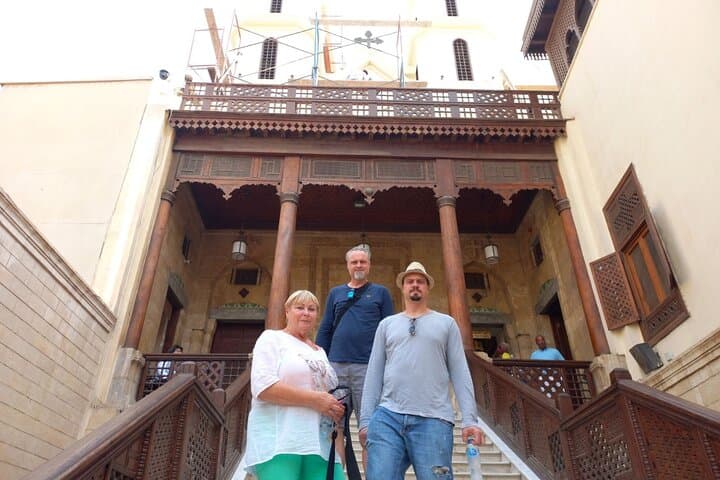
This single day stitches three very different chapters of Cairo’s past. The Giza Plateau—Khufu, Khafre and Menkaure—dates to Egypt’s Old Kingdom (c. 2600–2500 BCE) and demonstrates ancient engineering: quarries, precise stone setting and funerary corridors. The Egyptian Museum in Tahrir holds artifacts from millennia, including Tutankhamun’s treasures, illustrating both regal ritual and everyday craft. Coptic Cairo traces Christian communities back to Late Antiquity; churches like the Hanging Church and St. Sergius preserve mosaics and liturgy from the 4th–5th centuries.
Practical guidance: this is a long, guided day (about 7–8 hours). Expect 1–2 miles of walking on uneven stone and paved surfaces across the plateau and inside museum galleries. Bring sun protection and at least 1–2 liters of water; pyramids offer limited shade. Entrance fees for the Egyptian Museum and the pyramid interior are often extra—confirm with your guide and have cash or card ready. Modest dress is recommended for Coptic sites and respectful behavior is expected inside churches. If you want photos from the Panorama area or a short camel ride, budget extra time and cash. The itinerary is private and includes hotel pickup and drop‑off, making it manageable for travelers of most fitness levels who can handle a full day of standing, walking and brief climbs.
moderate.
7–8 hours.
Able to stand and walk intermittently for most of the day; comfortable with short climbs and uneven terrain
The tour includes visits but most attraction admission fees (Egyptian Museum, pyramid interior) are often extra—verify with your operator before travel.
Yes; the private tour includes hotel pickup and drop‑off within Cairo or Giza as part of the booking.
Access to enter pyramid passages requires a separate ticket and is limited—ask your guide to arrange this in advance if available.
The tour is physically easy to moderate—suitable for many ages, but expect full‑day activity; mobility issues may limit access to some uneven areas.
The Giza pyramids are royal tombs built during Egypt’s Old Kingdom (around 2600 BCE); the Egyptian Museum houses Tutankhamun’s collection, a key window into pharaonic burial practice.
High visitor numbers stress fragile sites—stay on marked paths, avoid climbing monuments, and follow guide instructions to limit wear and protect artifacts.
Cairo Private Guided Tours operates guided outdoor trips and adventures with an emphasis on safety, stewardship, and memorable experiences.
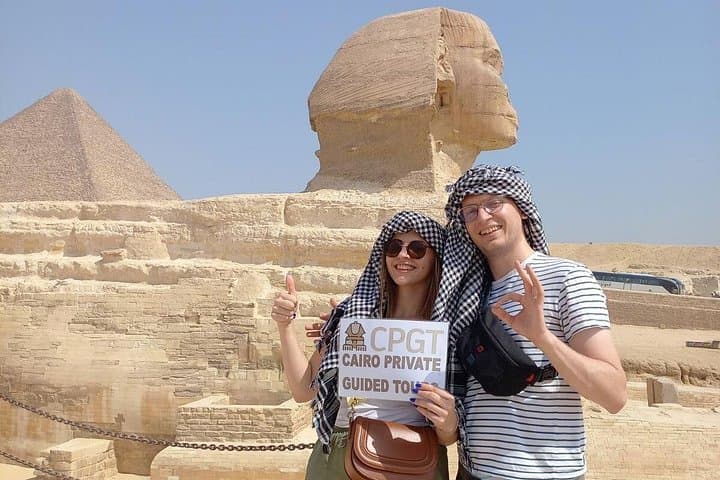
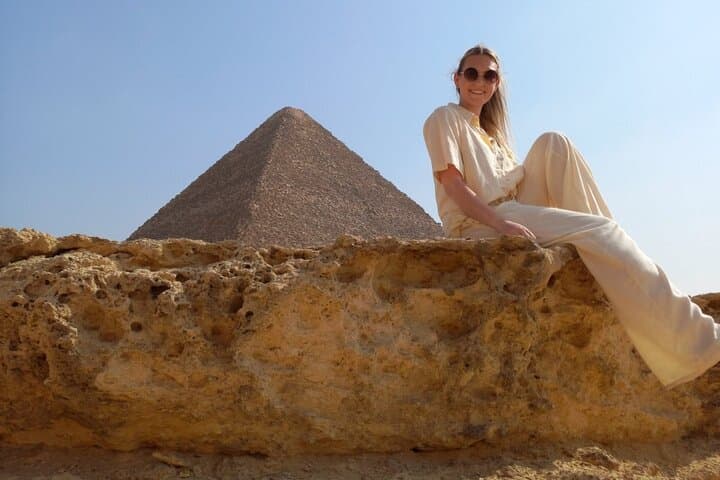
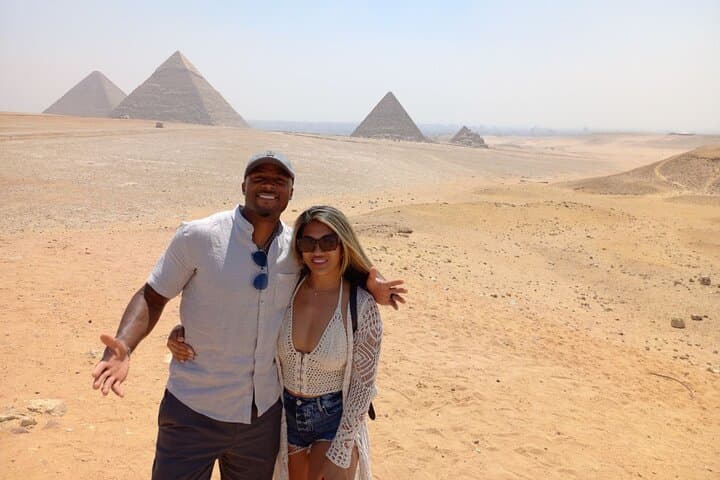
You step out of the air‑conditioned vehicle and the plateau opens: a sweep of golden limestone, the Pyramids rising like engineered mountains under a bright sky. Wind moves sand across the stones as guides point out the neat geometry of casing blocks and the long lines of tourists. The Sphinx watches silently, its weathered face turned toward history.
You step out of the air‑conditioned vehicle and the plateau opens: a sweep of golden limestone, the Pyramids rising like engineered mountains under a bright sky. Wind moves sand across the stones as guides point out the neat geometry of casing blocks and the long lines of tourists. The Sphinx watches silently, its weathered face turned toward history.
This single day stitches three very different chapters of Cairo’s past. The Giza Plateau—Khufu, Khafre and Menkaure—dates to Egypt’s Old Kingdom (c. 2600–2500 BCE) and demonstrates ancient engineering: quarries, precise stone setting and funerary corridors. The Egyptian Museum in Tahrir holds artifacts from millennia, including Tutankhamun’s treasures, illustrating both regal ritual and everyday craft. Coptic Cairo traces Christian communities back to Late Antiquity; churches like the Hanging Church and St. Sergius preserve mosaics and liturgy from the 4th–5th centuries.
Practical guidance: this is a long, guided day (about 7–8 hours). Expect 1–2 miles of walking on uneven stone and paved surfaces across the plateau and inside museum galleries. Bring sun protection and at least 1–2 liters of water; pyramids offer limited shade. Entrance fees for the Egyptian Museum and the pyramid interior are often extra—confirm with your guide and have cash or card ready. Modest dress is recommended for Coptic sites and respectful behavior is expected inside churches. If you want photos from the Panorama area or a short camel ride, budget extra time and cash. The itinerary is private and includes hotel pickup and drop‑off, making it manageable for travelers of most fitness levels who can handle a full day of standing, walking and brief climbs.