THE ADVENTURE COLLECTIVE® · Independent discovery and booking for outdoor travel

Spend a day on the Giza Plateau—explore all three main pyramids, ride a camel from the panoramic ridge, see the Sphinx, enjoy Egyptian lunch, then tour the Grand Egyptian Museum with an Egyptologist. This private, all-inclusive tour bundles transport, entrance fees and context for a focused cultural day.
Spend a day on the Giza Plateau—explore all three main pyramids, ride a camel from the panoramic ridge, see the Sphinx, enjoy Egyptian lunch, then tour the Grand Egyptian Museum with an Egyptologist. This private, all-inclusive tour bundles transport, entrance fees and context for a focused cultural day.
You step out onto the Giza Plateau and the sun finds the stone first, turning pharaohs' shoulders to gold as a breeze lifts dust that dares you to follow its path.
Verified experiences and guided adventures in the surrounding area.
Operated by Nefertiti Tours · Giza, Giza Governorate
You step out onto the Giza Plateau and the sun finds the stone first, turning pharaohs' shoulders to gold as a breeze lifts dust that dares you to follow its path.
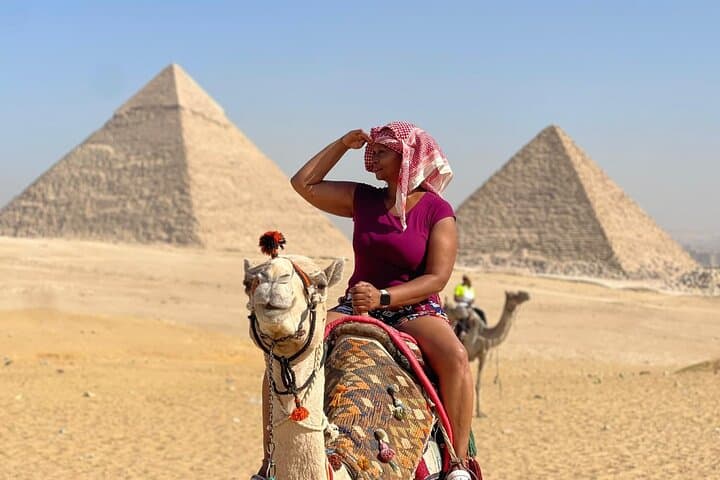
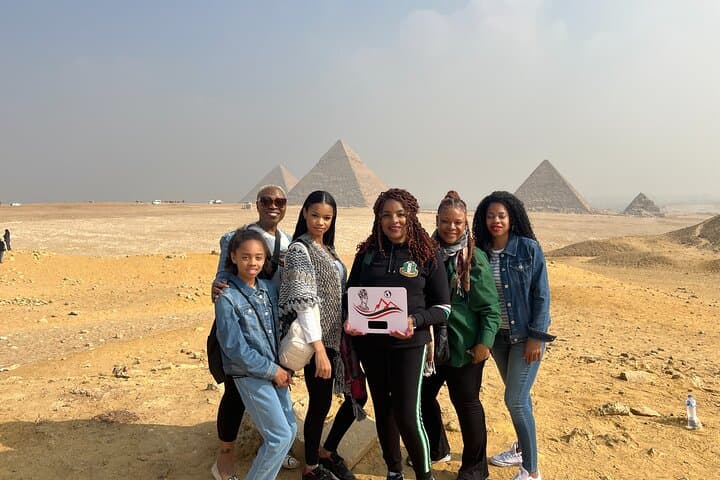
The day begins with wide, geometric silhouettes—the Great Pyramid, Khafre and Menkaure—each a 4,500-year-old marker of engineering and ritual. Walk the plateau loop, then climb to the panoramic ridge for a 20-minute camel ride that rocks you into the flat, timeless rhythm of the desert. The Sphinx watches with a weathered patience; its face has overseen millennia of human reverence and modern traffic alike.
History is literal here: the pyramids are cut limestone and core blocks laid as royal tombs in the Old Kingdom, while nearby the new Grand Egyptian Museum gathers its own gravity. The GEM consolidates centuries of finds, including the Tutankhamun collection and large-scale statuary moved from the Nile valley for preservation.
Practicalities shape the flow: most tours include entrance fees and private A/C transport, with an English-speaking Egyptologist guiding context and logistics. Interior access to the Great Pyramid is optional and limited—book ahead if you want the claustrophobic, cool silence inside.
Plan for heat and walking—sturdy shoes for uneven stone, sun protection, and a refillable water bottle. Expect a sit-down lunch at a local restaurant, followed by a measured, climate-controlled museum visit where photography and bag checks are enforced. End the day with a quiet return to Giza, the plateau receding as the city lights push forward.
easy.
3–8 hours.
Suitable for most fitness levels; involves moderate walking and short camel ride
Interior access is sometimes available but limited and often requires an additional ticket or reservation—confirm with your operator before the tour.
The tour lists wheelchair-accessible transportation and options, but access on the plateau and inside certain sites can be uneven—check specific needs with the operator in advance.
This all-inclusive tour states entrance fees and lunch are included; verify whether pyramid interior tickets or optional extras are covered.
Tipping is customary; a small amount for the guide and driver (roughly 10–15% combined or a fixed local amount) is appreciated and often expected.
The pyramids on Giza Plateau date to Egypt’s Fourth Dynasty (~2600–2500 BCE); the Grand Egyptian Museum now hosts the Tutankhamun collection and large artifacts moved for conservation.
Site managers limit access to fragile interiors and enforce bag checks; the GEM centralizes artifacts to reduce wear on original tombs and improve long-term preservation.
Nefertiti Tours operates guided outdoor trips and adventures with an emphasis on safety, stewardship, and memorable experiences.
You step out onto the Giza Plateau and the sun finds the stone first, turning pharaohs' shoulders to gold as a breeze lifts dust that dares you to follow its path.
You step out onto the Giza Plateau and the sun finds the stone first, turning pharaohs' shoulders to gold as a breeze lifts dust that dares you to follow its path.
The day begins with wide, geometric silhouettes—the Great Pyramid, Khafre and Menkaure—each a 4,500-year-old marker of engineering and ritual. Walk the plateau loop, then climb to the panoramic ridge for a 20-minute camel ride that rocks you into the flat, timeless rhythm of the desert. The Sphinx watches with a weathered patience; its face has overseen millennia of human reverence and modern traffic alike.
History is literal here: the pyramids are cut limestone and core blocks laid as royal tombs in the Old Kingdom, while nearby the new Grand Egyptian Museum gathers its own gravity. The GEM consolidates centuries of finds, including the Tutankhamun collection and large-scale statuary moved from the Nile valley for preservation.
Practicalities shape the flow: most tours include entrance fees and private A/C transport, with an English-speaking Egyptologist guiding context and logistics. Interior access to the Great Pyramid is optional and limited—book ahead if you want the claustrophobic, cool silence inside.
Plan for heat and walking—sturdy shoes for uneven stone, sun protection, and a refillable water bottle. Expect a sit-down lunch at a local restaurant, followed by a measured, climate-controlled museum visit where photography and bag checks are enforced. End the day with a quiet return to Giza, the plateau receding as the city lights push forward.