THE ADVENTURE COLLECTIVE® · Independent discovery and booking for outdoor travel

Stand on the Giza plateau and let the scale of the Great Pyramid and the Sphinx reframe your sense of history. This 3–5 hour private tour from Cairo pairs efficient logistics with expert explanation to make the most of limited time.
Stand on the Giza plateau and let the scale of the Great Pyramid and the Sphinx reframe your sense of history. This 3–5 hour private tour from Cairo pairs efficient logistics with expert explanation to make the most of limited time.
You arrive on a low, wind-scoured plateau where stone rises like a challenge—three pyramids keeping watch as the city hums beyond the horizon. The air smells faintly of dust and diesel; the scale of the Great Pyramid makes conversation shrink to a respectful whisper. Your guide points out masonry seams and the original casing stones, and the plateau opens up into a panoramic line of Pharaohs' ambition.
Verified experiences and guided adventures in the surrounding area.
Operated by Mystic Egypt · Giza, Giza Governorate
You arrive on a low, wind-scoured plateau where stone rises like a challenge—three pyramids keeping watch as the city hums beyond the horizon. The air smells faintly of dust and diesel; the scale of the Great Pyramid makes conversation shrink to a respectful whisper. Your guide points out masonry seams and the original casing stones, and the plateau opens up into a panoramic line of Pharaohs' ambition.
The monuments at Giza date to Egypt's Old Kingdom (c. 2600–2500 BCE). The Great Pyramid of Khufu is the last standing remnant of the ancient Seven Wonders; the Sphinx pairs lion’s body with a human face, guarding a necropolis shaped by limestone geology and Nile-fed clay terraces. Local culture layers modern Cairo’s bustle over an archaeological landscape where counterweights of history and daily life move in parallel.
Expect wide paved and packed-sand walks, short stair sections, and uneven surfaces around tomb entrances. Visits focus on external viewing and guided interpretation; interior entry to some pyramids is possible but restricted and often requires separate tickets. Photogenic vantage points line the plateau, and the Solar Boat Museum near Khufu offers a quieter, often-missed stop.
Practicalities: aim for morning or late afternoon to avoid peak heat, bring sun protection and plenty of water, and plan for security checks and crowds. A private guide speeds movement through gate lines and provides context that turns stone and sand into stories. Whether you linger at the Sphinx or step closer to the Great Pyramid’s shadow, this is a visit where scale and history insist you pay attention.
easy.
3–5 hours.
Light walking ability required; suitable for most fitness levels but expect short periods on uneven ground and standing.
The private tour runs about 3–5 hours depending on pickup, traffic, and how long you spend at each point.
Most standard private tours include external viewing and Sphinx access; entering a pyramid requires separate tickets and may be restricted.
Main areas have some wheelchair-accessible routes, but uneven surfaces and stairs limit access to certain spots; check with the operator for specifics.
Yes — private Egyptologist guides typically provide historical context, construction theories, and cultural insights throughout the visit.
The Giza complex was built during Egypt’s Fourth Dynasty; Khufu’s pyramid alone originally stood about 146 meters high and was clad in polished limestone.
Visitor pressure and urban expansion strain the site; stick to marked paths, avoid touching carved surfaces, and follow guide instructions to minimize impact.
Mystic Egypt operates guided outdoor trips and adventures with an emphasis on safety, stewardship, and memorable experiences.
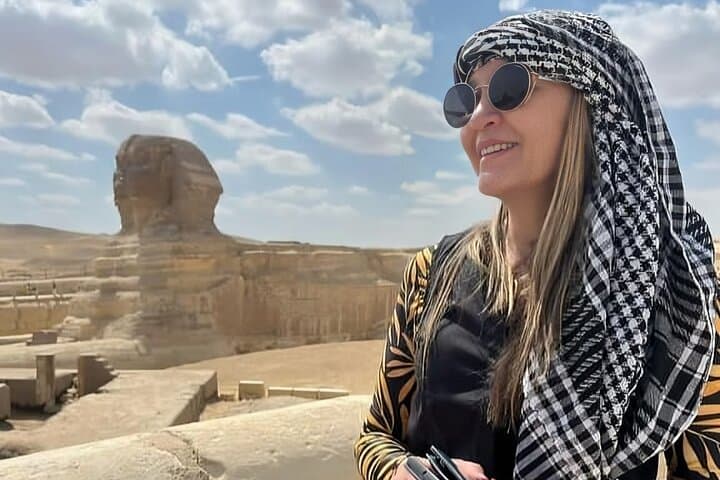


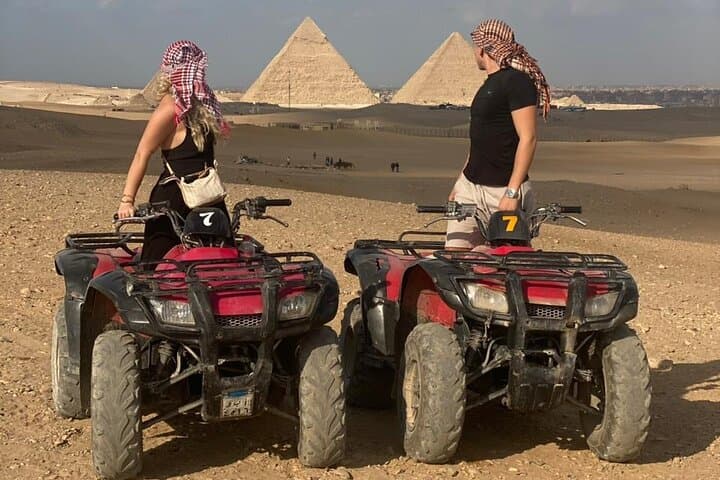
You arrive on a low, wind-scoured plateau where stone rises like a challenge—three pyramids keeping watch as the city hums beyond the horizon. The air smells faintly of dust and diesel; the scale of the Great Pyramid makes conversation shrink to a respectful whisper. Your guide points out masonry seams and the original casing stones, and the plateau opens up into a panoramic line of Pharaohs' ambition.
You arrive on a low, wind-scoured plateau where stone rises like a challenge—three pyramids keeping watch as the city hums beyond the horizon. The air smells faintly of dust and diesel; the scale of the Great Pyramid makes conversation shrink to a respectful whisper. Your guide points out masonry seams and the original casing stones, and the plateau opens up into a panoramic line of Pharaohs' ambition.
The monuments at Giza date to Egypt's Old Kingdom (c. 2600–2500 BCE). The Great Pyramid of Khufu is the last standing remnant of the ancient Seven Wonders; the Sphinx pairs lion’s body with a human face, guarding a necropolis shaped by limestone geology and Nile-fed clay terraces. Local culture layers modern Cairo’s bustle over an archaeological landscape where counterweights of history and daily life move in parallel.
Expect wide paved and packed-sand walks, short stair sections, and uneven surfaces around tomb entrances. Visits focus on external viewing and guided interpretation; interior entry to some pyramids is possible but restricted and often requires separate tickets. Photogenic vantage points line the plateau, and the Solar Boat Museum near Khufu offers a quieter, often-missed stop.
Practicalities: aim for morning or late afternoon to avoid peak heat, bring sun protection and plenty of water, and plan for security checks and crowds. A private guide speeds movement through gate lines and provides context that turns stone and sand into stories. Whether you linger at the Sphinx or step closer to the Great Pyramid’s shadow, this is a visit where scale and history insist you pay attention.