THE ADVENTURE COLLECTIVE® · Independent discovery and booking for outdoor travel

A full-day private tour that pairs the timeless Pyramids of Giza and Sphinx with hands-on desert activities: a 20-minute camel ride, a 60-minute ATV run, and guided Egyptologist commentary. Ideal for travelers who want history and adrenaline in one day.
A full-day private tour that pairs the timeless Pyramids of Giza and Sphinx with hands-on desert activities: a 20-minute camel ride, a 60-minute ATV run, and guided Egyptologist commentary. Ideal for travelers who want history and adrenaline in one day.
You step from the car into a sweep of ochre sand and sunlight; the desert seems to dare you forward and there, rising from the plateau, are the Pyramids of Giza—monoliths that compress millennia into a single silhouette. The guide ushers you to a panoramic ledge where the three main pyramids and the Sphinx command the skyline, and the air smells faintly of spice and engine oil from the nearby village.
Verified experiences and guided adventures in the surrounding area.
Operated by Forever Egypt Tours · Giza, Giza Governorate
You step from the car into a sweep of ochre sand and sunlight; the desert seems to dare you forward and there, rising from the plateau, are the Pyramids of Giza—monoliths that compress millennia into a single silhouette. The guide ushers you to a panoramic ledge where the three main pyramids and the Sphinx command the skyline, and the air smells faintly of spice and engine oil from the nearby village.
These stone giants date to Egypt’s Old Kingdom: Khufu’s pyramid is the lone survivor of the ancient world’s wonders, Khafre’s complex includes a Valley Temple used in mummification rituals, and Menkaure preserves its rare Aswan granite facing. Geologically, the Giza plateau sits on Pleistocene limestone benches; quarrying and ancient transport shaped margins still visible in the stones. Local culture remains intimate here—Bedouin communities and Cairo vendors keep the plateau a working landscape, not a museum.
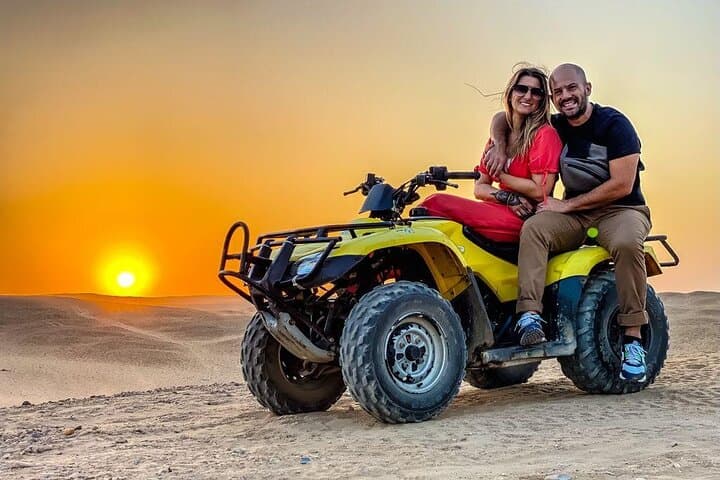
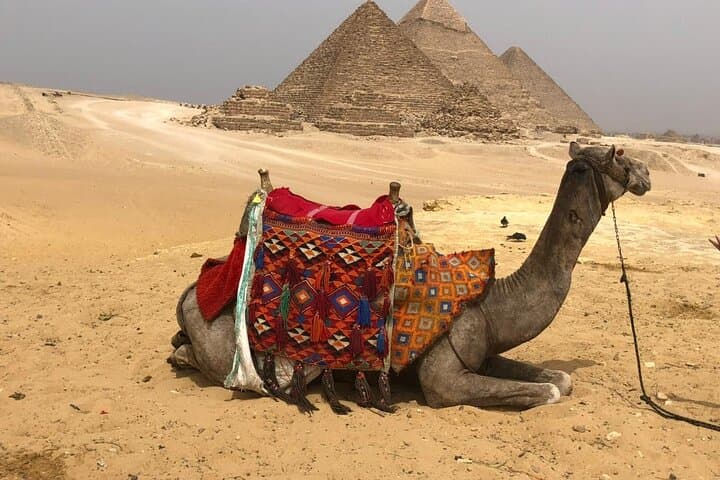
The tour combines history with hands-on desert motion: a 20‑minute camel ride for broad vistas, an approximately 60‑minute ATV run over rolling dunes, and flexible time to photograph the Sphinx and pyramid faces. Practicalities matter: entry into pyramid interiors requires special tickets; bring cash for tips and small purchases, and plan on guided commentary from an Egyptologist included in many private options.
Wear closed shoes for sand and limestone, sun protection, and carry at least 1.5 liters of water. Expect uneven ground, short steep steps near temple entrances, and busy photo zones. With hotel pickup and drop-off, the day packages deliver both spectacle and motion—ancient stones and the desert’s pull in a single active day out of Cairo.
moderate.
5–6 hours.
Suitable for travelers in average health able to walk on uneven ground and handle short climbs and sandy surfaces; ATV requires basic balance.
Not always—interior pyramid tickets are often optional and priced separately; check your package and buy in advance if you want to go inside.
Yes—operators provide a short safety briefing and helmets; riders under local age limits (commonly 12) may not be permitted.
The standard camel ride on this tour is about 20 minutes, offering panoramic views of the plateau rather than long-distance trekking.
Most private packages include hotel pickup and drop-off in central Cairo or Giza—confirm your pickup point and time when booking.
The Giza complex was built in the Fourth Dynasty (c. 2600–2500 BCE); Khufu’s pyramid was the tallest man-made structure for millennia and the valley temples played a role in royal funerary rites.
Heavy visitation and local development stress the plateau’s archaeology and environment—stay on marked paths, avoid touching fragile stonework, and support local guides to promote sustainable tourism.
Forever Egypt Tours operates guided outdoor trips and adventures with an emphasis on safety, stewardship, and memorable experiences.

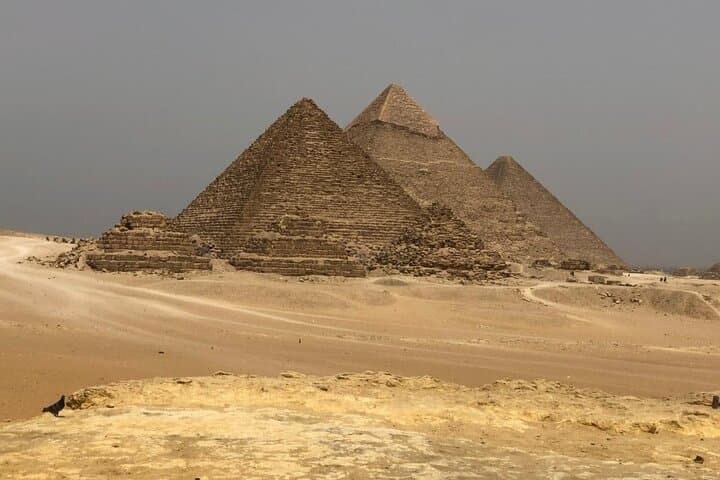
You step from the car into a sweep of ochre sand and sunlight; the desert seems to dare you forward and there, rising from the plateau, are the Pyramids of Giza—monoliths that compress millennia into a single silhouette. The guide ushers you to a panoramic ledge where the three main pyramids and the Sphinx command the skyline, and the air smells faintly of spice and engine oil from the nearby village.
You step from the car into a sweep of ochre sand and sunlight; the desert seems to dare you forward and there, rising from the plateau, are the Pyramids of Giza—monoliths that compress millennia into a single silhouette. The guide ushers you to a panoramic ledge where the three main pyramids and the Sphinx command the skyline, and the air smells faintly of spice and engine oil from the nearby village.
These stone giants date to Egypt’s Old Kingdom: Khufu’s pyramid is the lone survivor of the ancient world’s wonders, Khafre’s complex includes a Valley Temple used in mummification rituals, and Menkaure preserves its rare Aswan granite facing. Geologically, the Giza plateau sits on Pleistocene limestone benches; quarrying and ancient transport shaped margins still visible in the stones. Local culture remains intimate here—Bedouin communities and Cairo vendors keep the plateau a working landscape, not a museum.
The tour combines history with hands-on desert motion: a 20‑minute camel ride for broad vistas, an approximately 60‑minute ATV run over rolling dunes, and flexible time to photograph the Sphinx and pyramid faces. Practicalities matter: entry into pyramid interiors requires special tickets; bring cash for tips and small purchases, and plan on guided commentary from an Egyptologist included in many private options.
Wear closed shoes for sand and limestone, sun protection, and carry at least 1.5 liters of water. Expect uneven ground, short steep steps near temple entrances, and busy photo zones. With hotel pickup and drop-off, the day packages deliver both spectacle and motion—ancient stones and the desert’s pull in a single active day out of Cairo.