THE ADVENTURE COLLECTIVE® · Independent discovery and booking for outdoor travel

See Northern Ireland’s dramatic coast in a single day: basalt columns, a cliff-edge rope bridge and historic Bushmills distillery. This express private tour from Belfast covers the highlights with time for short walks and photo stops.
See Northern Ireland’s dramatic coast in a single day: basalt columns, a cliff-edge rope bridge and historic Bushmills distillery. This express private tour from Belfast covers the highlights with time for short walks and photo stops.
A wind from the North Atlantic drives the spray across the basalt like a hand urging you forward.
Verified experiences and guided adventures in the surrounding area.
Operated by Taxi Tours NI · Bushmills, County Antrim
A wind from the North Atlantic drives the spray across the basalt like a hand urging you forward.
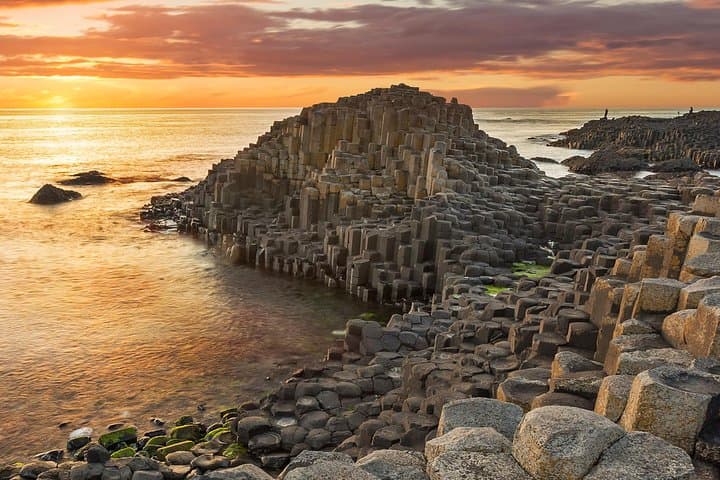
On this express tour the driver drops you close to cliff-edge paths where hexagonal columns step down to the sea and a narrow rope bridge connects you to an island with a history of risk and reward. The guide points out the stacked columns—some called the Wishing Chair, the Camel and the Giant’s Foot—while gulls wheel and the ocean keeps time.
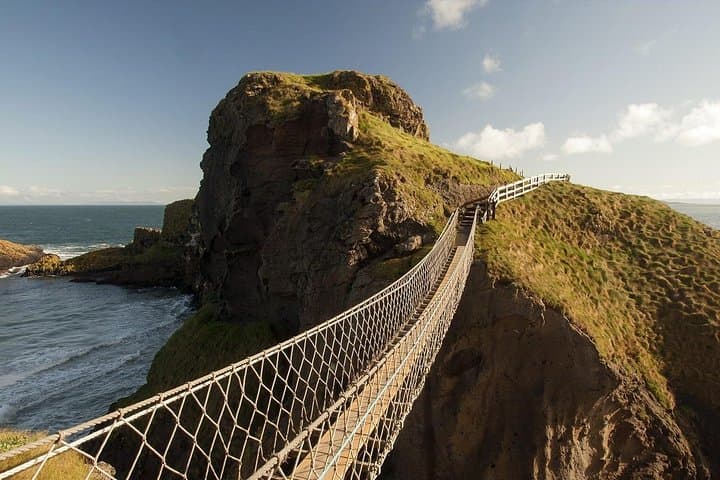
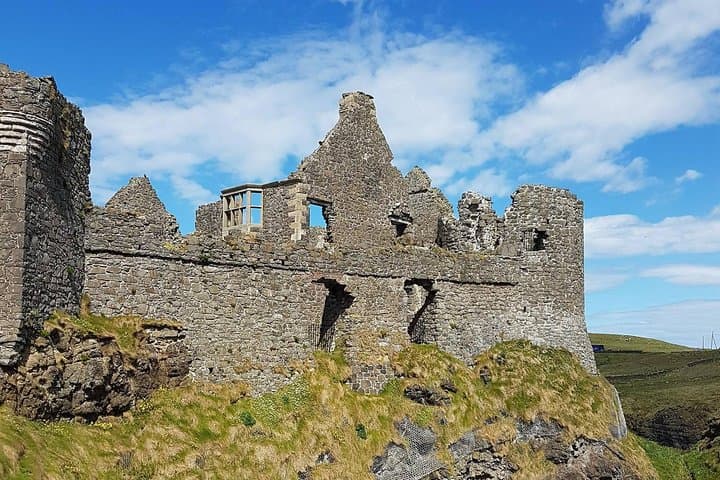
Geology here is blunt: the Causeway formed about 50–60 million years ago as lava cooled and contracted into regular columns. Human stories overlay the rocks—Irish myth of rival giants, the 18th-century fishermen who first used Carrick-a-Rede, and the 400-year whiskey craft at Bushmills inland. Dunluce Castle sits like a weathered guard over the coastline, its ruins marking clan conflicts of the 16th and 17th centuries.
Practically, expect uneven, slippery rock and exposed cliff trails; sections require steady footing rather than technical climbing. The visitor centre manages traffic and offers a paid exhibition; admission to the Causeway itself is free but shuttles between the carpark and shore cost a small fee or you can walk. Tours run 6–7 hours from Belfast in an executive Mercedes with Wi‑Fi and bottled water provided, and groups are kept small.
Plan for changeable weather, allow extra time for photography and short walks around Dunluce and Bushmills, and wear sturdy shoes. The sea will challenge you; respect that pull and the paths, and you’ll leave with clear views and a sharper sense of place.
moderate.
6–7 hours.
Moderate fitness — able to walk on uneven ground and climb short flights of steps; not suitable for those with severe mobility issues.
Access to the Causeway rock formations is free; the visitor centre charges a separate fee for exhibits and facilities.
There is usually a small admission fee to access Carrick-a-Rede and staff manage crossings for safety; fees and opening times vary seasonally.
This private tour operates from Belfast with pickup times confirmed after booking; specific pickup locations and times are arranged with the operator.
The tour is family-friendly, but some walks include uneven ground and exposed cliff sections—supervise children and check mobility needs before booking.
The Causeway’s columns are the result of Paleocene lava flows; local lore frames the rocks as the work of giants, while Carrick-a-Rede was used by 18th-century fishermen.
High visitor numbers have required managed paths, shuttles and visitor-centre controls to limit erosion—stick to marked trails and use provided facilities to reduce impact.
Taxi Tours NI operates guided outdoor trips and adventures with an emphasis on safety, stewardship, and memorable experiences.
A wind from the North Atlantic drives the spray across the basalt like a hand urging you forward.
A wind from the North Atlantic drives the spray across the basalt like a hand urging you forward.
On this express tour the driver drops you close to cliff-edge paths where hexagonal columns step down to the sea and a narrow rope bridge connects you to an island with a history of risk and reward. The guide points out the stacked columns—some called the Wishing Chair, the Camel and the Giant’s Foot—while gulls wheel and the ocean keeps time.
Geology here is blunt: the Causeway formed about 50–60 million years ago as lava cooled and contracted into regular columns. Human stories overlay the rocks—Irish myth of rival giants, the 18th-century fishermen who first used Carrick-a-Rede, and the 400-year whiskey craft at Bushmills inland. Dunluce Castle sits like a weathered guard over the coastline, its ruins marking clan conflicts of the 16th and 17th centuries.
Practically, expect uneven, slippery rock and exposed cliff trails; sections require steady footing rather than technical climbing. The visitor centre manages traffic and offers a paid exhibition; admission to the Causeway itself is free but shuttles between the carpark and shore cost a small fee or you can walk. Tours run 6–7 hours from Belfast in an executive Mercedes with Wi‑Fi and bottled water provided, and groups are kept small.
Plan for changeable weather, allow extra time for photography and short walks around Dunluce and Bushmills, and wear sturdy shoes. The sea will challenge you; respect that pull and the paths, and you’ll leave with clear views and a sharper sense of place.