THE ADVENTURE COLLECTIVE® · Independent discovery and booking for outdoor travel

Walk among some of Earth's largest and oldest living things on a private guided hike or snowshoe through Yosemite’s Tuolumne and Merced groves. This six-hour outing pairs quiet, close-up sequoia encounters with local history and practical guidance for winter conditions.
Walk among some of Earth's largest and oldest living things on a private guided hike or snowshoe through Yosemite’s Tuolumne and Merced groves. This six-hour outing pairs quiet, close-up sequoia encounters with local history and practical guidance for winter conditions.
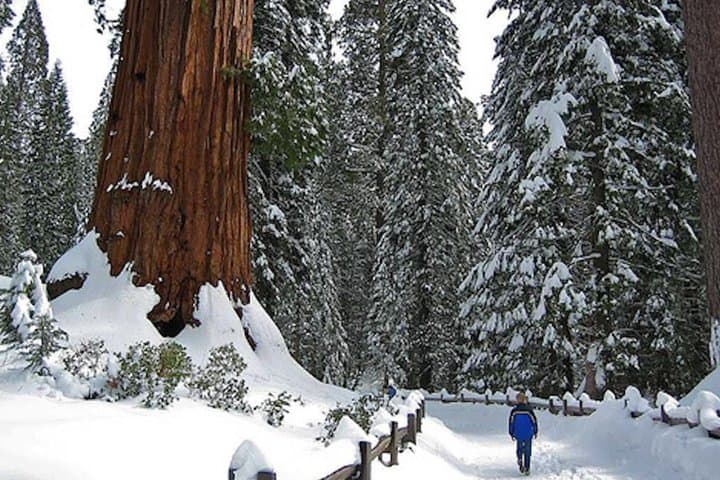
A hush lands before the trees do. You step off the gravel of the Tuolumne Grove parking area and the world tilts toward scale — trunks wider than small cabins, bark fibrous and cinnamon-dark, crowns lost to the sky. In winter, the silence is thicker: your boots compress fresh snow, a guide clears a corridor and the forest exhales cold, tree-scented air. In summer, light threads between branches and the grove becomes a cathedral of dappled shadow and moss.
Verified experiences and guided adventures in the surrounding area.
Operated by Lasting Adventures · Yosemite Valley, California
A hush lands before the trees do. You step off the gravel of the Tuolumne Grove parking area and the world tilts toward scale — trunks wider than small cabins, bark fibrous and cinnamon-dark, crowns lost to the sky. In winter, the silence is thicker: your boots compress fresh snow, a guide clears a corridor and the forest exhales cold, tree-scented air. In summer, light threads between branches and the grove becomes a cathedral of dappled shadow and moss.
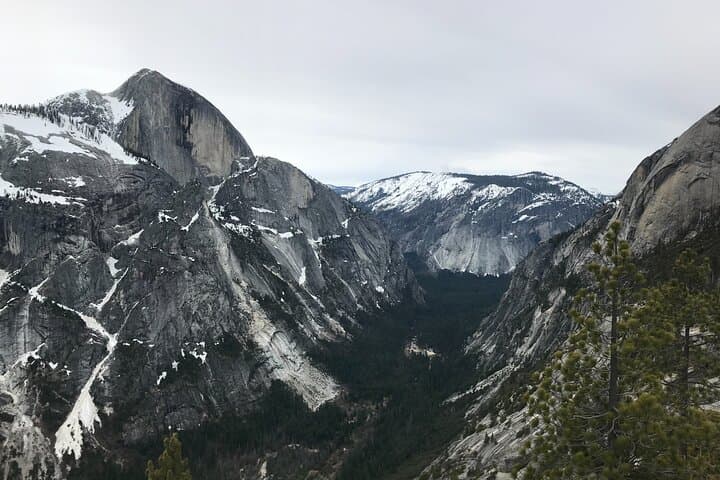
The groves visited on this private outing — usually Tuolumne and, when time allows, Merced — contain some of the oldest living organisms on Earth. Giant Sequoias (Sequoiadendron giganteum) evolved on the western slope of the Sierra Nevada, their resilience shaped by millennia of fire, snow, and steep granite uplift. The surrounding granite and glacially carved valleys tell a younger geological story: ice and rock that worked together to lift and reveal these giants.
Human history here runs deeper than park signage. The Ahwahnechee and neighboring Miwok peoples managed the landscape with fire before Euro-American settlers arrived; those cultural burns helped maintain sequoia regeneration. Today, National Park Service stewardship and prescribed fire programs try to mimic those rhythms to reduce fuel and give seedlings room to grow.
The trip is private and flexible: in low-snow years it’s a steady 3–4 mile hike on packed dirt and roots, with modest elevation change; under heavy snow, it becomes a guided snowshoe through the same groves, slow and deliberate. Guides bring snowshoes when needed and adjust pace for families and mixed-ability groups, making this a good option for those who want close encounters with these monumental trees without crowds.
Practicalities matter here. The trail is uneven and can be icy; good traction and layered clothing are essential in shoulder seasons. Winter drives in Yosemite demand extra time — chains or traction devices may be required on park roads — so allow for slow travel and check park road status before you go. Bring water, snacks, and a camera with a wide-angle lens; the scale of a sequoia is often best captured with context — a person or boot for perspective.
This private grove experience pairs emotional impact with quiet logistics: a thoughtful guide, a meeting point at Tuolumne Grove parking, and a 6-hour window to explore, photograph, and learn. Whether you’re moving across snowy hush or under the filtered summer canopy, these trees make an unambiguous point — longevity is earned in the long seasons of fire, wind, and patience. The result is not just a hike, but a lesson in time and scale that rewards slow footsteps and respectful attention.
moderate.
6 hours.
Participants should be comfortable walking 3–5 miles over uneven ground and able to handle slow uphill stretches; basic winter mobility for snowshoeing may be required.
Meet at the Tuolumne Grove parking lot at the scheduled time; your confirmation includes a Google Maps link.
Yes — guides bring snowshoes when the route is snow-covered; wear warm socks and boots that fit snowshoe bindings.
Yes — the route can be adjusted for families and younger children, though adults should monitor stamina and dressing for cold.
Bring water and snacks; cold weather can mask dehydration, so carry insulated bottles in winter.
Yes — guides may alter the itinerary for safety or seasonal openings; you’ll be notified and offered alternatives or a refund if canceled.
Service animals are permitted; regular pets are subject to park rules and are generally not recommended on snowshoe trips.
Giant sequoias evolved on the western Sierra slopes and have been part of local Indigenous stewardship for generations; Ahwahnechee and neighboring Miwok people used cultural burning that supported sequoia regeneration.
Park managers now use prescribed burns and mechanical thinning to restore natural fire cycles; visitors should stay on trails and follow leave-no-trace principles to protect root zones.
Lasting Adventures operates guided outdoor trips and adventures with an emphasis on safety, stewardship, and memorable experiences.
A hush lands before the trees do. You step off the gravel of the Tuolumne Grove parking area and the world tilts toward scale — trunks wider than small cabins, bark fibrous and cinnamon-dark, crowns lost to the sky. In winter, the silence is thicker: your boots compress fresh snow, a guide clears a corridor and the forest exhales cold, tree-scented air. In summer, light threads between branches and the grove becomes a cathedral of dappled shadow and moss.
A hush lands before the trees do. You step off the gravel of the Tuolumne Grove parking area and the world tilts toward scale — trunks wider than small cabins, bark fibrous and cinnamon-dark, crowns lost to the sky. In winter, the silence is thicker: your boots compress fresh snow, a guide clears a corridor and the forest exhales cold, tree-scented air. In summer, light threads between branches and the grove becomes a cathedral of dappled shadow and moss.
The groves visited on this private outing — usually Tuolumne and, when time allows, Merced — contain some of the oldest living organisms on Earth. Giant Sequoias (Sequoiadendron giganteum) evolved on the western slope of the Sierra Nevada, their resilience shaped by millennia of fire, snow, and steep granite uplift. The surrounding granite and glacially carved valleys tell a younger geological story: ice and rock that worked together to lift and reveal these giants.
Human history here runs deeper than park signage. The Ahwahnechee and neighboring Miwok peoples managed the landscape with fire before Euro-American settlers arrived; those cultural burns helped maintain sequoia regeneration. Today, National Park Service stewardship and prescribed fire programs try to mimic those rhythms to reduce fuel and give seedlings room to grow.
The trip is private and flexible: in low-snow years it’s a steady 3–4 mile hike on packed dirt and roots, with modest elevation change; under heavy snow, it becomes a guided snowshoe through the same groves, slow and deliberate. Guides bring snowshoes when needed and adjust pace for families and mixed-ability groups, making this a good option for those who want close encounters with these monumental trees without crowds.
Practicalities matter here. The trail is uneven and can be icy; good traction and layered clothing are essential in shoulder seasons. Winter drives in Yosemite demand extra time — chains or traction devices may be required on park roads — so allow for slow travel and check park road status before you go. Bring water, snacks, and a camera with a wide-angle lens; the scale of a sequoia is often best captured with context — a person or boot for perspective.
This private grove experience pairs emotional impact with quiet logistics: a thoughtful guide, a meeting point at Tuolumne Grove parking, and a 6-hour window to explore, photograph, and learn. Whether you’re moving across snowy hush or under the filtered summer canopy, these trees make an unambiguous point — longevity is earned in the long seasons of fire, wind, and patience. The result is not just a hike, but a lesson in time and scale that rewards slow footsteps and respectful attention.