THE ADVENTURE COLLECTIVE® · Independent discovery and booking for outdoor travel

Spend a private day exploring Ubud’s highlights—from the thunder of Tegenungan Waterfall to the carved sanctity of Goa Gajah and the sweeping steps of Tegalalang Rice Terrace. This full-day tour blends cultural sites, nature walks and a lively market visit with private transfers and an English-speaking driver.
Spend a private day exploring Ubud’s highlights—from the thunder of Tegenungan Waterfall to the carved sanctity of Goa Gajah and the sweeping steps of Tegalalang Rice Terrace. This full-day tour blends cultural sites, nature walks and a lively market visit with private transfers and an English-speaking driver.
You start the day leaving the hum of southern Bali behind and drive into a cooler, greener world where palms and jackfruit trees lean over narrow village roads.
Verified experiences and guided adventures in the surrounding area.
Operated by Bali Day Tour · Ubud, Bali
You start the day leaving the hum of southern Bali behind and drive into a cooler, greener world where palms and jackfruit trees lean over narrow village roads.
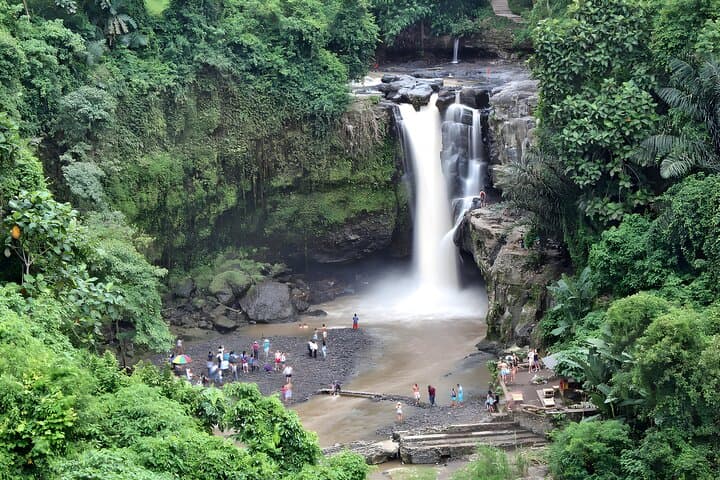
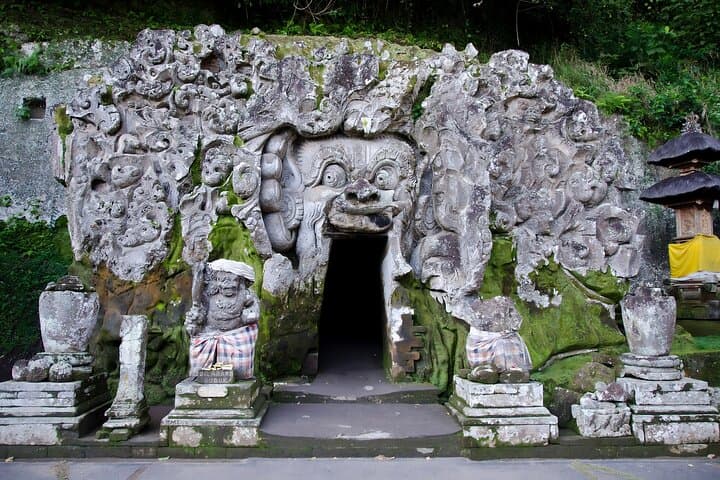
First stop: Tegenungan, where the Petanu river thunders over a 20m drop and the spray dares you to get closer. From there you descend to Goa Gajah’s carved stone mouth and ritual pools, an archaeological pocket of early Balinese Hindu influence carved into volcanic bedrock.
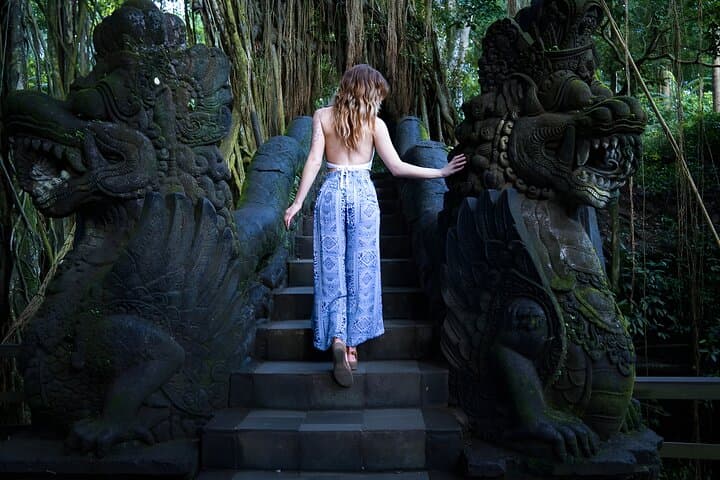
The route threads through terraced slopes at Tegalalang — stepped fields that trace ancient subak irrigation lines — offering wide valley views and a breeze that carries the scent of wet earth and young rice. The Monkey Forest introduces a livelier tempo: long-tailed macaques move like small brown currents through temple ruins and banyan roots, a reminder that this landscape is shared with wildlife and village ritual.
Ubud Palace and the traditional market close the loop: architecture, daily offerings, and crafts that reflect centuries of regional artistic production. Guides typically combine cultural context with practical tips, from temple etiquette to bargaining in the market.
Plan for a full 9–10 hour day with repeated short walks, uneven stone steps and some roadside stalls. Wear closed shoes for waterfall access, bring sunscreen and insect repellent, and carry local cash for small entrance fees and souvenirs. If you prefer quieter photos, aim for an early start; if you want livelier market scenes, linger into the afternoon. This private format keeps the pace flexible — useful when you want longer time at a temple or a quick cafe stop overlooking the terraces.
easy.
9–10 hours.
Suitable for most travelers; requires repeated short walks and stair negotiation, not sustained hiking.
Most entrance fees are included per the itinerary, but check your booking details for any optional extras and have small cash for incidental charges.
Yes—this private tour is rated easy and suitable for children and older guests, though there are steps and short uneven walks at several stops.
A professional English-speaking driver/guide is provided; request other language support when booking if needed.
Pickup and drop-off are available from many southern Bali locations (Seminyak, Kuta, Sanur, Jimbaran); confirm your pickup point at booking.
Ubud grew as a center for Balinese arts and royal patronage; Puri Saren (Ubud Palace) remains a cultural hub for dance and crafts tied to the region’s ruling families.
The Monkey Forest is managed by the Padangtegal community council to balance tourism with temple conservation; visitors are asked to follow rules to reduce stress on wildlife and degradation of historic sites.
Bali Day Tour operates guided outdoor trips and adventures with an emphasis on safety, stewardship, and memorable experiences.

You start the day leaving the hum of southern Bali behind and drive into a cooler, greener world where palms and jackfruit trees lean over narrow village roads.
You start the day leaving the hum of southern Bali behind and drive into a cooler, greener world where palms and jackfruit trees lean over narrow village roads.
First stop: Tegenungan, where the Petanu river thunders over a 20m drop and the spray dares you to get closer. From there you descend to Goa Gajah’s carved stone mouth and ritual pools, an archaeological pocket of early Balinese Hindu influence carved into volcanic bedrock.
The route threads through terraced slopes at Tegalalang — stepped fields that trace ancient subak irrigation lines — offering wide valley views and a breeze that carries the scent of wet earth and young rice. The Monkey Forest introduces a livelier tempo: long-tailed macaques move like small brown currents through temple ruins and banyan roots, a reminder that this landscape is shared with wildlife and village ritual.
Ubud Palace and the traditional market close the loop: architecture, daily offerings, and crafts that reflect centuries of regional artistic production. Guides typically combine cultural context with practical tips, from temple etiquette to bargaining in the market.
Plan for a full 9–10 hour day with repeated short walks, uneven stone steps and some roadside stalls. Wear closed shoes for waterfall access, bring sunscreen and insect repellent, and carry local cash for small entrance fees and souvenirs. If you prefer quieter photos, aim for an early start; if you want livelier market scenes, linger into the afternoon. This private format keeps the pace flexible — useful when you want longer time at a temple or a quick cafe stop overlooking the terraces.