THE ADVENTURE COLLECTIVE® · Independent discovery and booking for outdoor travel

Experience the layered history of Memphis and Saqqara on a private full-day tour. Walk across desert quarries, enter mastaba tombs, and stand before the Pyramid of Teti with a guide who brings ancient inscriptions to life.
Experience the layered history of Memphis and Saqqara on a private full-day tour. Walk across desert quarries, enter mastaba tombs, and stand before the Pyramid of Teti with a guide who brings ancient inscriptions to life.
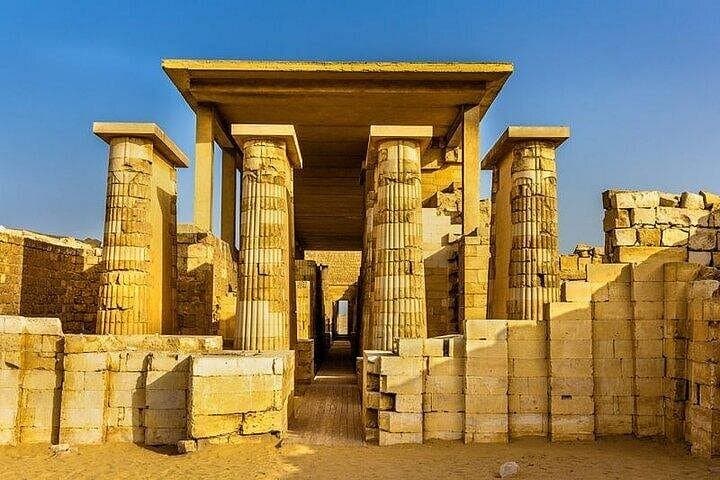
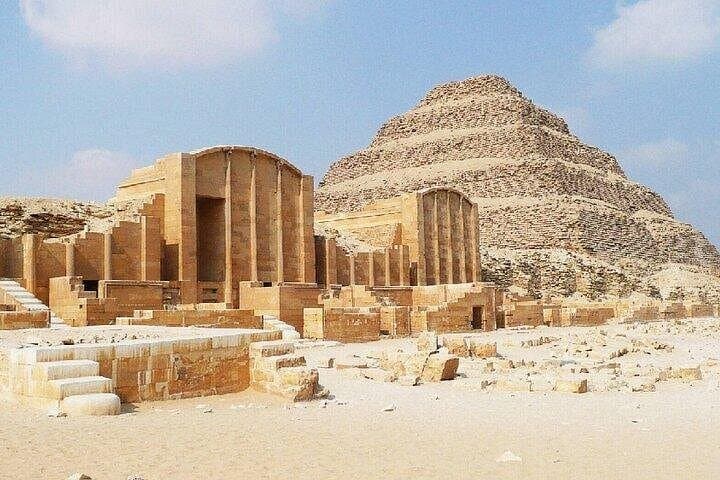
A dry wind lifts dust off the desert plain as the minibus pulls away from Cairo and the plateau of Saqqara unfurls ahead: flat stone, low ridgelines and the stepped silhouette of Djoser’s tomb cutting the skyline. On a private full-day tour, fragments of ancient life sit in the open—mastabas scored with painted reliefs, fallen blocks of limestone, and the low, squat profile of Teti’s pyramid where carved texts watch the horizon.
Verified experiences and guided adventures in the surrounding area.
Operated by Emo Tours Swiss · Saqqara, Giza Governorate
A dry wind lifts dust off the desert plain as the minibus pulls away from Cairo and the plateau of Saqqara unfurls ahead: flat stone, low ridgelines and the stepped silhouette of Djoser’s tomb cutting the skyline. On a private full-day tour, fragments of ancient life sit in the open—mastabas scored with painted reliefs, fallen blocks of limestone, and the low, squat profile of Teti’s pyramid where carved texts watch the horizon.
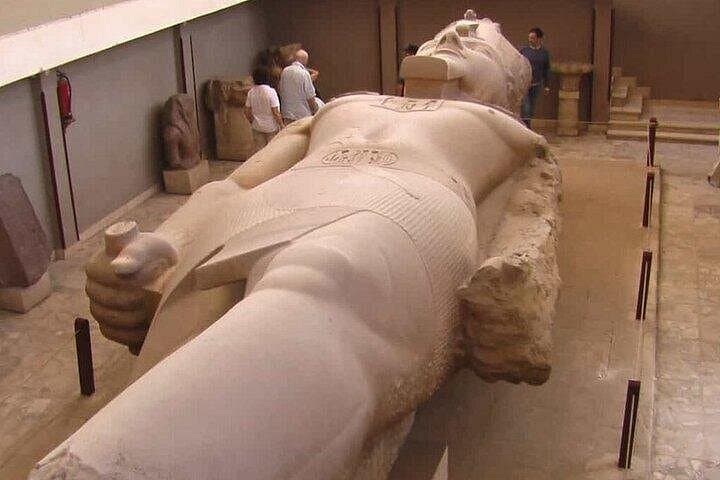
This corridor of monuments marks the necropolis of Memphis, Egypt’s first great capital. Saqqara holds the Step Pyramid of Djoser (the world’s earliest large-scale stone structure) and a sequence of Old Kingdom tombs; nearby Memphis preserves colossal statues and the memory of a city that organized the Nile’s floodplain. The local geology—layered limestone and calcarenite—was quarried into smooth casings that weather into red and beige faces now exposed to the sun.
Guides point to inscriptions, funerary scenes, and construction quirks that reveal changing ritual, class, and engineering across millennia. Culture here is tactile: bargaining with vendors at the site entry, mindful photography, and the quiet respect shown around tombs.
Practical notes: the day includes several shorter walks across uneven, sandy ground (expect 1–2 miles on foot total). Temperatures can spike; start early, carry water, and wear closed shoes for rubble and steps. Entry fees and private transfers are typically included in packaged tours; verify whether inside access (to mastabas or pyramid chambers) is open that day. Morning light flatters reliefs; late afternoon brings long shadows for photography. With a good guide, the circuit compresses thousands of years into five hours of visible history and desert detail.
easy.
5 hours.
Suitable for most fitness levels; involves multiple short walks (up to 2 miles total) on uneven, sandy ground and some stairs.
The full private tour is approximately 5 hours (300 minutes) including transfers and guided time at each site.
Most private packages include entry fees and transfers; confirm on booking to avoid surprises.
Access depends on current site rules—some chambers are open intermittently; your guide will advise whether interior access is available that day.
The tour is family-friendly but involves uneven terrain and stairs; travelers with serious mobility constraints should discuss accommodations before booking.
Saqqara served as the necropolis for ancient Memphis; Djoser’s Step Pyramid (3rd Dynasty) is history’s earliest monumental stone structure and Teti’s pyramid contains some of the earliest pyramid texts.
Visitor impact is managed through controlled access and signage; follow paths, avoid touching delicate carvings, and support local conservation efforts by using licensed guides.
Emo Tours Swiss operates guided outdoor trips and adventures with an emphasis on safety, stewardship, and memorable experiences.

A dry wind lifts dust off the desert plain as the minibus pulls away from Cairo and the plateau of Saqqara unfurls ahead: flat stone, low ridgelines and the stepped silhouette of Djoser’s tomb cutting the skyline. On a private full-day tour, fragments of ancient life sit in the open—mastabas scored with painted reliefs, fallen blocks of limestone, and the low, squat profile of Teti’s pyramid where carved texts watch the horizon.
A dry wind lifts dust off the desert plain as the minibus pulls away from Cairo and the plateau of Saqqara unfurls ahead: flat stone, low ridgelines and the stepped silhouette of Djoser’s tomb cutting the skyline. On a private full-day tour, fragments of ancient life sit in the open—mastabas scored with painted reliefs, fallen blocks of limestone, and the low, squat profile of Teti’s pyramid where carved texts watch the horizon.
This corridor of monuments marks the necropolis of Memphis, Egypt’s first great capital. Saqqara holds the Step Pyramid of Djoser (the world’s earliest large-scale stone structure) and a sequence of Old Kingdom tombs; nearby Memphis preserves colossal statues and the memory of a city that organized the Nile’s floodplain. The local geology—layered limestone and calcarenite—was quarried into smooth casings that weather into red and beige faces now exposed to the sun.
Guides point to inscriptions, funerary scenes, and construction quirks that reveal changing ritual, class, and engineering across millennia. Culture here is tactile: bargaining with vendors at the site entry, mindful photography, and the quiet respect shown around tombs.
Practical notes: the day includes several shorter walks across uneven, sandy ground (expect 1–2 miles on foot total). Temperatures can spike; start early, carry water, and wear closed shoes for rubble and steps. Entry fees and private transfers are typically included in packaged tours; verify whether inside access (to mastabas or pyramid chambers) is open that day. Morning light flatters reliefs; late afternoon brings long shadows for photography. With a good guide, the circuit compresses thousands of years into five hours of visible history and desert detail.