THE ADVENTURE COLLECTIVE® · Independent discovery and booking for outdoor travel

A long, private day that takes you from Hurghada to Luxor’s monumental complexes and the painted halls of Dendera. Expect early departure, archaeological depth, and a full day of walking between temples, tombs, and alabaster workshops.
A long, private day that takes you from Hurghada to Luxor’s monumental complexes and the painted halls of Dendera. Expect early departure, archaeological depth, and a full day of walking between temples, tombs, and alabaster workshops.
You arrive before dawn on a long two-way drive from Hurghada, the Red Sea receding behind you as the desert opens and the Nile's green ribbon appears on the horizon. By mid-morning the columns of Karnak loom: a stone forest whose carved capitals catch dust and light, and you feel the scale of millennia pressing in.
Verified experiences and guided adventures in the surrounding area.
Operated by ToursMo · Luxor, Luxor Governorate
You arrive before dawn on a long two-way drive from Hurghada, the Red Sea receding behind you as the desert opens and the Nile's green ribbon appears on the horizon. By mid-morning the columns of Karnak loom: a stone forest whose carved capitals catch dust and light, and you feel the scale of millennia pressing in.
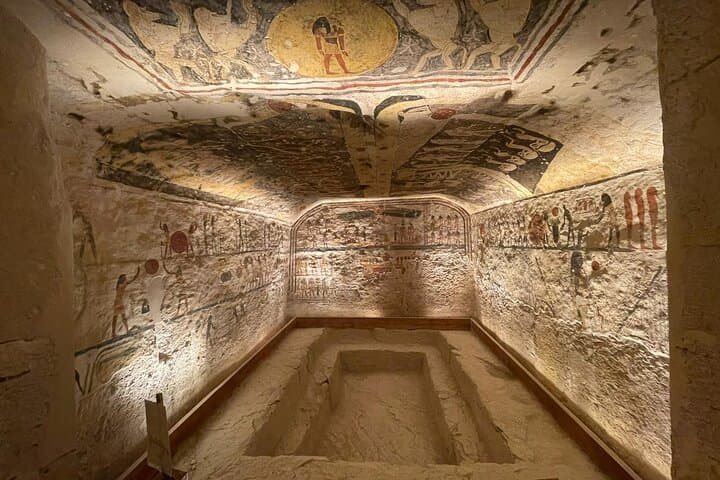
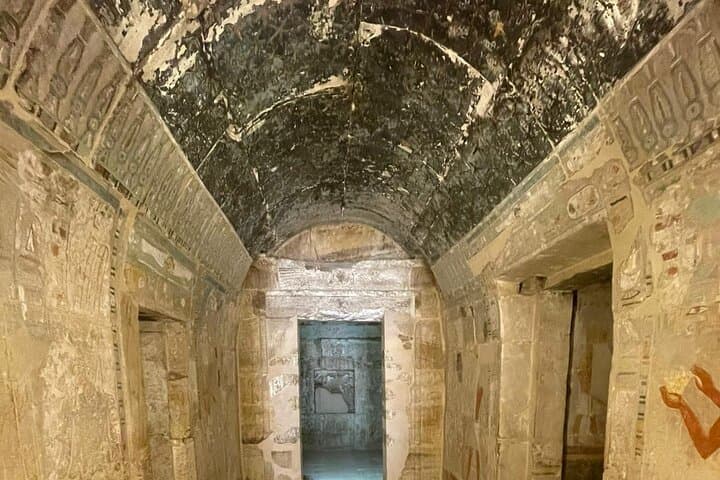
Luxor was ancient Thebes, a political and religious heart of pharaonic Egypt; its necropolises, mortuary temples and colonnades reflect layers of reinvention by successive rulers. The Valley of the Kings cuts into limestone escarpments—tombs bored deep into bedrock, with painted ceilings that speak to funerary astronomy. Dendera, a short drive north of Luxor, is home to the Temple of Hathor: a late Ptolemaic complex where color survives in sheltered reliefs and an astronomical ceiling records ancient calendars.
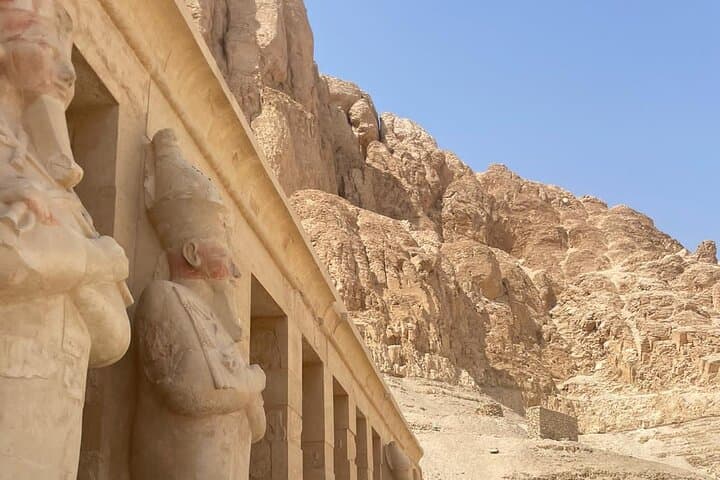
Culturally, expect lively market stalls and workshops producing alabaster crafts. Geologically, the route moves from Nile alluvium to the exposed siltstone and limestone of the West Bank, which made precision tomb-cutting possible.
Practical guidance: this private full-day is long—plan for early pickup, sturdy shoes for uneven steps, sun protection and plenty of water. Museum-like etiquette is enforced at painted tombs—no touching, and photography rules vary. Lunch in Luxor is included and transfers are provided, but bring small local currency for tips and souvenirs. Start the day rested: the itinerary covers Karnak, Valley of the Kings, Colossi of Memnon, Medinet Habu and Dendera in a single, intense cultural sweep.
moderate.
14–18 hours.
Able to handle long periods of walking and climbing stairs over a full day; basic stamina required for desert heat and excursions.
Yes; the tour description includes all tickets and a lunch in Luxor as part of the private tour package.
Expect about 3.5–4 hours each way depending on traffic and stops, which makes for a full 14–18 hour day including visits.
The provider lists wheelchair accessibility, but some temple areas and tomb interiors have steps and uneven ground—ask about specific mobility needs when booking.
A qualified Egyptologist guide is included; most guides speak English and often additional languages—confirm language preferences at booking.
Luxor occupies ancient Thebes, once the capital of Egypt; Dendera’s temple complex preserves Ptolemaic-era ceilings that chart astronomical and calendrical observations.
These monuments are vulnerable to humidity, visitor wear and pollution; follow site rules, avoid touching painted reliefs and use refillable water to reduce plastic waste.
ToursMo operates guided outdoor trips and adventures with an emphasis on safety, stewardship, and memorable experiences.
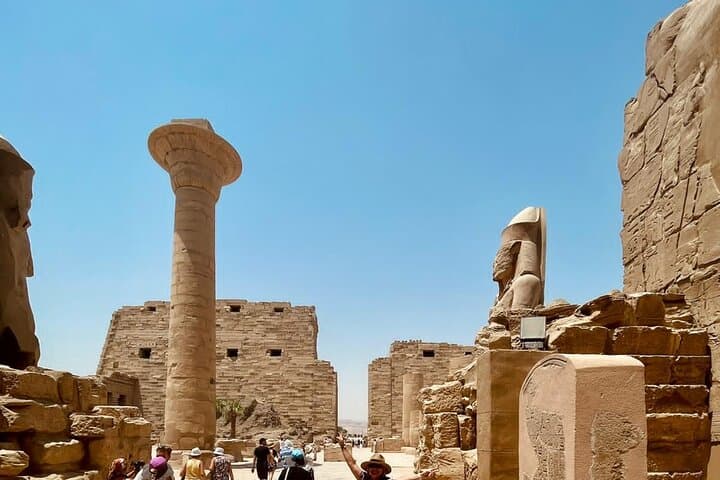
You arrive before dawn on a long two-way drive from Hurghada, the Red Sea receding behind you as the desert opens and the Nile's green ribbon appears on the horizon. By mid-morning the columns of Karnak loom: a stone forest whose carved capitals catch dust and light, and you feel the scale of millennia pressing in.
You arrive before dawn on a long two-way drive from Hurghada, the Red Sea receding behind you as the desert opens and the Nile's green ribbon appears on the horizon. By mid-morning the columns of Karnak loom: a stone forest whose carved capitals catch dust and light, and you feel the scale of millennia pressing in.
Luxor was ancient Thebes, a political and religious heart of pharaonic Egypt; its necropolises, mortuary temples and colonnades reflect layers of reinvention by successive rulers. The Valley of the Kings cuts into limestone escarpments—tombs bored deep into bedrock, with painted ceilings that speak to funerary astronomy. Dendera, a short drive north of Luxor, is home to the Temple of Hathor: a late Ptolemaic complex where color survives in sheltered reliefs and an astronomical ceiling records ancient calendars.
Culturally, expect lively market stalls and workshops producing alabaster crafts. Geologically, the route moves from Nile alluvium to the exposed siltstone and limestone of the West Bank, which made precision tomb-cutting possible.
Practical guidance: this private full-day is long—plan for early pickup, sturdy shoes for uneven steps, sun protection and plenty of water. Museum-like etiquette is enforced at painted tombs—no touching, and photography rules vary. Lunch in Luxor is included and transfers are provided, but bring small local currency for tips and souvenirs. Start the day rested: the itinerary covers Karnak, Valley of the Kings, Colossi of Memnon, Medinet Habu and Dendera in a single, intense cultural sweep.