THE ADVENTURE COLLECTIVE® · Independent discovery and booking for outdoor travel

An eight-hour private tour from Siem Reap to two of Cambodia’s most atmospheric Angkor-era sites. Navigate moss-covered galleries at Beng Mealea and climb the remote Prasat Thom at Koh Ker while a local guide handles logistics and history.
An eight-hour private tour from Siem Reap to two of Cambodia’s most atmospheric Angkor-era sites. Navigate moss-covered galleries at Beng Mealea and climb the remote Prasat Thom at Koh Ker while a local guide handles logistics and history.
Morning light breaks through a humid Cambodian sky as the van eases out of Siem Reap and the pavement gives way to red-dust tracks. By the time you arrive at Beng Mealea, the jungle is already reclaiming carved sandstone—roots have pried open galleries, and creepers pull at lintels like curious hands. Moving through collapsed passageways requires a low, deliberate pace: here the ruins ask for attention, not speed.
Verified experiences and guided adventures in the surrounding area.
Operated by Angkor Wat Travel Tour · Siem Reap, Siem Reap Province
Morning light breaks through a humid Cambodian sky as the van eases out of Siem Reap and the pavement gives way to red-dust tracks. By the time you arrive at Beng Mealea, the jungle is already reclaiming carved sandstone—roots have pried open galleries, and creepers pull at lintels like curious hands. Moving through collapsed passageways requires a low, deliberate pace: here the ruins ask for attention, not speed.
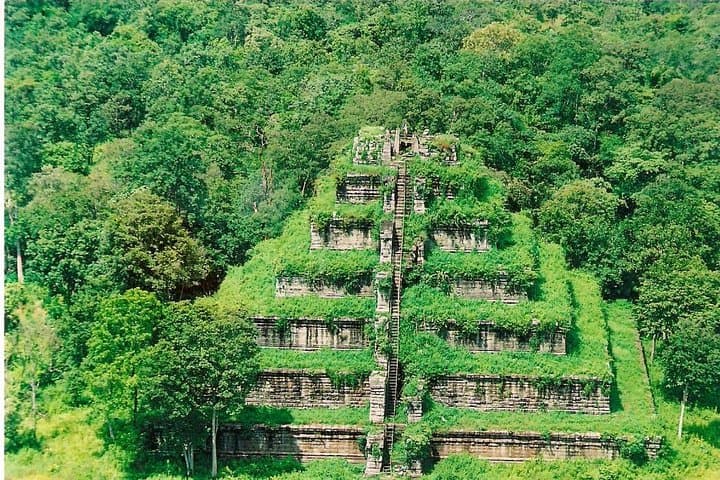
Both sites belong to the sweep of Angkor-era history. Beng Mealea, roughly 70 km northeast of Siem Reap, feels abandoned; its scale and fallen blocks recall Angkor Wat but are scored by centuries of vegetation. Koh Ker, about 120 km from the city, was briefly the Khmer capital in the 10th century and contains the steep pyramid of Prasat Thom amid a sparsely populated forest. Geologically, the region’s sandstone blocks weather quickly in the tropical climate, producing the characteristic soft edges and mossy facades you’ll see.
Expect a private, full-day rhythm: long drives on rural roads, guided walks over uneven, moss-covered stone, and time to photograph half-buried lintels. Practicalities matter—bring water, insect repellent, sturdy shoes, and small Cambodian riel for temple donations or snacks. Mobile reception is intermittent; the guide manages logistics and admissions. Temperatures peak midday, so aim for early starts and shade breaks. Visitors should respect fragile carvings and follow the guide’s routing—some sanctuaries remain off-limits due to conservation and demining work.
This is a day for explorers who welcome slow scrutiny over polished ruins—wear grip-friendly shoes, carry a light pack, and let the jungle set the pace.
moderate.
8 hours.
Suitable for travelers with moderate fitness: expect walking on uneven ground, short climbs, and extended periods standing.
Expect about 1.5–2 hours each way to Beng Mealea and up to 2.5–3 hours to Koh Ker depending on road conditions and traffic.
This tour often excludes national or site entrance fees—confirm with the operator and bring cash for ticket purchase at each site.
Children who can manage uneven footing are fine, but the sites require climbing and scrambling; those with mobility limitations will find access challenging.
Most zones open to tourists have been cleared, but parts of Koh Ker remain restricted—always follow your guide and stick to marked paths.
Koh Ker was briefly the Khmer capital in the 10th century under King Jayavarman IV; Beng Mealea served as a provincial temple complex closely linked stylistically to Angkorian architecture.
Both sites face erosion and vegetation pressure; visitors should avoid climbing on fragile carvings and support local conservation initiatives when possible.
Angkor Wat Travel Tour operates guided outdoor trips and adventures with an emphasis on safety, stewardship, and memorable experiences.

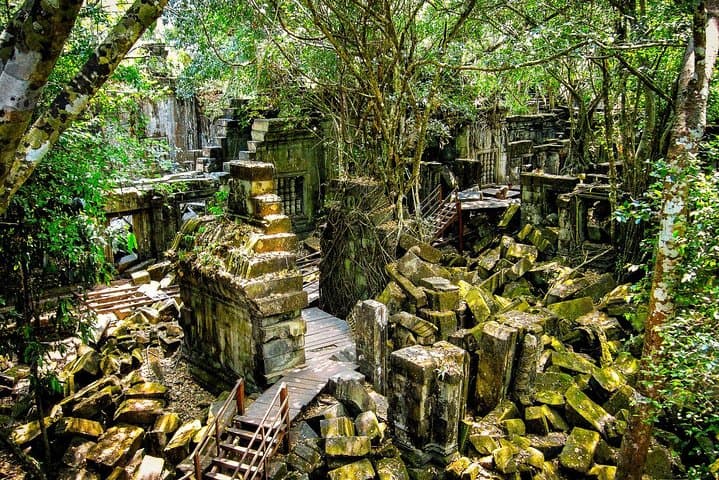
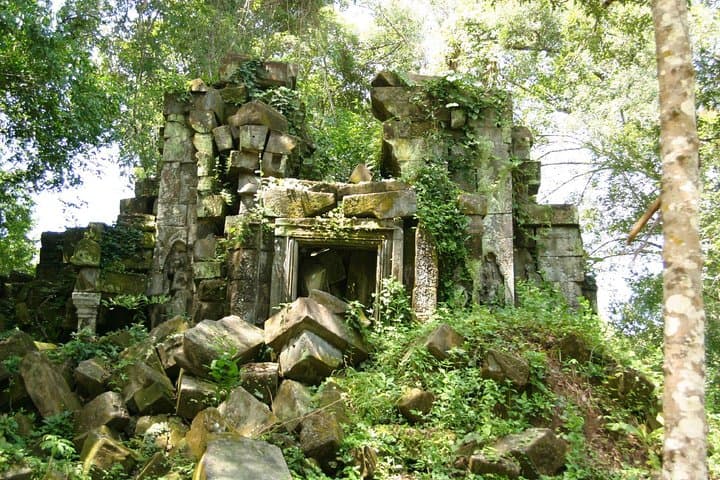
Morning light breaks through a humid Cambodian sky as the van eases out of Siem Reap and the pavement gives way to red-dust tracks. By the time you arrive at Beng Mealea, the jungle is already reclaiming carved sandstone—roots have pried open galleries, and creepers pull at lintels like curious hands. Moving through collapsed passageways requires a low, deliberate pace: here the ruins ask for attention, not speed.
Morning light breaks through a humid Cambodian sky as the van eases out of Siem Reap and the pavement gives way to red-dust tracks. By the time you arrive at Beng Mealea, the jungle is already reclaiming carved sandstone—roots have pried open galleries, and creepers pull at lintels like curious hands. Moving through collapsed passageways requires a low, deliberate pace: here the ruins ask for attention, not speed.
Both sites belong to the sweep of Angkor-era history. Beng Mealea, roughly 70 km northeast of Siem Reap, feels abandoned; its scale and fallen blocks recall Angkor Wat but are scored by centuries of vegetation. Koh Ker, about 120 km from the city, was briefly the Khmer capital in the 10th century and contains the steep pyramid of Prasat Thom amid a sparsely populated forest. Geologically, the region’s sandstone blocks weather quickly in the tropical climate, producing the characteristic soft edges and mossy facades you’ll see.
Expect a private, full-day rhythm: long drives on rural roads, guided walks over uneven, moss-covered stone, and time to photograph half-buried lintels. Practicalities matter—bring water, insect repellent, sturdy shoes, and small Cambodian riel for temple donations or snacks. Mobile reception is intermittent; the guide manages logistics and admissions. Temperatures peak midday, so aim for early starts and shade breaks. Visitors should respect fragile carvings and follow the guide’s routing—some sanctuaries remain off-limits due to conservation and demining work.
This is a day for explorers who welcome slow scrutiny over polished ruins—wear grip-friendly shoes, carry a light pack, and let the jungle set the pace.