THE ADVENTURE COLLECTIVE® · Independent discovery and booking for outdoor travel

Travel from Marsa Alam to explore Dendera’s Hathor reliefs and Abydos’ royal mortuary complexes on a private full‑day tour. Expect close-up hieroglyphs, windswept limestone façades, and guided interpretation that brings ancient rituals to life.
Travel from Marsa Alam to explore Dendera’s Hathor reliefs and Abydos’ royal mortuary complexes on a private full‑day tour. Expect close-up hieroglyphs, windswept limestone façades, and guided interpretation that brings ancient rituals to life.
You step out of the air-conditioned car and the desert exhales—heat rolling off the road, a pale Nile floodplain visible in the distance, and stone that has held stories for millennia. The first stop is Dendera: low-slung temple walls crisscrossed with hieroglyphs that still catch light like carved script. The reliefs are close enough to read; the goddess Hathor watches in profile while painted pigments hide in shadowed grooves.
Verified experiences and guided adventures in the surrounding area.
Operated by Get Your Trip · Dendera, Qena Governorate
You step out of the air-conditioned car and the desert exhales—heat rolling off the road, a pale Nile floodplain visible in the distance, and stone that has held stories for millennia. The first stop is Dendera: low-slung temple walls crisscrossed with hieroglyphs that still catch light like carved script. The reliefs are close enough to read; the goddess Hathor watches in profile while painted pigments hide in shadowed grooves.
Abydos arrives with a different gravity. Here the Osireion and Seti I’s mortuary complex speak of pilgrimage and kingship. Walk the causeways and the carvings insist on lineage—pharaohs invoking gods and the land’s cyclical rebirth. Geologically, both sites sit on alluvial plains shaped by the Nile’s ancient rhythms; limestone and sandstone façades bear the scars of wind, sand, and occasional salt weathering.
Culture and craft remain present: Coptic and modern rural communities nearby, modest local workshops, and simple food stalls on the approach roads. A knowledgeable guide connects inscriptions to rituals and points out where pigments still cling to bas-reliefs.
Practical guidance: plan for long but gentle walking on uneven stone floors and sun exposure. Start early from Marsa Alam to avoid peak heat, carry a refillable water bottle, and wear closed shoes with grip for temple steps. Respect sacred spaces—modest clothing is required at many temple sites.
This private itinerary compresses centuries of ritual, art, and power into one thoughtful day—accessible, revealing, and best experienced at a measured pace.
easy.
8 hours.
Suitable for most fitness levels; requires standing and walking on uneven surfaces for several hours.
Most organized private tours include admission for the main temple sites; confirm with the operator before booking to avoid on-site payments.
Driving to the Luxor region where Dendera and Abydos are located takes roughly 3–4 hours each way depending on the route and traffic, so expect a full day in the vehicle and on foot.
Both sites have uneven surfaces and steps; accessibility is limited, though some operators may assist with transfers—check accessibility details in advance.
Photography is generally allowed in open areas, but flash and tripods may be restricted to protect pigments; follow guide and site rules.
Abydos served as an important cult center tied to Osiris and royal ancestor worship, while Dendera was a key temple for Hathor with layers of construction spanning Ptolemaic to Roman periods.
Both sites face challenges from salt weathering and tourism pressure; choose guided visits that follow established paths and avoid touching reliefs to limit wear.
Get Your Trip operates guided outdoor trips and adventures with an emphasis on safety, stewardship, and memorable experiences.
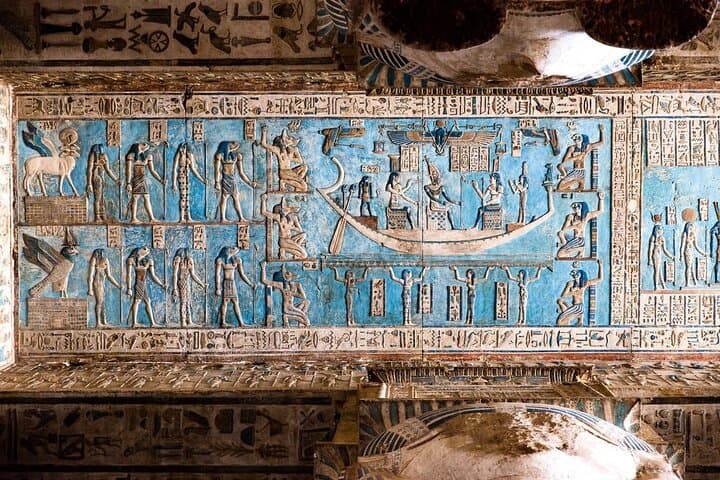
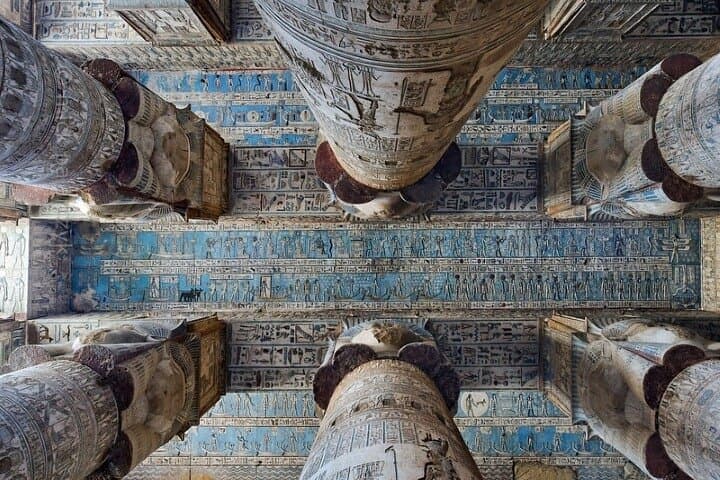
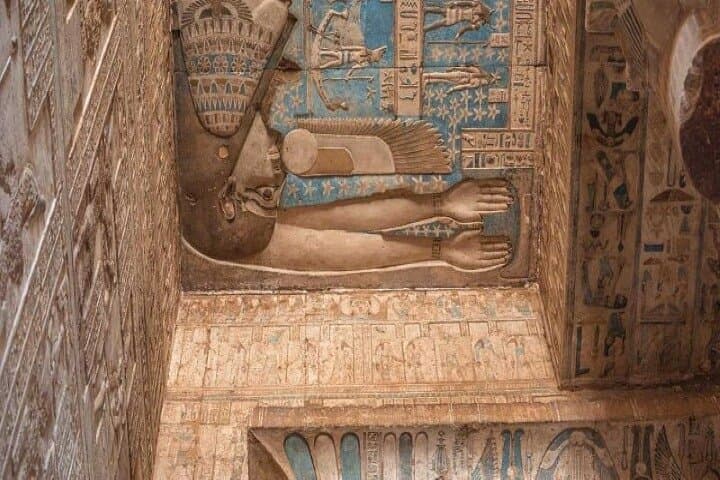
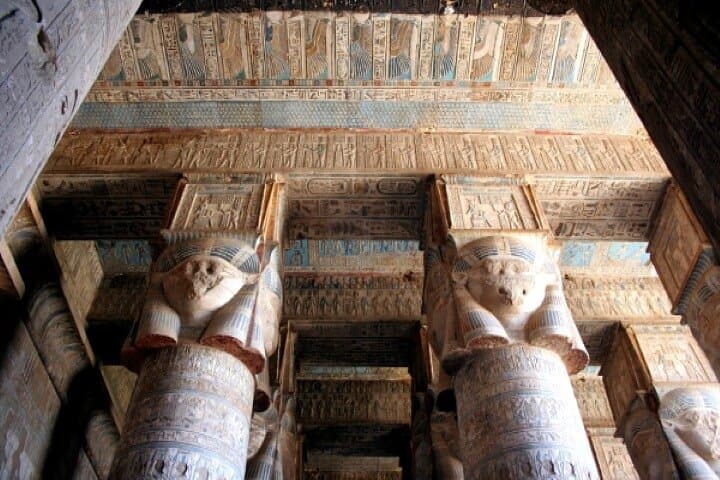
You step out of the air-conditioned car and the desert exhales—heat rolling off the road, a pale Nile floodplain visible in the distance, and stone that has held stories for millennia. The first stop is Dendera: low-slung temple walls crisscrossed with hieroglyphs that still catch light like carved script. The reliefs are close enough to read; the goddess Hathor watches in profile while painted pigments hide in shadowed grooves.
You step out of the air-conditioned car and the desert exhales—heat rolling off the road, a pale Nile floodplain visible in the distance, and stone that has held stories for millennia. The first stop is Dendera: low-slung temple walls crisscrossed with hieroglyphs that still catch light like carved script. The reliefs are close enough to read; the goddess Hathor watches in profile while painted pigments hide in shadowed grooves.
Abydos arrives with a different gravity. Here the Osireion and Seti I’s mortuary complex speak of pilgrimage and kingship. Walk the causeways and the carvings insist on lineage—pharaohs invoking gods and the land’s cyclical rebirth. Geologically, both sites sit on alluvial plains shaped by the Nile’s ancient rhythms; limestone and sandstone façades bear the scars of wind, sand, and occasional salt weathering.
Culture and craft remain present: Coptic and modern rural communities nearby, modest local workshops, and simple food stalls on the approach roads. A knowledgeable guide connects inscriptions to rituals and points out where pigments still cling to bas-reliefs.
Practical guidance: plan for long but gentle walking on uneven stone floors and sun exposure. Start early from Marsa Alam to avoid peak heat, carry a refillable water bottle, and wear closed shoes with grip for temple steps. Respect sacred spaces—modest clothing is required at many temple sites.
This private itinerary compresses centuries of ritual, art, and power into one thoughtful day—accessible, revealing, and best experienced at a measured pace.