THE ADVENTURE COLLECTIVE® · Independent discovery and booking for outdoor travel

Spend a private day across Valensole’s lavender plateau, the pottery streets of Moustiers‑Sainte‑Marie and the azure shores of Lac Sainte‑Croix. This practical guide explains what to expect, when to go and how to make the most of the bloom.
Spend a private day across Valensole’s lavender plateau, the pottery streets of Moustiers‑Sainte‑Marie and the azure shores of Lac Sainte‑Croix. This practical guide explains what to expect, when to go and how to make the most of the bloom.
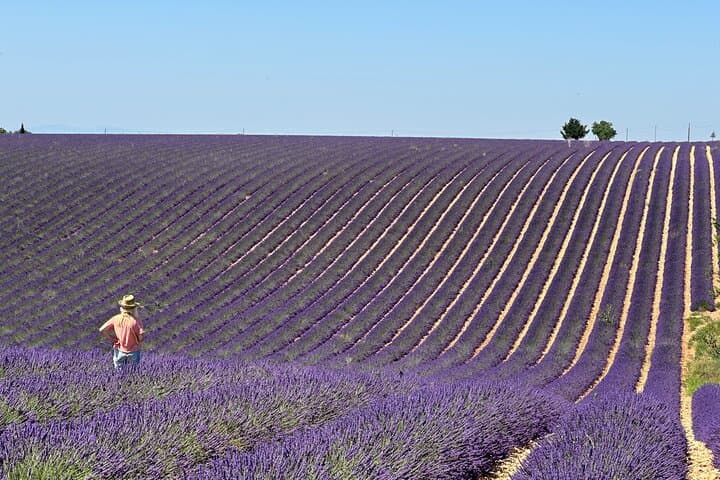
Morning light on the plateau of Valensole flattens the rows of lavender into precise ribbons of purple; a private minivan eases between fields, the guide pointing out the best viewpoints while the air carries the plant’s resinous perfume. The day unfolds through contrasts: agricultural plateau, a village of painted faïence, and a broad blue artificial lake fed by the Verdon’s diverted waters.
Verified experiences and guided adventures in the surrounding area.
Operated by DOMITIA TOURS · Valensole, Provence-Alpes-Côte d'Azur
Morning light on the plateau of Valensole flattens the rows of lavender into precise ribbons of purple; a private minivan eases between fields, the guide pointing out the best viewpoints while the air carries the plant’s resinous perfume. The day unfolds through contrasts: agricultural plateau, a village of painted faïence, and a broad blue artificial lake fed by the Verdon’s diverted waters.
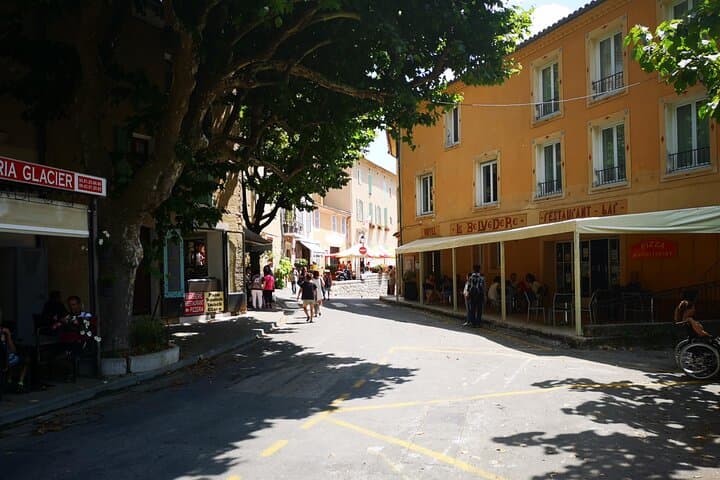
This corner of the Alpes-de-Haute-Provence sits on limestone plateaus carved by ancient seas; terraces and sinkholes tell a geology of uplift and erosion while human history reads as shepherding, lavender cultivation born in the 19th century and pottery in Moustiers-Sainte-Marie that dates to the 17th–18th centuries. The village’s faïence workshops and cliff-side chapel reflect the local craft economy; the Lac de Sainte‑Croix, created in 1973, gives a modern recreational edge to a rural landscape.
Practically, expect short walks through fields and cobbled streets, brief stops at pottery studios, and two hours at the lake for swimming or shoreline views. Bloom peaks mid-June to mid-July; outside that window the plateau is still scenic but less purple. Wear sturdy walking shoes, sun protection, and bring water—shade is sparse on the Valensole plateau. Respect private plots: stay on paths and ask before photographing workers or picking blooms. Timing early morning or late afternoon reduces crowds and sharp midday light for photography.
A private full-day tour packs geology, culture and easy outdoor time into a single, manageable day—good for travelers wanting immersive Provençal scenery without heavy hiking.
moderate.
10 hours.
Moderate fitness—able to walk 2–4 miles total over uneven village streets and short field paths; comfortable standing during visits.
Peak bloom on Valensole typically runs from about June 15 to July 15, but exact timing varies by altitude and season weather—plan mid‑June to mid‑July for the most reliable color.
No—lavender is usually grown commercially; do not pick or trespass into fields without explicit permission from the farmer or guide.
Some parts of the tour (minivan transport and village streets) are accessible, but field terrain and steep village lanes can be uneven; collapsible wheelchairs with assistance may be accommodated—confirm when booking.
Yes—Lac Sainte‑Croix permits swimming in designated areas; bring a towel and check seasonal water temperatures and lifeguard presence.
Lavender cultivation in Provence expanded in the 19th century for perfume and oil; Moustiers‑Sainte‑Marie developed a notable faïence industry in the 17th–18th centuries.
Stay on marked routes and avoid trampling crops; local tourism supports small producers, so buying from village artisans helps sustain traditional crafts.
DOMITIA TOURS operates guided outdoor trips and adventures with an emphasis on safety, stewardship, and memorable experiences.


Morning light on the plateau of Valensole flattens the rows of lavender into precise ribbons of purple; a private minivan eases between fields, the guide pointing out the best viewpoints while the air carries the plant’s resinous perfume. The day unfolds through contrasts: agricultural plateau, a village of painted faïence, and a broad blue artificial lake fed by the Verdon’s diverted waters.
Morning light on the plateau of Valensole flattens the rows of lavender into precise ribbons of purple; a private minivan eases between fields, the guide pointing out the best viewpoints while the air carries the plant’s resinous perfume. The day unfolds through contrasts: agricultural plateau, a village of painted faïence, and a broad blue artificial lake fed by the Verdon’s diverted waters.
This corner of the Alpes-de-Haute-Provence sits on limestone plateaus carved by ancient seas; terraces and sinkholes tell a geology of uplift and erosion while human history reads as shepherding, lavender cultivation born in the 19th century and pottery in Moustiers-Sainte-Marie that dates to the 17th–18th centuries. The village’s faïence workshops and cliff-side chapel reflect the local craft economy; the Lac de Sainte‑Croix, created in 1973, gives a modern recreational edge to a rural landscape.
Practically, expect short walks through fields and cobbled streets, brief stops at pottery studios, and two hours at the lake for swimming or shoreline views. Bloom peaks mid-June to mid-July; outside that window the plateau is still scenic but less purple. Wear sturdy walking shoes, sun protection, and bring water—shade is sparse on the Valensole plateau. Respect private plots: stay on paths and ask before photographing workers or picking blooms. Timing early morning or late afternoon reduces crowds and sharp midday light for photography.
A private full-day tour packs geology, culture and easy outdoor time into a single, manageable day—good for travelers wanting immersive Provençal scenery without heavy hiking.